Measurement and testing
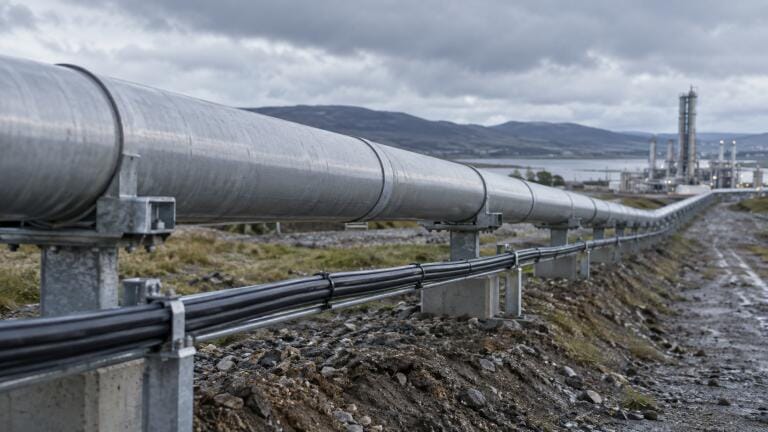
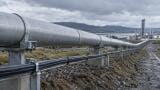
That chain can stretch tens to hundreds of kilometres.
A newly published review sets out how mature that capability has become for oil and gas applications specifically.
The review, led by Professor Arnaldo Leal-Junior of the Federal University of Espírito Santo, Brazil, and colleagues, was published on 9 July in Opto-Electronic Advances.
It covers distributed acoustic sensing (DAS), a technique that uses optical fibre as a dense array of virtual sensors.
The method analyses the Rayleigh backscatter generated as light travels along the cable.
That backscatter allows detection of vibration, acoustic signals and dynamic strain at points along the fibre's length, without any additional sensors physically attached.
For process and pipeline engineers, the review's most directly relevant section covers well-integrity diagnostics, vertical seismic profiling and multiphase-flow monitoring.
It also covers the detection of leaks or sand ingress in pipelines.
These are established use cases in the review, rather than speculative ones.
The review situates them within DAS's two dominant technical approaches. Optical Frequency Domain Reflectometry (OFDR) offers millimetre- or centimetre-scale spatial resolution but a shorter sensing range.
Phase-sensitive Optical Time Domain Reflectometry (φ-OTDR) underpins most commercial DAS systems.
It supports long-range monitoring over tens of kilometres while retaining sensitivity to vibration and acoustic events.
The review sets out the persistent challenges that determine how reliable DAS deployments are in practice.
Separating strain effects from temperature effects on the same fibre remains a core difficulty.
Other challenges include signal fading caused by Rayleigh backscattering interference, laser phase noise, and hardware limitations that constrain how far and how finely a system can resolve events.
Proposed mitigations include frequency-, polarisation- and space-division multiplexing, dual-pulse interrogation, and pulse compression, alongside improved noise-compensation methods.
Signal-processing techniques cited in the review include the Hilbert transform, IQ demodulation, and phase differentiation and unwrapping algorithms, used to extract usable information from raw fibre signals.
The same underlying technology appears throughout the review in adjacent monitoring contexts relevant to process sites and infrastructure operators more broadly.
These include structural health monitoring of pipelines and buried infrastructure, where DAS can detect small deformations or stress concentrations before they become failures.
Perimeter security is another cited application, including detecting unauthorised digging near pipeline corridors, a capability directly relevant to preventing accidental third-party pipeline strikes.
The authors point to silicon photonics as a route to smaller, more affordable interrogator hardware, which would lower the barrier to wider adoption across pipeline networks and processing sites.
Improved optical configurations and processing methods, they suggest, may extend sensing range and enhance signal quality without a proportional increase in hardware cost.
Standardised data formats, performance metrics and publicly available datasets are also identified as priorities, which the authors argue would improve comparability between different DAS systems and vendors.
As DAS interrogators become more compact and affordable, the review anticipates its applications expanding beyond large-scale industrial and infrastructure monitoring into more distributed, lower-cost deployments.
For pipeline operators and process engineers, the review functions less as a single new finding and more as a consolidated map.
It shows where a maturing sensing technology is genuinely ready for deployment, and where its remaining engineering limits still sit.
PIN 27.4 Aug/Sept 2026


 Product directory



.jpg)











.jpg)