Measurement and testing
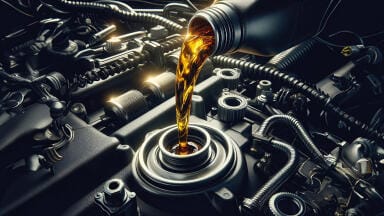
The reliability, efficiency, and environmental performance of internal combustion engines depend heavily on the stability and condition of their lubricants during operation.
Engine oil functions not only as a friction-reducing, wear-protective medium but also as a diagnostic fluid that reveals and reflects the engine’s internal state [1].
This dual role positions oil analysis as a cornerstone of condition-based maintenance strategies, which aims to replace fixed service intervals with data-driven decisions that reflect real operating conditions.
By integrating laboratory measurements (viscosity, TAN, wear metals, and FTIR) with real-time machine data, operators can detect early signs of degradation, predict failures, and optimize oil drain intervals to enhance sustainability and engine longevity.
Combining laboratory oil analysis (viscosity, TAN, metals, and FTIR) with real-time machine data transforms maintenance from a reactive process into a predictive, condition-based strategy.
Traditional oil changes rely on fixed mileage or time intervals, but these approaches fail to capture the nonlinear and highly variable nature of lubricant degradation.
Identical vehicles operating under different loads, temperatures, and driving cycles can experience different oil degradation rates. Integrating laboratory diagnostics with machine telemetry (such as load, RPM, oil temperature, and fuel rate) provides the contextual information needed to interpret chemical and physical changes in the lubricant.
This allows for early detection of mechanical faults, more accurate prediction of oil life, and a shift towards sustainable maintenance practices that has the potential in reducing waste and preventing wear.
Viscosity is a fluid’s internal resistance to gradual deformation by shear or tensile stress.
Viscosity remains one of the most important and widely used indicators of oil condition because it directly influences film thickness, hydrodynamic lubrication, and wear protection.
A reduction in viscosity is typically associated with fuel dilution or mechanical shear of viscosity-index improvers, while an increase is often caused by oxidation, soot accumulation, or polymerization processes [1].
As viscosity governs the lubricant’s ability to maintain separation between moving surfaces, moderate deviations can significantly increase wear rates and thermal stress [2].
Over the lifespan of the engine oil, the viscosity of the lubricant changes due to excessive heat, soot, engine debris, and fluids such as antifreeze and fuel. Currently, many viscosity measurement systems measure kinematic viscosity (KV), which is proportional to density and dynamic viscosity.
Table 1. Percentage change in viscosity parameters resulting from actual operation [1]
Figure 1. Matrix plots of the percentage change in viscosity parameters resulting from actual operation [1]
Table 1 shows the percentage changes in KV observed for the used oil samples and Figure 1 shows the relationships between the data presented in Table 1.
The reduction in viscosity at 40 ℃ correlated strongly with the reduction in at 100 ℃. The most pronounced decline was recorded for sample number 5, and the smallest change occurred for sample number 6.
Viscosity changes should be classified as critical, confirming severe physicochemical degradation of the oils during operation [1].
These reductions occurred regardless of driving style, mileage, or oil brand, which demonstrates that viscosity degradation is driven more by engine behavior (such as temperature fluctuations, fuel dilution, or mechanical shear) rather than time or distance.
Modern research reinforces this understanding: dynamic viscosity, rather than KV, is the more sensitive indicator of oil quality, and high-temperature piezoelectric viscosity sensors can detect viscosity changes through shear wave damping and resonance frequency shifts.
While viscosity describes macroscopic functional behavior, the Total Acid Number (TAN) provides insight into chemical degradation.
TAN is a key metric in measuring the acidity of a substance [3]. It represents the milligrams of potassium hydroxide (KOH) needed to neutralize the acidic components in one gram of a sample. TAN is crucial in the lubricants and engine oil industry, where it tracks oil degradation.
As lubricants oxidize, they form organic and inorganic acids, increasing TAN over time. Rising TAN values indicate oxidative degradation, additive depletion, and the accumulation of acidic oxidation byproducts that can corrode metal surfaces, thicken oil, and accelerate wear.
Generally, the lubricating oils TAN increases while the total base number (TBN) decreases when using.
The decrease in TBN is caused by the degradation of antioxidants (lubricant additives) [4]. The development of an online sensor capable of monitoring changes of TAN is crucial in ensuring more efficient and safer machine operations. Traditional methods of glass pH sensors cannot
be used in monitoring TAN changes due to their slow response and low stability in the hydrocarbon environment.
Figure 2. Schematic of the CNT oil sensor for total acid number measurement [4]
Figure 3. (a) real image of a CNT oil sensor, (b) SEM image of multiwall carbon nanotubes as sensitive thin films [5]
Moon et al. used a resistive sensor utilizing carbon nanotubes (CNTs) as sensitive films for measuring the oil’s TAN.
The CNTs were 95% pure multiwall carbon nanotube (MWNT) and synthesized by using thermal chemical vapor deposition [5].
The CNTs did not undergo any post-treatments such as purification, functionalization, etc. as they have already been pre-processed.
The sensing mechanism is that change in TAN affects oil’s electrochemical reactivity and conductivity [4]. Figure 2 shows the schematic of the CNT oil sensor. The sensor was unable to accurately predict TAN when being used in actual oils as water content or soot content also influenced the conductivity change.
Figure 3a shows the fabricated CNT oil condition sensor and lead-line of the pin type. The sensor composed of a closed circuit passing through the printed CNT paste and electrode pair.
Figure 3b presents a scanning electron microscopy (SEM) image of the CNTs after heat treatment of screen-printed CNT paste.
TAN trends complement viscosity by revealing the buildup of acidic oxidation products and the exhaustion of alkaline additives. Solid state ion selective electrode (ISE) has shown promise in sensing pH of the aqueous solutions.
Ruthenium oxide ISEs have been looked at for monitoring engine oil acidity [4]. The sensor consisted of a working electrode and three reference electrodes (using glass-based Ag/AgCl, polymer-based Ag/AgCl, and bare silver conductor).
Though test results showed that ruthenium oxide ISEs had a linear response and fast response time, there was low stability in high temperature conditions and was sensitive to light and external electromagnetic fields [4]. When combined with FTIR oxidation indices and machine temperature data, TAN becomes a powerful predictor of oil life and impending lubricant failure.
Wear metal analysis provides insights into the mechanical condition of the engine by identifying the concentration of metallic particles suspended in the oil.
Metal oil analysis combined with data science transforms preventative maintenance by shifting from basic threshold alarms to predictive analytics [6].
Machine learning can be applied to historical wear metal and elemental data (such as iron, silicon, and chromium), and mechanical failures can be forecasted.
Elements such as iron, copper, lead, aluminum, and chromium originate from specific components (cylinder liners, pistons, and rings).
Sudden increases in wear metals often precede mechanical failures by hundreds of hours, making them crucial for preventive fault detection.
When wear metal spikes are correlated with machine telemetry (such as abnormal vibration signatures, elevated temperatures, and load fluctuations), the root cause of wear can be pinpointed.
Rising copper and lead levels may indicate bearing fatigue, and elevated iron and chromium levels indicate ring or cylinder wear. When paired with machine-learning models trained on wear data, metal analysis becomes a predictive tool capable of forecasting mechanical failures.
While viscosity describes macroscopic functional behavior, Fourier-transform infrared (FTIR) spectroscopy enables molecular-level insight into chemical transformation within the oil [1].
The use of differential spectra allows for distinguishing additive depletion from base-oil oxidation and evaluating the relative contribution of various degradation processes.
When combined with viscosity data, FTIR spectroscopy forms a robust analytical toolset that shows the mechanisms underlying oil deterioration. FTIR can detect oxidation, nitration, sulfation, soot contamination, etc. by analyzing characteristic absorbance bands.
Figure 4. Differential spectra for examined oils in the range 600-4000 cm-1 [1]
Figure 5. Differential spectra for examined oils in the range 2000-600 cm-1 [1]
The FTIR differential spectra presented in Figures 4 and 5 indicate that the chemical transformations occurring in the tested oils correspond closely with viscosity data.
Combined use of viscosity testing and FTIR spectroscopy can provide a sensitive diagnostic framework for assessing an engine’s technical condition. Using laboratory analysis and oil condition monitoring, early detection and prevention of engine malfunction can be possible.
Machine data integration provides the operational context necessary to interpret laboratory oil analysis and is increasingly recognized as essential for accurate lubricant diagnostics. Real-time telemetry (load, RPM, oil temperature, and fuel rate) captures the dynamic environment in which degradation processes unfold. Advancements in machine learning and artificial intelligence have propelled data-driven prognostic models for oil condition monitoring [7].
Methods such as ARIMA, Kalman filters, and hidden Markov models have been used to estimate the remaining useful life (RUL) of equipment.
Detection of small wear debris is critical to identify abnormal wear conditions for prognosis of pending machinery failure [4].
In-situ monitoring of viscosity, wear debris, water contamination, soot, and corrosion indicators can bridge the gap between static laboratory testing and continuously changing conditions inside an engine.
These sensors allow lubricant condition to be assessed in real-time, providing early warnings of abnormal wear or contamination that may not be visible in periodic laboratory samples.
When machine telemetry is correlated with laboratory diagnostics (viscosity loss, TAN increase, FTIR oxidations, or varnish and sludge formation (MPC)), the combined dataset enables precise identification of degradation mechanisms and supports predictive maintenance.
Optimizing oil drain intervals requires moving beyond fixed conditions to adaptive decisions based on both laboratory analysis and machine data.
Predictive models integrate viscosity trends, TAN progression, metal oil analysis, and FTIR oxidation with varnish and sludge metrics.
The Performance Rating Index (PRI) is a comprehensive metric that consolidates viscosity, water separability, oxidation stability, copper strip corrosion, and varnish/sludge potential into a single indicator of lubricant condition [3].
The PRI evaluation addresses data management challenges for a successful oil analysis program, and the performance test results of a turbine oil provided a PRI of 48.5.
This indicated clear maintenance actions and this approach enhanced maintenance scheduling and machine longevity [3].
The dynamic viscosity sensor study further reinforced the importance of real-time monitoring, showing that viscosity changes caused by fuel dilution, oxidation, or contamination can be detected with high, sensitivity, enabling early intervention.
When PRI-based assessments are combined with machine telemetry, the resulting hybrid diagnostic framework supports precise oil change timing, reduces waste, and prevents early wear.
Overall, the integration of laboratory oil analysis and machine telemetry demonstrate that lubricant degradation is governed by dynamic, non-linear interactions between chemical aging processes and real operating conditions.
When oil analysis data are placed side-by-side with machine sensor readings, subtle problems that would remain invisible to either dataset alone becomes immediately apparent. For example, viscosity loss might look like ordinary shear or mild fuel dilution when viewed alone, but when paired with machine telemetry showing unusually low oil temperature or extended idling periods, it becomes clear that incomplete combustion is driving the dilution.
A rising TAN value may suggest normal oxidation, but when paired with load and RPM data showing high-temperature excursions, accelerated thermal stress and additive depletion becomes obvious.
Furthermore, wear metals alone indicate mechanical wear, yet with load, they reveal the specific operating conditions that trigger the release of iron, copper, or chromium.
FTIR oxidation may seem moderate, but when aligned with telemetry showing sustained high exhaust temperatures or heavy load cycles, they signal irregular early combustion or overheating.
Through combining laboratory diagnostics (viscosity, TAN, metals, and FTIR) with machine data (RPM, load, and temperature), emerging faults, abnormal operating patterns and early degradation can be detected far earlier and with greater accuracy than either dataset could achieve alone.
Dr. Raj Shah is the Director at Koehler Instrument Company in New York, where he has worked for the last 25+ years.
He is an elected Fellow by his peers at IChemE, AOCS, CMI, STLE, AIC, NLGI, INSTMC, Institute of Physics, The Energy Institute, and The Royal Society of Chemistry.
As an ASTM Eagle award recipient, Dr. Shah recently coedited the bestseller, “Fuels and Lubricants handbook”, details of which are available at ASTM’s Long Awaited Fuels and Lubricants Handbook 2nd Edition Now Available https://bit.ly/3u2e6GY.
He earned his doctorate in Chemical Engineering from The Pennsylvania State University and is a Fellow from The Chartered Management Institute, London.
Dr. Shah is also a Chartered Scientist with the Science Council, a Chartered Petroleum Engineer with the Energy Institute and a Chartered Engineer with the Engineering Council, UK. Dr. Shah was recently granted the honorific of “Eminent Engineer” with Tau beta Pi, the largest engineering society in the USA.
He is on the Advisory Board of Directors at Farmingdale University (Mechanical Technology), Auburn University (Tribology), SUNY, Farmingdale (Engineering Management), and State University of NY, Stony Brook (Chemical Engineering/Material Science and Engineering).
An Adjunct Professor at the State University of New York, Stony Brook, in the Department of Material Science and Chemical Engineering, Raj also has over 725 publications and has been active in the energy industry for over 3 decades.
More information on Raj can be found at https://tinyurl.com/mbz22vjv
Contact: [email protected]
Miss Sheena Chen is part of a thriving internship program at Koehler Instrument Company in Holtsville and is studying towards a degree in Chemical and Molecular Engineering at Stony Brook University, New York.
Brandon Juran is an intern at Koehler Instrument Company in Holtsville and is studying towards a degree in Chemical and Molecular Engineering at Stony Brook University, New York, where he also serves as a teaching assistant for Thermodynamics I. His work at Koehler focuses on bio-based nano-lubricant research and development. More information on Brandon can be found at linkedin.com/in/brandon-juran.
[1] Wolak, A. and Fijorek, K. (2026). Sustainability. Laboratory Diagnostics of Engine Oils as a Tool for Identifying Mechanical Faults and Supporting Sustainable Vehicle Maintenance. https://doi.org/10.3390/su18073355
[2] Brouwer, M. et al. (2012). ScienceDirect. High temperature dynamic viscosity sensor for engine oil applications. https://doi.org/10.1016/j.sna.2011.10.024
[3] Chokelarb, W. et al. (2024). Heliyon. Assessment of overall remaining useful life of lubricants by integrating oil quality and performance. https://doi.org/10.1016/j.heliyon.2024.e37486
[4] Zhu, X. et al. (2017). ScienceDirect. Lubricating oil conditioning sensors for online machine health monitoring- A review. https://doi.org/10.1016/j.triboint.2017.01.015
[5] Moon, S. et al. (2006). Instras. Multiwall Carbon Nanotube Sensor for Monitoring Engine Oil Degradation. https://nathan.instras.com/ResearchProposalDB/doc-58.pdf
[6] Rahimi, M. et al. (2022). ScienceDirect. Modeling and classifying the in-operando effects of wear and metal contaminations of lubricating oil on diesel engine: A machine learning approach. https://www.sciencedirect.com/science/article/abs/pii/S0957417422008235?via%3Dihub
[7] Omiya, T. et al. (2025). ScienceDirect. Predicting engine oil degradation across diverse vehicles and identifying key factors. https://www.sciencedirect.com/science/article/abs/pii/S0888327025002250
PIN 27.4 Aug/Sept 2026



 Product directory