Measurement and testing
In many industrial processes, measuring instruments have to withstand conditions that are anything but ordinary.
As described in VEGA’s article on radiometric measurement technology under extreme process conditions, high temperatures, aggressive media, high pressures, abrasion or heavy buildup can make conventional measurement methods unreliable or impractical.
This is where radiometry proves its value. Because radiometric instrumentation measures without contact with the process, it is wear-free, highly robust and capable of delivering dependable results even where other technologies are no longer suitable.
This article explains the operating principle behind radiometric measurement, the main components of a modern system and the applications in which the technology becomes particularly valuable for plant operators.
Radiometry uses the attenuation of gamma radiation as it passes through matter.
If little or no material is present between the source and the detector, more radiation reaches the detector. If the vessel, pipeline or medium absorbs more of the radiation, the detector receives fewer pulses.
This change in count rate is evaluated to determine process values such as level, density, limit level, interfaces or mass flow.
A radiometric measuring system essentially consists of three components:
• Radiation source
The system uses long-lived, encapsulated radioactive isotopes such as caesium-137 or cobalt-60, which continuously emit high-energy gamma radiation.
The appropriate isotope is selected according to the application: caesium-137 is commonly used for level and density measurement, while cobalt-60, with its higher energy, is often chosen for thick-walled vessels or large pipelines.
• Source holder
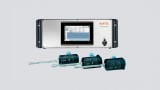
The VEGASOURCE source holder shields the radiation source safely in all directions and permits radiation to exit only along the defined beam path.
• Detector
The detector is the key measuring component. Gamma radiation emitted by the source passes through the process medium before reaching the detector.
VEGA uses scintillation detection: a scintillator, typically an organic plastic material such as PVT or PS, or a crystal such as sodium iodide (NaI), converts incoming gamma radiation into flashes of light.
These light signals are detected by a photomultiplier, amplified and converted into electrical pulses. The system counts these pulses; the higher the pulse rate, the more radiation has reached the detector.
The relationship is inverse: the denser or thicker the material in the radiation path, the more strongly the radiation is attenuated and the lower the count rate measured at the detector.
This principle enables precise determination of parameters such as level, density, limit level, interfaces and mass flow.
The highly capable integrated signal conditioning in VEGA sensor electronics converts the counted pulses into a usable measured value.
With their robust construction and high sensitivity, VEGA scintillation detectors are regarded as a proven solution for demanding applications.
They are available in different designs and lengths for hazardous areas, complex vessel geometries and large measuring ranges.
Radiometry is among the most dependable methods in industrial process measurement. Its main advantages include:
Because no measuring components are exposed to the process medium, mechanical wear is eliminated.
Seals, moving parts and material fatigue caused by chemical or thermal stress are not an issue.
Sensor maintenance is greatly simplified, since the instruments do not require cleaning or regular recalibration during operation.
Radiometric level measurement delivers reliable, non-contact monitoring across the entire vessel height, even under extreme process conditions.
Radiometric sensors provide stable, reproducible measured values even under demanding ambient and process conditions, including extreme temperatures, pressure fluctuations, steam, condensate or buildup.
Because the measurement takes place outside the process and does not rely on signal reflection in the medium, it is less affected by vessel internals, deposits or changing process conditions than many conventional methods.
In applications involving highly aggressive, abrasive or toxic media, external non-contact measurement through pipe or vessel walls improves safety for personnel and plant equipment.
Radiometric instrumentation delivers reliable readings even in processes involving acids, solvents or strongly alkaline slurries.
Radiometric systems can usually be added to existing plants without major structural modifications and, in many cases, without stopping the process.
The detector and source holder, which serves as the radiation shielding container, are mounted externally on pipes or vessels.
Analogue and digital interfaces make integration into existing control systems straightforward.
VEGA also provides mounting accessories for different pipe diameters and vessels, along with planning support and assistance with regulatory approvals.
Radiometric measurement is used wherever conventional measuring methods reach physical, chemical or mechanical limits.
This is especially relevant when contact with the medium is unsuitable, when vessels or pipelines cannot be opened, or when buildup, foam, vapours, pressure or temperature fluctuations impair other measuring principles.
Because the system measures from outside the process, it is particularly useful in applications where reliable measurement must be maintained without mechanical intervention in the vessel or pipeline.
VEGA’s Multi Point Density Array measures density at multiple heights simultaneously, providing accurate layer control for complex feed preparation and separation processes.
Typical applications include level measurement in pressurised reactors, density measurement in pipelines, interface detection in separators and monitoring in insulated vessels, high-temperature systems or installations with strong buildup.
In these cases, measuring from outside the process supports continuous plant operation while avoiding unnecessary modifications to pipes or vessels.
In silos with extremely dusty or sticky bulk solids, radiometric limit level sensors reliably detect when critical levels are reached, for example to prevent overfilling or to provide an automatic start-stop signal in conveying processes.
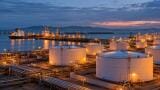
In large, pressurised or thermally insulated vessels, for instance in chemical plants, petrochemical facilities, refineries or power generation, radiometric level measurement is often the most practical solution.
Detectors provide precise measurement data over the vessel height without opening the vessel, penetrating the process wall or interrupting operation.
Radiometric density measurement enables continuous monitoring of liquids and suspensions directly in pipelines.
Typical applications include concentration measurement, phase detection and quality assurance.
Based on physical parameters, density measurement supports targeted process control in reactors, mixing vessels and production lines.
A density profile can be generated by installing several detectors along a vessel.
This is particularly useful for multiphase media, as it enables reliable detection of interfaces between oil and water, as well as sedimentation processes in settling tanks or separating columns.
On conveyor belts or screw conveyors, radiometric instrumentation enables non-contact mass flow measurement, making it suitable for abrasive, dusty or hot materials such as ore, cement, coal and recycled materials.
Unlike conventional belt weighing systems, which can be maintenance-intensive and susceptible to faults, the radiometric solution operates independently of belt tension, load distribution and many environmental influences.
Conventional measuring principles are efficient and cost-effective in many applications.
Under extreme process conditions, however, they can quickly reach their limits.
Radiometry is therefore not intended to replace established technologies across the board, but to complement them as a highly specialised measurement method for particularly demanding applications.
It enables reliable measurement at points that would otherwise be difficult or impossible to monitor and contributes significantly to process stability, productivity and occupational safety across level, density, limit level, interface and mass flow applications.
Because it operates entirely without process contact, remains largely independent of extreme environmental conditions and provides accurate measured values, radiometry has an important place in modern industrial measurement technology and is an essential option for operators of complex process plants.
For processes involving extreme temperatures, aggressive media or complex installation conditions, radiometric measurement technology provides a robust long-term solution where conventional instruments cannot deliver stable results or cannot be installed without major process modifications.
This article is based on technical information provided by VEGA. You can find the full original article here:
Radiometry in industry: When conventional measurement technology reaches its limits
PIN 27.4 Aug/Sept 2026

 Product directory