Fuel for thought
Once the fire is out and the immediate danger has passed, though, the harder work is only starting.
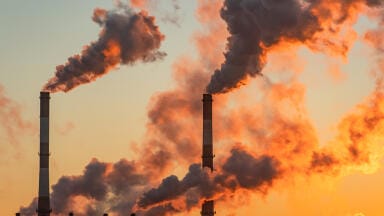
On 11 August 2026, Russia's Orsknefteorgsintez refinery in Orsk halted operations after a Ukrainian drone strike.
The strike caused a fire and damaged processing units, according to Reuters and confirmed by Ukraine's own military.
The plant has a nameplate capacity of around 115,200 barrels of crude a day, making it one of the larger refineries in the Orenburg region.
Orenburg's regional governor, Yevgeny Solntsev, said repairs could take up to six months, citing sanctions-related delays in sourcing imported replacement equipment.
For those responsible for restarting the plant, there is no simple reset button.
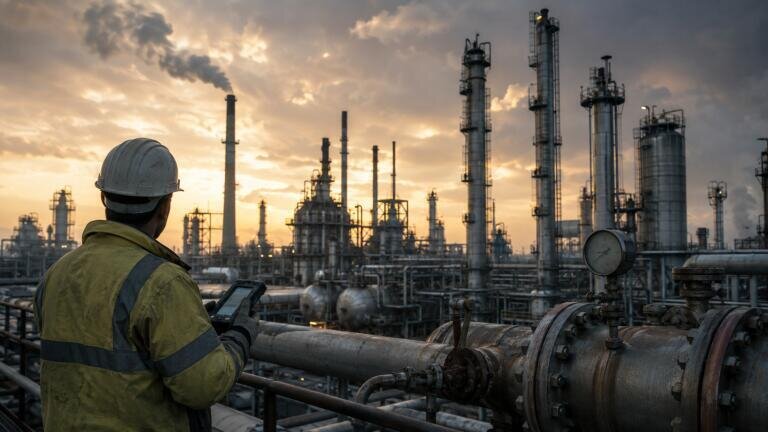
Before production can resume, operators need a clear picture of exactly what has happened inside the site.
Equipment exposed to fire and extreme temperatures needs inspection.
Piping, vessels, heat exchangers and other pressure-critical systems may need detailed integrity checks before they can be trusted with hydrocarbons again.
Instrumentation needs the same scrutiny. An analyser or sensor can look outwardly intact while heat, pressure or debris have shifted its calibration. It might report normal readings that are, in fact, wrong.
The laboratory has an equally important role in this phase. Samples can show whether process fluids have become contaminated, degraded or changed in composition during the shutdown.
Those results provide an independent check against whatever the online analysers and process instrumentation report once systems are switched back on.
Then comes the restart itself, which is rarely a single event. Units are brought back into service in a carefully sequenced order.
Bringing several process units online at once, without confirming each is stable, risks compounding a small problem into a much larger one.
Throughout that sequence, operators watch temperatures, pressures, flows and stream composition, while laboratory results act as an independent check.
This is not the first time the Orsk refinery has been targeted. Ukrainian drones previously struck the site in late April 2026, and in October and November 2025.
This forms part of a wider campaign against Russian refining and export infrastructure that has continued for several years.
Each incident adds to the same underlying operational problem: verifying, from scratch, that a damaged plant's instrumentation can be trusted before production resumes.
The refinery normally supplies motor fuels, aviation fuel, fuel oil and bitumen to the Urals and Volga regions.
Orenburg has already introduced fuel-rationing measures at petrol stations while the plant is offline.
Emissions monitoring adds another layer to the restart.
Continuous emissions monitoring systems (CEMS) covering flares, stacks and process vents typically need re-verification against a certified reference material before a regulator will treat their readings as valid again.
A unit that has been offline for months, exposed to fire and subsequently repaired, cannot simply be assumed to still meet its pre-incident calibration.
Skipping that step to bring output back online faster risks reporting emissions data that looks plausible but is not actually accurate.
It is a useful reminder that an unplanned refinery outage does not end when the fire is extinguished or the unit is isolated.
In many respects, that is when the more painstaking work begins.
For operators, engineers, inspectors and laboratory teams facing a restart of this kind, the challenge is not simply getting the plant running again.
It is making sure the instrumentation and the laboratory are telling them the truth about what is actually happening inside it.
PIN 27.5 Oct/Nov 26


 Product directory


.jpg)




















.jpg)