Hydrogen fuel
A new Brazilian study suggests the country’s hydrogen challenge is not simply where to make green hydrogen, but how to connect renewable-rich production zones with industrial demand.
For process industry suppliers, that shifts attention from electrolysers alone to the monitoring, analytical and safety systems needed to make a distributed hydrogen economy work.
A new study mapping green hydrogen potential in Brazil can be read in two ways. The obvious reading is that Brazil has strong conditions for becoming a major hydrogen producer.
The study identifies a logistical mismatch that could shape the next wave of industrial procurement. The researchers found seven clusters with high production potential and ten clusters with stronger industrial consumption potential.
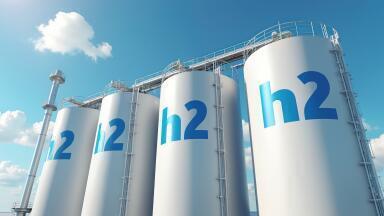
Production potential is strongest in the Northeast, while likely demand is concentrated in the South and Southeast. That means the issue is no longer just whether hydrogen can be produced competitively, but how it will be transported, stored, verified and safely integrated into industrial use.
That is what makes this a process technology story rather than a pure energy-transition one. The study itself says the main production and consumption sites do not coincide geographically and that this will require major investment in transportation and distribution infrastructure.
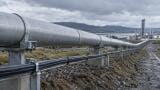
It also points to hydrogen hubs as one way of reducing losses and costs by locating production near industrial users, while noting that longer-distance options may include hydrogen pipelines, maritime transport and conversion into derivatives such as green ammonia.
For instrumentation suppliers, those are not background details. They define where measurement, control and verification requirements start to multiply.
Once hydrogen has to move through a wider value chain, process monitoring moves to the centre of the commercial picture. Electrolysis plants already depend on careful management of water treatment, purification, drying, compression and overall process efficiency.
UK regulatory guidance for hydrogen production by electrolysis says operators should identify how much contaminant must be removed to maintain the water quality necessary for effective operation, and should monitor key performance indicators such as energy consumption per kilogram of hydrogen and water consumption per kilogram of hydrogen.
It also notes that hydrogen purification requirements depend on the target product specification and residual impurities such as oxygen, water and other trace gases.
Read against the Brazilian study, that points to a broader procurement opportunity than electrolyser stacks alone. If Brazil develops multiple regional production sites and then tries to connect them to distant industrial demand, operators will need a larger installed base of flow measurement, pressure instrumentation, water-quality monitoring, humidity and gas conditioning systems, compressor controls, balance-of-plant automation and digital performance monitoring.
The study does not forecast instrument demand directly, but it clearly identifies the physical gaps that would have to be bridged. That makes it reasonable to infer that much of the practical work of scaling hydrogen will sit in the monitored systems around the core production unit.
The same logic applies to quality monitoring. In a more localised hydrogen system, product quality can be managed closer to the point of production and use.
In a geographically split system, quality assurance becomes a supply-chain issue. ISO 14687:2025 sets minimum quality characteristics for hydrogen fuel across industrial, stationary and other uses, with the standard explicitly framed around safety, performance and market confidence.
The UK electrolysis guidance likewise emphasises that purification requirements depend on product specification and residual impurities. That matters because every additional stage of storage, transport, transfer or conversion creates another opportunity for hydrogen to move off specification.
For industrial users, that means hydrogen quality will not be something checked only at the plant gate. It will increasingly have to be demonstrated throughout the chain.
In commercial terms, that suggests demand for inline analysers, lab-based confirmation methods, sampling systems and digital traceability tools able to support certification, product acceptance and contractual quality assurance.
Brazil’s legal framework for low-carbon hydrogen reinforces that direction by creating a Brazilian Hydrogen Certification System that will assess emissions intensity and record inputs, production location and life-cycle information. That is a policy signal that verification infrastructure will matter almost as much as production infrastructure.
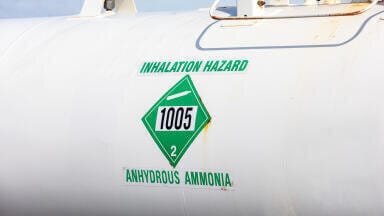
There is also a clear fuel analysis angle. The Brazilian study positions hydrogen as relevant to hard-to-abate sectors including refining, and identifies green ammonia as one possible long-distance carrier because the relevant shipping know-how and port infrastructure already exist.
That widens the technical scope from hydrogen purity alone to the analysis of hydrogen-derived fuels and intermediates moving through storage terminals, port systems and downstream industrial plants.
In other words, if Brazil’s hydrogen economy develops through carrier molecules and industrial hubs rather than simple point-of-use generation, fuel analysis becomes part of the core commercial infrastructure.
For a refining and petrochemical audience, that matters because hydrogen is not arriving as a single, isolated molecule in a policy vacuum. It is arriving through a chain that may include derivative production, bulk handling, blending, transport, storage and final industrial use.
Each of those stages has implications for composition analysis, impurity control, custody transfer and product verification. The story, then, is not only that Brazil could produce more green hydrogen. It is that the chosen route for moving that hydrogen will shape demand for the analytical systems used to prove what is actually being sold and consumed.
Health and safety monitoring may be the most immediate implication. US Department of Energy safety guidance notes that hydrogen is odourless, colourless and tasteless, and that hydrogen systems are therefore designed with ventilation and leak detection.
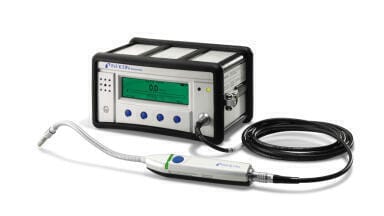
The same guidance states that the energy required to initiate hydrogen combustion is significantly lower than for common fuels such as natural gas or gasoline. UK guidance for electrolysis plants adds that operators should provide monitoring plans for emissions to air, consider venting and fugitive emissions, and implement risk-based LDAR programmes to minimise hydrogen releases.
That matters more in a distributed network than in a single, tightly bounded facility. More transfer points mean more joints, more flanges, more valves, more compressors, more storage interfaces and more opportunities for release. If hydrogen is also converted into ammonia for long-distance movement, the safety case becomes more complex again.
For suppliers of fixed and portable gas detection, flame detection, ventilation monitoring, shutdown systems and area safety controls, this is where the Brazilian study starts to look commercially significant. The study maps the geography of production and demand; the safety implication is that every kilometre between the two tends to create more monitored risk.
Brazil’s low-carbon hydrogen framework already points in this direction. The Ministry of Mines and Energy says Law 14.948/2024 established the national framework for low-carbon hydrogen, covering production, storage, transportation and commercialisation, alongside certification and incentive mechanisms including Rehidro and the PHBC.
It also launched a public call for hydrogen hubs. That policy architecture suggests Brazil is not thinking only in terms of generation assets. It is thinking in terms of a full industrial chain.
That is why the most interesting angle for your audience is not “Brazil has hydrogen potential”. It is that Brazil’s hydrogen geography points to a second-order market in the systems needed to make that potential operational. Process monitoring, quality monitoring, fuel analysis and safety monitoring are not peripheral to that story.
They are the technologies that would turn a promising regional map into a functioning industrial network. For suppliers serving refining, chemicals, fuels and process industries, the bigger procurement opportunity may lie not in the headline electrolyser build-out, but in the measurement and control layer required to connect production with real industrial use.
PIN 27.4 Aug/Sept 2026

 Product directory



















.jpg)