Fuel analysis
The UK High Court’s ruling on diesel defeat devices turned on how engines behave off the test bench. The instruments that revealed that gap are now written into type approval, and the next step moves them inside the vehicle.
Portable emissions measurement systems (PEMS) supplied the evidence that first exposed diesel defeat devices. The UK’s largest group action has now tested what that evidence means in law.
When the High Court handed down its Pan-NOx judgment on Friday, 10 July 2026, it largely cleared five car manufacturers of fitting prohibited defeat devices.
It found two unlawful strategies, one in a Mercedes calibration and one in Euro 5 Peugeot/Citroën vehicles. A damages trial for the Mercedes claims is due to start on Monday, 26 October 2026.
The legal argument centred on a measurement question. The court defined a defeat device as a strategy that senses when a vehicle is being tested.
Such a strategy makes emission controls work more effectively on the test than in other driving. Proving that requires data from both the laboratory and the road.
That evidence base began with portable instruments. In May 2014, the Center for Alternative Fuels, Engines and Emissions (CAFEE) at West Virginia University published a study for the International Council on Clean Transportation (ICCT).
The report, In-Use Emissions Testing of Light-Duty Diesel Vehicles in the United States, covered three diesel cars certified to US Tier 2 Bin 5 limits, tested on public roads.
One vehicle, fitted with a lean NOx trap, emitted NOx at 15 to 35 times the standard.
A second, with urea-based selective catalytic reduction (SCR), reached five to 20 times the standard on some routes while meeting it on others.
The third exceeded the limit by around ten times, but only on rural uphill and downhill driving.
On the chassis dynamometer at the California Air Resources Board’s El Monte facility, two of the vehicles met the standard on the FTP-75 test cycle.
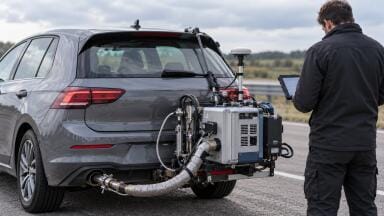
The on-road work used a PEMS that measured NOx by chemiluminescence, and carbon monoxide, hydrocarbons and carbon dioxide by non-dispersive infrared (NDIR), with an exhaust flow meter.
The US Environmental Protection Agency (EPA) issued its first notice of violation to Volkswagen on Friday, 18 September 2015.
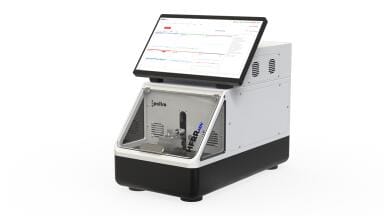
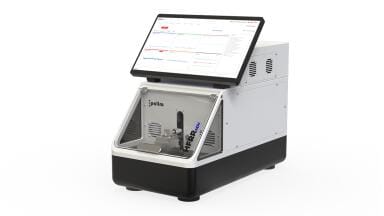
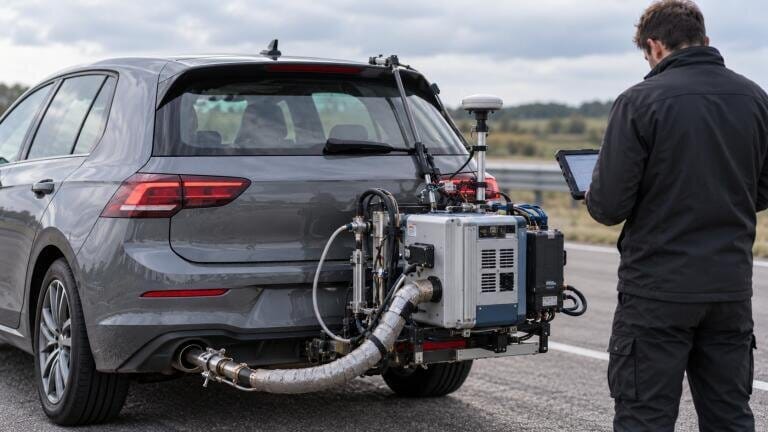
A PEMS installation combines gas analysers, an exhaust mass flow meter, a weather station and GPS, logged at 1Hz.
Commercial units measure NOx either by chemiluminescence detection (CLD), the laboratory reference principle, or by non-dispersive ultraviolet (NDUV) absorption. Exhaust flow is typically measured with Pitot-type flow meters.
Accuracy depends on concentration. A 2018 peer-reviewed comparison of three commercial PEMS against laboratory equipment, published in Applied Sciences, found NOx agreement within 5 per cent at 20ppm and above.
The difference grew to 15 per cent at 7ppm and 30 per cent at 1ppm.
That low-concentration behaviour matters as vehicles get cleaner. The lower the emissions, the larger the share of the measured value that sits within instrument uncertainty.
EU real driving emissions (RDE) rules dealt with that uncertainty directly.
The NOx conformity factor – the multiple of the laboratory limit permitted on the road – was set at 2.1 for Euro 6d-TEMP, then at 1.43 for Euro 6d.
The European Commission’s Joint Research Centre (JRC) has defined the portion above one as a margin for “the additional measurement uncertainty introduced by PEMS” compared with laboratory systems.
As JRC assessments showed that uncertainty falling, the margin was cut. Commission Regulation (EU) 2023/443 set the NOx factor at 1.10 for Euro 6e.
In effect, the size of the legal allowance now tracks the measured performance of the instruments.
Euro 7, set by Regulation (EU) 2024/1257, applies to new car and van types from 29 November 2026 and to all new cars and vans a year later.
Tailpipe limits are largely unchanged, with the diesel car NOx limit remaining at 80mg/km.
The larger change is on-board monitoring (OBM). Vehicles must monitor their own NOx and particulate emissions and detect exceedances of at least 2.5 times the limit.
They must then warn the driver and ultimately restrict operation if the fault is not fixed.
Implementing Regulation (EU) 2025/1707 sets the detailed rules. Manufacturers may use “any available data or engineering approach” – sensors, models or both.
They must also supply anonymised OBM data to authorities each year. The regulation sets no explicit accuracy requirement for NOx sensors.
The sensors most likely to carry that load are those already used to control SCR systems. They are amperometric devices built on yttria-stabilised zirconia.
One chamber pumps out oxygen. In a second, NOx is reduced and the pumping current is proportional to its concentration.
Their accuracy has plateaued at around ±10ppm, according to a 2022 review in Transportation Engineering. They are also cross-sensitive to ammonia, which SCR systems can slip.
A 2024 study in Transportation Research Part D, based on 574 trips in a Euro 6d-TEMP diesel, examined what on-board sensors miss.
It found that more than 60 per cent of a trip’s NOx information could be lost during sensor light-off after a cold start.
A 2025 analysis estimated OBM uncertainty at an average of 28 per cent of the Euro 7 NOx limit per trip, and up to 75 per cent. Sensor accuracy was the largest contributor.
Remote sensing offers a third view, measuring passing vehicles’ exhaust plumes without contact.
A 2023 ICCT analysis drew on nearly one million records from the CONOX database and the TRUE initiative’s London and Paris campaigns.
It flagged all 55 Euro 5 and 38 of 39 Euro 6 diesel engine families examined as exceeding its ‘suspicious’ threshold.
The UK consulted from April to May 2026 on aligning its new-vehicle standards with Euro 7. The Department for Transport says it is still analysing responses.
The Pan-NOx case examined vehicles approved before on-road testing was required. Since then, portable analysers have moved from research tool to type-approval instrument.
Their measured uncertainty now sets the legal margin. Under Euro 7, the burden shifts again, to sensors fitted in the vehicle that are less accurate than the analysers they partly replace.
PIN 27.4 Aug/Sept 2026


 Product directory