Gas detector
The cause is under investigation, but the incident is a reminder of the controls that tank cleaning and hot work demand.
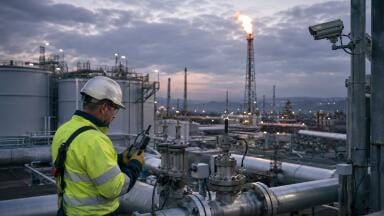
An explosion at Tank T-143 of the PPSDM Migas Cepu refinery in Blora Regency, Central Java, has killed a third-party worker.
The blast happened at around 09.30 Western Indonesian Time (WIB) on Wednesday, 18 November 2026, according to Indonesia’s Ministry of Energy and Mineral Resources (ESDM).
PPSDM Migas is the Indonesian abbreviation for the Centre for Oil and Gas Human Resources Development. Under normal conditions, the refinery serves as a training facility for oil and gas industry workers.
In a press release issued on Thursday, 19 November 2026, the ministry said the refinery was undergoing planned turnaround maintenance at the time. Cleaning work was in progress and the plant was not operating.
The worker suffered serious burns and was declared dead at 17.00 WIB the same day. The release does not name the worker or the contractor, and reports no other casualties.
Dwi Anggia, spokesperson for the ESDM ministry, said: “With a heavy heart we report that the victim died at 17.00 this afternoon.” (Translated from Indonesian.)
She added: “The refinery was not operating when the cleaning activity was being carried out.” (Translated from Indonesian.)
According to the ministry, the fire has been put out, the area has been cooled and the situation is under control.
The Directorate of Engineering and Environment within the Directorate General of Oil and Gas (Ditjen Migas) is investigating. The ministry said the team is working with law enforcement officers to establish the cause.
The ministry also addressed images circulating online. It said some photos and videos actually show a 2020 fire at the Gundih Central Processing Plant (CPP), which it described as a different incident.
The release does not say what work was being done on Tank T-143 when it exploded, or what ignited it. No cause has been published, and none should be assumed until the investigation reports.
Even without a cause, the circumstances will be familiar to refinery and terminal staff. Turnarounds bring heavy maintenance workloads, large contractor crews and tanks that are out of service but may still hold hydrocarbon residues and vapour.
The US Occupational Safety and Health Administration (OSHA) sets out the sequence of a petroleum tank cleaning job. Product and bottoms are removed, and the tank is isolated. It is then vapour- and gas-freed, and atmospheric testing follows before cleaning and other work inside or around the tank.
OSHA says acceptable entry conditions must be specified and verified throughout entry. It also advises monitoring around, above and below the tank, not just inside it.
Industry guidance covers the same ground. API Standard 2015, Requirements for Safe Entry and Cleaning of Petroleum Storage Tanks, deals with tank entry and cleaning. API Recommended Practice (RP) 2009, Safe Welding and Cutting Practices in Refineries, Gasoline Plants, and Petrochemical Plants, covers hot work.
Where welding, cutting or grinding is involved, the investigation record is extensive. In February 2010, the US Chemical Safety and Hazard Investigation Board (CSB) published Safety Bulletin No. 2009-01-SB on hot work in and around tanks.
The CSB counted more than 60 deaths since 1990 in fires and explosions during hot work on tanks. It reviewed 11 accidents, all involving hot work in, on or near tanks containing flammables. In seven of these, no gas testing was done. In the other four, testing was carried out improperly.
The bulletin sets out seven lessons: use alternatives to hot work, analyse the hazards, monitor the atmosphere, test the area, use written permits, train thoroughly and supervise contractors.
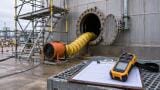
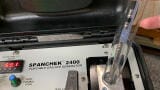
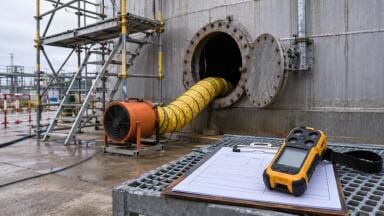
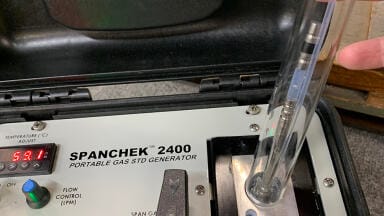
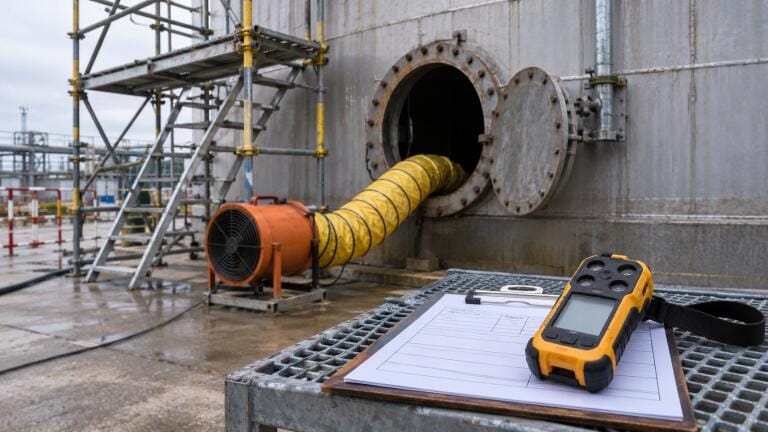
On monitoring, the CSB calls for combustible gas testing before and during hot work, even where a flammable atmosphere is not expected. Portable combustible gas detectors, often called LEL meters, are the usual tool. The bulletin notes that NFPA 326 requires work to stop if readings reach 10 per cent of the lower explosive limit (LEL).
Don Holmstrom, then CSB investigations supervisor, said: “The absence of flammables needs to be verified before and during any hot work.”
He also said: “Regulators, companies, and workers should recognize that combustible gas monitoring will save lives.”
In the UK, the Health and Safety Executive (HSE) describes permit-to-work systems as a way to control maintenance work on chemical plant and help prevent major accidents. Its guidance for major hazard sites lists hot work, vessel entry and isolation among the activities that need permits.
HSE identifies failure to follow permit terms, such as not isolating plant or draining lines, as a major hazard. It lists failure to hand plant back in a safe condition when work ends in the same way.
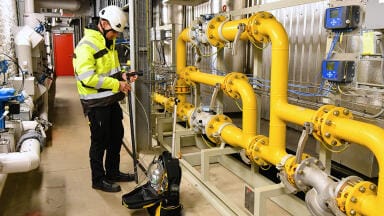
For analytical and safety staff, the practical questions are well established. Is the gas detector calibrated and bump-tested? Is testing continuous during work, or only at the start of a shift? Are readings taken wherever vapour can collect? Does the permit tie each test result to the work it authorises?
The findings of the Cepu investigation will show which, if any, of these controls are relevant to this incident. Until then, the ministry’s account confirms only a tank explosion during turnaround cleaning, and one worker’s death.
PIN 27.5 Oct/Nov 26


 Product directory