Safety
Two recent investigations by the US Chemical Safety and Hazard Investigation Board (CSB) into fatal hydrogen sulphide (H2S) releases share an uncomfortable feature. In neither case did the failure lie in detection technology itself.
It lay in when monitors were worn, whether fixed detectors worked and whether anyone was required to carry a monitor at all.
Both incidents happened during non-routine work: maintenance at a refinery and decommissioning at a catalyst recovery plant. Those are the periods when gas detection programmes are most likely to be relaxed.
The CSB published its final report on the PEMEX Deer Park Refinery release in Texas on Monday, 23 February 2026.
On Thursday, 10 October 2024, contract workers carrying out maintenance in the refinery’s Amine Unit opened the wrong flange. The line they opened contained pressurised acid gas; the intended flange was around five feet away.
The gas was around 90 per cent H2S at a pressure of around 15 psig.
The release lasted nearly an hour, and the CSB puts the quantity released at more than 27,000 pounds (around 12 tonnes).
Two contract workers died. One worked for Repcon, Inc., the contractor carrying out the line break. The other, employed by a second contractor, was working in the adjacent Sulfur Unit around 250 feet downwind.
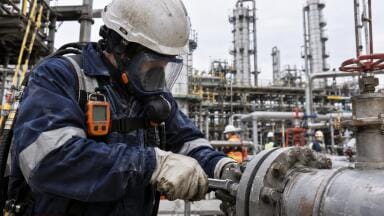
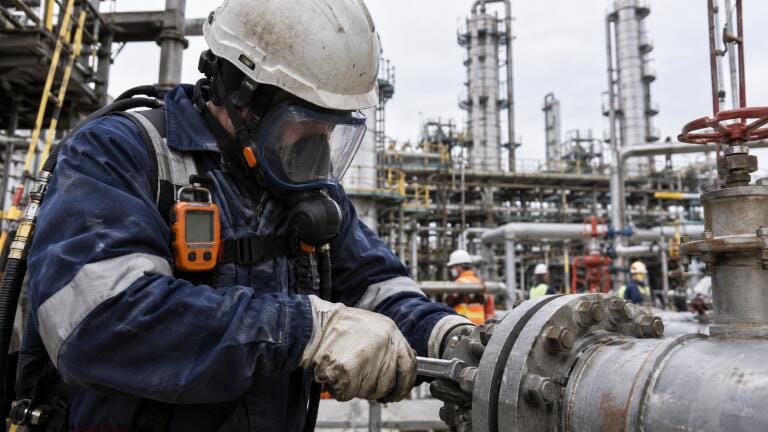
The report shows how the detection layers failed one by one. Personal H2S monitors, which alarm above 10 ppm, were required in both units.
However, the refinery’s policy did not require personal gas detectors to be worn while workers used supplied-air respirators.
Before removing the blind, the two workers took their monitors off and left them on a nearby platform.
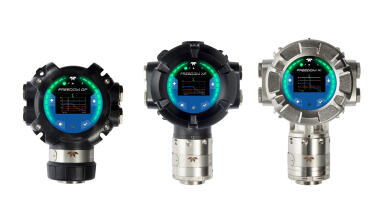
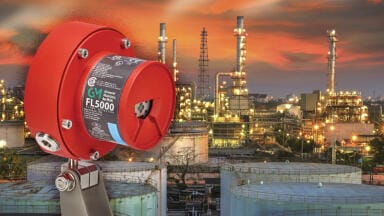
Fixed detectors were also compromised. The CSB found that the Sulfur Unit’s permanent gas detectors were not operable on the day of the incident.
One working detector had an alarm that was separate from the unit’s horns. Amine Unit monitors recorded concentrations above 50 ppm at least four minutes after the release began.
Portable monitors in the Sulfur Unit recorded more than 500 ppm, reaching nearly 800 ppm in places.
The workers in the Sulfur Unit had not been required to wear respiratory protection for their permitted work and had no escape respirators.
Their personal monitors alarmed, but one worker lost consciousness on a caged ladder and died.
The CSB attributed the incident to a failure to positively identify the correct equipment.
Its recommendations to the refinery cover piping labelling to ANSI/ASME A13.1, briefing reassigned workers on hazards and a conduct of operations system with enforceable metrics.
It also asked the American Society of Mechanical Engineers (ASME) to develop guidelines for marking equipment before it is opened.
The second case involves Catalyst Refiners, Inc., a facility in Institute, West Virginia, described by the CSB as belonging to Ames Goldsmith Corporation.
On Wednesday, 22 April 2026, the site was decommissioning its silver reclamation operations while its wastewater pretreatment system was still running.
According to the CSB’s investigation update, published on Thursday, 13 August 2026, employees pumped two proprietary products into a wastewater receiving tank.
One was a coagulant; the other was a metal precipitant whose active ingredient is sodium trithiocarbonate, which its safety data sheet lists as incompatible with strong acids. Diluted nitric acid was then added.
The reaction produced a fog and H2S vapour.
Two employees died, four were seriously injured and a shelter-in-place order covered the area within one mile. The CSB notes that 100 ppm of H2S is immediately dangerous to life or health.
The CSB found that the company did not provide, or require the use of, personal gas monitors by employees or contractors.
The respirators found on site were fitted with particulate filters that do not protect against gases such as H2S. Workers said respirator use stopped being required once decommissioning began.
The company also had no written procedure for disposing of the chemicals through its wastewater system.
The CSB has not yet issued recommendations in this case. Its final report will address decommissioning hazard analysis, personal protective equipment, onsite chemicals and corporate oversight.
Neither investigation suggests that H2S detectors failed to respond. Where monitors were present, worn and working, they alarmed. The failures were organisational.
Monitors were taken off under a policy that treated supplied air as a substitute for detection. Fixed detectors were out of service, or their alarms were not integrated with the unit’s warning system.
At Catalyst Refiners, detection was absent altogether once production stopped.
For operators and gas detection suppliers, the lesson concerns the edges of normal operation: turnarounds, line breaks, simultaneous operations and shutdowns.
These are the periods when hazards change and safeguards are most likely to be scaled back. Detection policies need to specify that monitors stay on and that fixed systems are verified before work begins.
A site moving into decommissioning should reassess its gas hazards rather than assume they have gone.
PIN 27.5 Oct/Nov 26


 Product directory