Measurement and testing
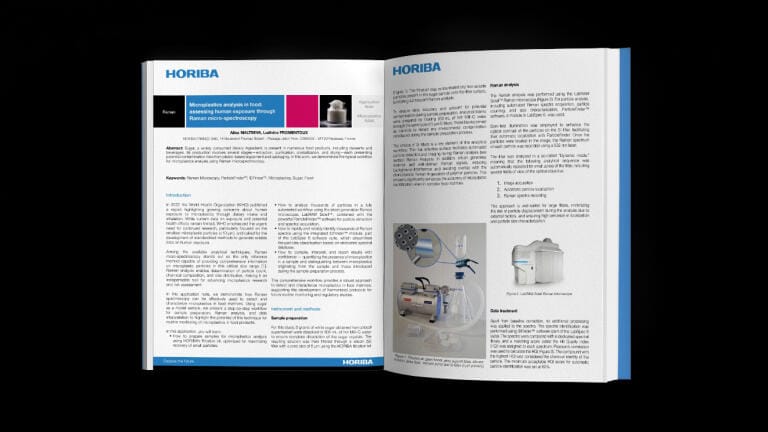
Microplastics and nanoplastics are receiving increased attention due to their potential impacts on human health. These particles can enter the body through ingestion, inhalation, and environmental exposure, with emerging research suggesting they may contribute to inflammation, oxidative stress, and disruptions to normal biological processes. Nanoplastics are of particular concern because their small size may enable them to cross biological barriers and interact directly with cells and tissues. Read our app note on microplastics in food and how Raman spectroscopy can be effectively used to detect, characterise, and quantify microplastic particles in food matrices.
To better understand the health effects of these materials, robust characterisation is essential. Identifying particle size, morphology, chemical composition, concentration, and surface properties helps researchers determine how microplastics and nanoplastics behave in biological systems, influence toxicity, and contribute to human exposure. Characterisation data also support the development of standardised research methods, enabling more accurate comparisons across studies and improving our understanding of potential health risks. As detection technologies continue to advance, researchers can gain deeper insight into particle transport, accumulation, and interactions within the body.
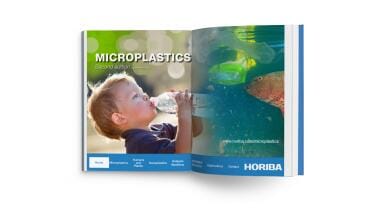
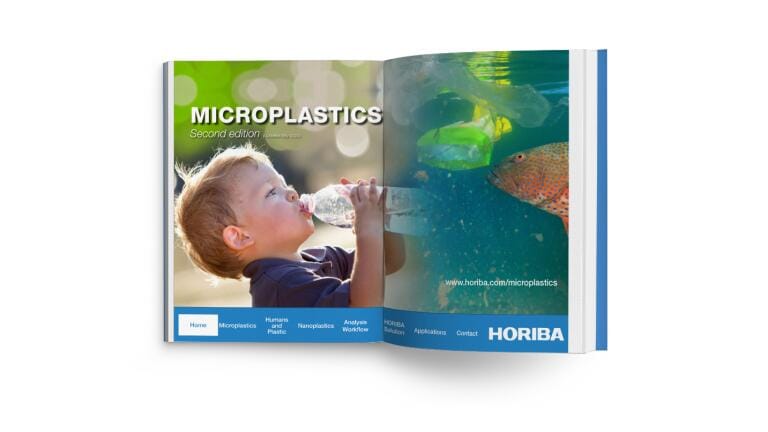
Learn how advanced analytical techniques are helping researchers address these challenges on HORIBA’s Microplastics Analysis page:
Additional Resources you can find on our microplastics webpages:
PIN 27.5 Oct/Nov 26


 Product directory