.jpg)
Measurement and testing
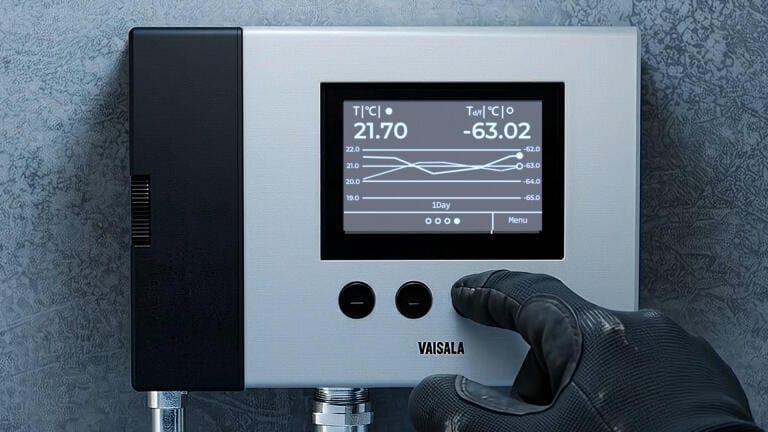
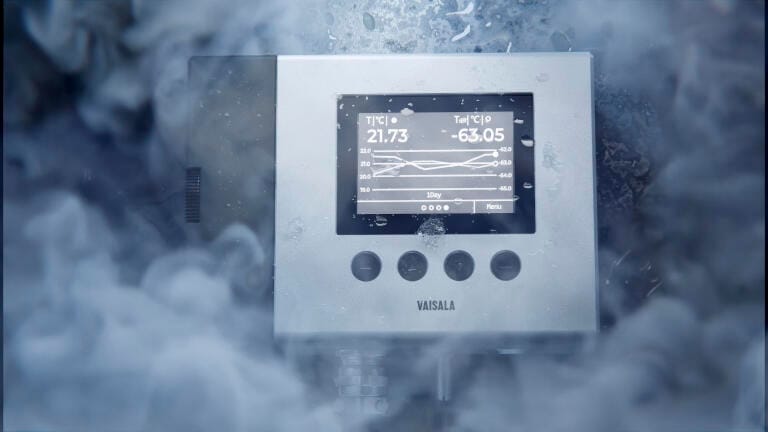
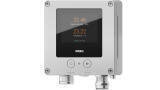
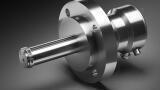
Vaisala has launched the Vaisala DMP370 Intrinsically Safe Dew Point Instrument for hazardous locations. The new instrument extends Vaisala's proven DRYCAP® dew point technology into hazardous locations.
Growing industrial gas markets increase the need for reliable moisture measurement
According to the International Energy Agency's Global Hydrogen Review 2026, global hydrogen demand surpassed 100 million tonnes already in 2025. Much of this demand comes from industrial processes where gas quality directly affects safety, equipment performance, and operational reliability.
As hydrogen and biomethane production and other decarbonized gas applications expand, reliable moisture measurement is becoming increasingly important across both new and existing gas infrastructure.
Moisture plays a critical role in many gas processes. Excess moisture can compromise fuel cell performance, reduce process efficiency, shorten equipment lifetime, and increase operational risks in gas infrastructure, electrolyzers, and industrial processing facilities. In many of these environments, only equipment certified for hazardous locations may be used.
Existing measurement solutions often require compromises
Measuring moisture in hazardous locations has traditionally involved trade-offs. Some solutions require additional protective enclosures or introduce installation constraints, depending on the protection concept and application. Other technologies periodically interrupt measurements during regeneration or heating cycles, creating gaps in monitoring data.
The new DMP370 addresses these challenges by combining intrinsic safety with uninterrupted measurement. The solution is enabled by Vaisala's proven DRYCAP® dew point technology and an innovative drift-compensation solution.
Bringing Vaisala's DRYCAP® technology to hazardous locations for the first time
The DMP370 combines Vaisala’s DMP37X probe and HMT370EX transmitter into a single intrinsically safe solution.
Intrinsic safety limits the instrument's electrical energy by design, preventing it from becoming an ignition source in explosive atmospheres.
The DMP370 measures continuously, combining fast response with long-term stability, providing operators with uninterrupted gas-quality data without measurement gaps.
"As hydrogen and renewable gas projects move from pilot installations to full-scale industrial operations, the need for reliable, continuous gas-quality monitoring is growing. Operators need measurement solutions that support both process performance and safety in hazardous locations," said Antti Heikkilä, Product Line Manager of Industrial Decarbonisation at Vaisala.
"With the DMP370, we're bringing Vaisala's proven DRYCAP® measurement technology into hazardous locations, enabling continuous dew point measurement in applications where explosion safety is essential," he added.
Designed for emerging and established industrial applications
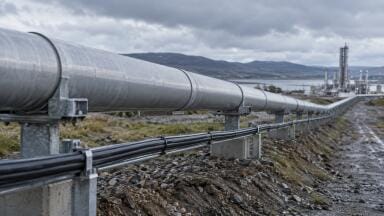
The DMP370 supports gas quality measurement and gas purity monitoring across a wide range of hazardous industrial environments, including hydrogen production, storage, fuel cell and electrolyser output monitoring, as well as natural gas and biomethane applications, such as biogas upgrading, grid injection and gas infrastructure monitoring, including natural gas pipelines. It is also suited to chemical and industrial processing, including synthetic fuels such as eSAF, methanol production, pharmaceuticals, electronics manufacturing, and oil and gas applications. In battery manufacturing, it can support dry-process applications where combustible carbon dust may be present, while compressed air and nitrogen applications include inerting, purge gas and moisture monitoring in hazardous locations.
The Vaisala DMP370 Intrinsically Safe Dew Point Instrument combines the DMP37X probe and HMT370EX transmitter into a single intrinsically safe unit. It uses DRYCAP® dew point sensor technology with an innovative drift-compensation solution and offers a measurement range of -70°C to +10°C Td/f, with typical measurement accuracy of ±2°C Td/f. The instrument operates across a temperature range of -40°C to +60°C and a pressure range of 0 to 40 bar (abs). It is certified as intrinsically safe (Ex i) for applications up to Zone 0/20 under ATEX and IECEx, and is FM approved for Class I, II and III, Division 1, Groups A, B, C, D, E, F and G, T4 in the US and Canada. A traceable calibration certificate is included. First deliveries are expected to begin in Q1 2027, with applications spanning hydrogen, natural gas and biomethane, chemical and industrial processing, battery manufacturing, compressed air and nitrogen.
PIN 27.5 Oct/Nov 26


 Product directory


.jpg)








.jpg)



.jpg)