Measurement and testing
This already exceeds the total issued across the whole of 2024 and is closing in on the 37 alerts recorded across all of 2025.
The figures come from VPS’s own testing data.
They point to an accelerating rise in fuel quality problems across the industry in 2026.
Of the 29 alerts issued so far in 2026, the combination of abrasive issues linked to elevated cat-fines and fuel stability issues accounted for 72 per cent of cases.
The ports involved were ARA, Balboa, Busan, Callao, Hamburg, Houston, Las Palmas, Philadelphia, Piraeus, Rotterdam, San Roque, Singapore and Valencia.
No marine gas oil alerts have been recorded in 2026 to date. HSFO and VLSFO account for all alerts issued so far this year.
Marine and energy consultancy Brookes Bell has highlighted a related finding from a P&I Club, reporting that bunker-related claims are up 50 per cent this year.
A significant proportion of the fuels involved technically passed ISO 8217 specification testing. The P&I Club’s findings note that some ISO 8217-compliant fuels have still caused operational damage.
This leaves shipowners managing complex evidentiary disputes after problems arise, since passing specification testing does not guarantee an absence of operational risk.
Taken together, the two datasets point to a widening gap between formal specification compliance and demonstrated operational safety.
VPS attributes the wider deterioration in fuel quality partly to disruption in Middle East supply routes, alongside sustained high bunker prices through 2026.
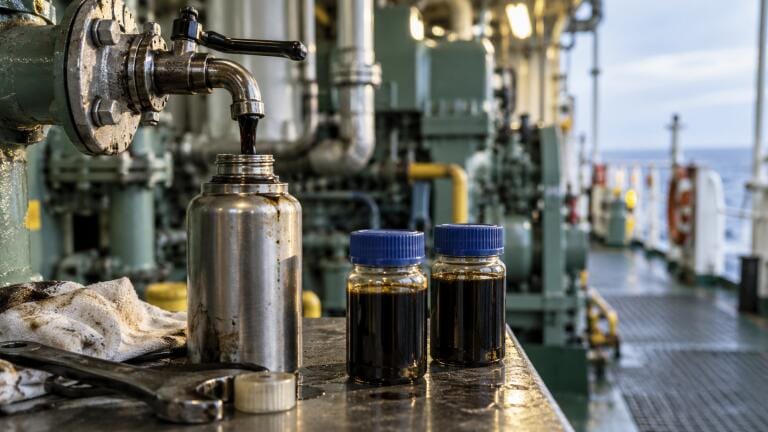
For operators, the data reinforces the value of testing beyond baseline ISO 8217 compliance. Fuel System Check services can monitor purifier efficiency and cat-fines removal to protect engines.
Separability Number testing complements hot filtration stability tests such as TSP, TSA and TSE. Together these help identify stability risk before fuel is burned.
PIN 27.4 Aug/Sept 2026


 Product directory


.jpg)













.jpg)