Fuel analysis
In gasoline blending, small differences in measurement confidence can have a significant financial impact. When refiners cannot confidently operate near composition limits, they often set larger safety margins. That can mean using less of a lower-cost constrained blendstock and relying more heavily on premium blending components. The result is product giveaway: producing gasoline that meets specifications but carries more quality margin, and potentially more cost, than necessary.
Gasoline specifications go beyond octane. Aromatics, olefins, benzene, oxygen and oxygenates can all restrict component selection. Consider an aromatics specification of 35 vol%. A blending target of 34.2 vol% versus 34.8 vol% represents only a 0.6 percentage-point difference. Yet it can change how much FCC gasoline or other constrained material a blender can use, and how much premium material is needed to balance the blend. Both outcomes can meet regulatory and octane requirements. The difference is the cost of maintaining confidence in compliance. With gasoline produced at scale, even small margins between operational targets and permitted limits can have meaningful financial consequences.
A 2025 PAC interlaboratory study evaluated repeatability and reproducibility for key gasoline composition parameters under practical laboratory conditions. At an aromatics concentration of 30 vol%, the study reported reproducibility of 0.99 vol%, compared with 1.49 vol% for ISO 22854 and 1.86 vol% for EN 18015. For olefins at 10 vol%, the corresponding figures were 0.50, 1.69 and 0.90 vol%. These results show that analytical methods do not necessarily provide the same precision. Differences in reproducibility can influence the buffers blending teams apply when operating near composition limits.
The economic effect can add up quickly. In an illustrative scenario with aromatics as the active constraint, a 0.3 vol% difference in usable blending margin could represent approximately €0.10–€0.20 per barrel in blend cost. For a refinery producing six million barrels of gasoline annually, even a €0.10-per-barrel improvement would equal €600,000 a year. The estimates are illustrative, not guaranteed savings: actual impact depends on refinery configuration, component value differences, feedstock prices and operating conditions.
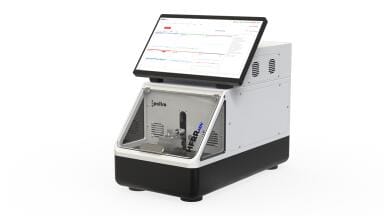
Analytical instruments are often evaluated by purchase price, throughput, maintenance and staffing needs. Those factors matter, but they do not capture the potential recurring cost of conservative blending. More precise composition information may support better utilisation of lower-cost streams, fewer adjustments and stronger confidence in compliance decisions. PAC Powered by AC Reformulyzer M4 provides gasoline composition measurements across key parameters, giving laboratory and blending teams data to help assess how closely operations can approach specification limits without compromising compliance.
For refiners and independent blenders, measurement precision is not just a laboratory performance metric. It can be an operational and economic advantage when applied consistently across refinery-scale production.
Read the full article to explore what measurement uncertainty really cost.
PIN 27.5 Oct/Nov 26



 Product directory