Analytical instrumentation
In fuel laboratories, “simplification” is often discussed as a goal: shorter analyses, fewer steps, streamlined workflows. These are valid objectives, particularly as laboratories face increasing throughput demands and staffing constraints. At the same time, gasoline itself has not become simpler. If anything, modern fuels have become more compositionally constrained and economically sensitive.
The challenge for laboratories, therefore, is not whether analysis can be simplified, but rather, where simplification supports confident decision-making, and where it introduces risk.
Gasoline is not a single substance but a controlled blend of hydrocarbons and oxygenates. Its performance, emissions behavior, and regulatory compliance are determined by the balance of group types: paraffins, olefins, naphthenes, aromatics, and oxygenates rather than by bulk properties alone.
Each step forward improved fuel performance but tightened the boundaries within which refiners operate. As a result, accurate group-type information has become central to blending, compliance, and optimization decisions.
In blending operations, analytical uncertainty has practical consequences. When laboratories lack confidence in composition data, refiners respond by introducing safety margins:
This phenomenon, typically referred to as product giveaway, can represent a significant, recurring economic impact for the refineries. Even small increases in uncertainty for regulated parameters such as aromatics or olefins can translate into meaningful margin loss when applied across large production volumes.
Precision and reproducibility are not academic metrics. They determine how closely a refinery can operate to its true constraints.
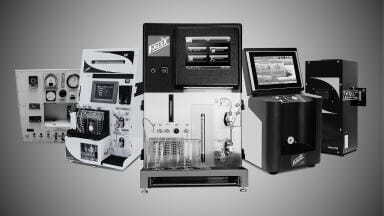
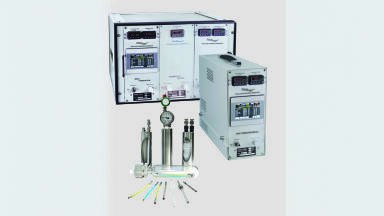
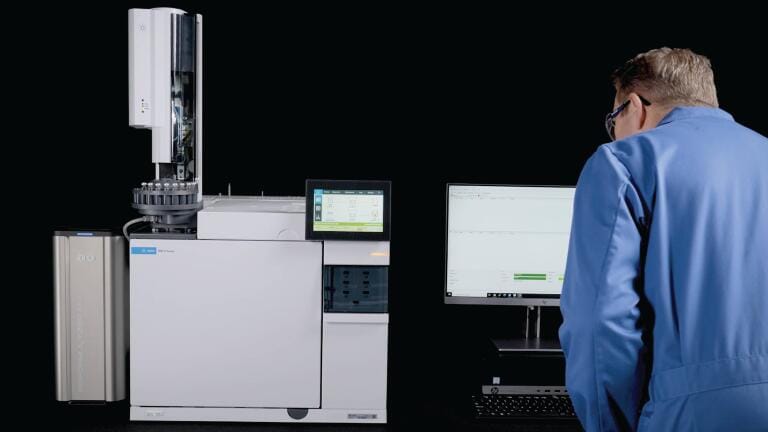
The Reformulyzer®, a multidimensional gas chromatography (MDGC) technique, was developed in collaboration with refinery experts and has been continuously optimized over the last 40 years to address the unique compositional complexity of gasoline. Its design philosophy is straightforward: separate, measure, and report each hydrocarbon group directly.
Because each group is measured independently, results remain stable as gasoline formulations evolve, maintaining consistency across changes in crude slate, seasonal blending practices, and oxygenate content.
This direct-measurement approach is also the reason multidimensional gas chromatography was selected as the basis for ISO 22854, the EN 228 referee method for gasoline group-type analysis.
Simplification has value when it supports those decisions. But when accuracy, defensibility, and blending confidence are paramount, direct, composition-based analysis remains the more reliable foundation. The question is not whether analysis can be simpler, but whether it delivers the confidence required to operate closer to the limit, with less giveaway and fewer surprises.
PIN 27.4 Aug/Sept 2026



 Product directory



.jpg)











.jpg)
.jpg)