Analytical instrumentation
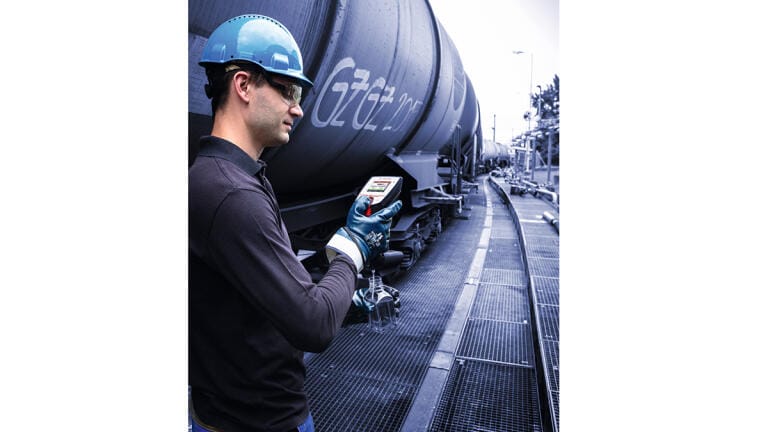
Handling petroleum and aviation fuels often means working in locations where there may be flammable vapours: at storage tanks, airport fuel farms, aircraft refuelling points, loading terminals, or on board a vessel. Taking a sample to a remote laboratory adds transport time and delays decisions. An intrinsically safe portable density meter allows the operator to perform the check directly at the sampling point, without bringing non-approved electrical equipment into the hazardous area.
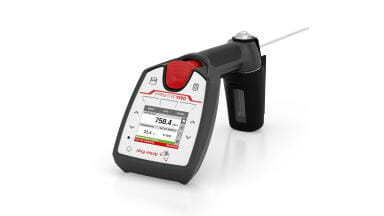
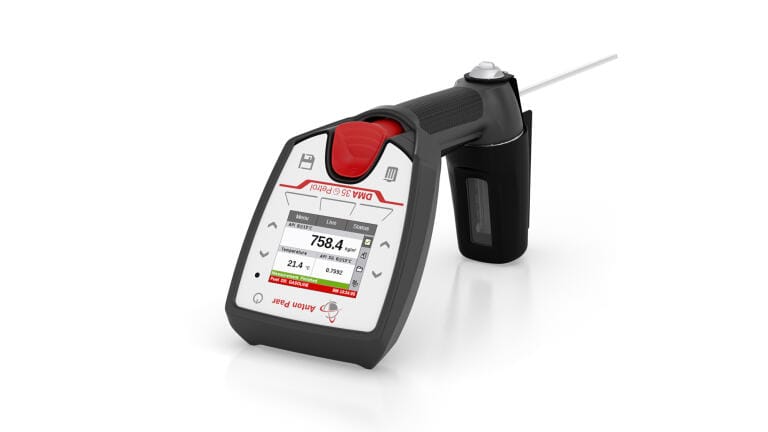
“Fuel quality checks often need to happen exactly where the fuel is handled – not later in a laboratory,” says Barbara Klug-Santner, Product Manager for DMA 35 Ex Petrol at Anton Paar. “DMA 35 Ex Petrol gives operators an intrinsically safe way to obtain a reliable, immediately usable result directly at the sampling point. By combining measurement, automatic conversion, and digital documentation in one portable instrument, we make routine fuel checks faster and simpler while reducing manual steps and potential sources of error.”
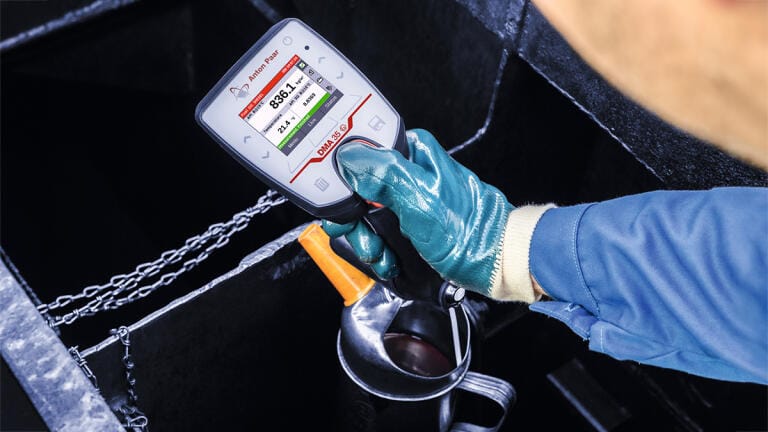
DMA 35 Ex Petrol’s ATEX- and IECEx-certified intrinsically safe design supports measurements in hazardous areas, while its petroleum-resistant materials and rugged housing suit fieldwork. The instrument requires only about 2 mL of sample and delivers density, specific gravity, or API gravity within seconds. It also complies with ASTM D7777 and IP 559. This enables product identification and plausibility checks before fuel enters a tank, an aircraft, or a ship's fuel system.
Traditional hydrometer measurements are often tied to a limited measuring range, with several hydrometers sometimes required to cover different API gravity ranges. The operator must also read the meniscus correctly, record the sample temperature, select the appropriate correction table, and convert the result to the required reference temperature. Each additional step takes time and introduces a potential source of error.
DMA 35 Ex Petrol covers the API gravity ranges typically encountered in petroleum testing with one instrument. It automatically calculates fuel-related results, including API gravity at 60 °F, according to the selected method. There is no need to search through tables or perform manual conversions: The displayed value is ready for comparison with internal limits, delivery documents, or fuel specifications.
Digital measurement shortens the overall workflow. The sample does not need to be transported to a laboratory for a routine operational check, and the operator does not have to wait for manual temperature correction or calculations. Compared with a conventional hydrometer workflow, a result can be available in approximately 30 seconds instead of several minutes. The small sample volume also reduces the amount of flammable liquid that must be handled and disposed of.
The instrument creates a digital measurement record rather than a handwritten note, storing results together with a time stamp and sample identification. Results can then be transferred for further reporting and archiving, supporting traceability and reducing transcription errors. At airport fuel farms, tank terminals, and marine refuelling points, this makes it easier to document that incoming or transferred fuel has already been checked directly at the point of operation.
By combining intrinsic safety, automatic conversion, digital documentation, and a broad measuring range in one portable device, DMA 35 Ex Petrol simplifies routine fuel quality checks. Operators can measure where the sample is taken, obtain an immediately usable API gravity result, and document the result without extra calculation steps. The outcome is a faster, more consistent workflow with less sample handling and fewer errors.
More information online.
PIN 27.4 Aug/Sept 2026


 Product directory