Analytical instrumentation
If your lab performs flash point testing for aviation fuel compliance, this topic matters more than ever. The method you use, the analyzer you run, and even instrument settings operating in the background can directly impact whether your results are valid under ASTM D1655 and ASTM D7566.
As flash point instrumentation becomes more automated and feature-rich, there is growing misunderstanding around method equivalency, correlated results, and what qualifies as a referee method result. ASTM guidance is clear: flash point methods are not interchangeable.
Some modern flash point analyzers include software that automatically converts results from one test method into an estimated equivalent for another method. In some cases, a result generated using ASTM D93 or ASTM D7094 may appear on a report as a “D56 equivalent.” While this may seem convenient operationally, ASTM D1655 Section 11.1.3 specifically states:
“Correlated flash point test results are not allowed.”
The specification further emphasizes that only the apparatus specified within each test method may be used. Even if a correlated value appears numerically close to another method, it is still not considered a valid result to conform compliance to specification.
The reason behind this is straightforward: flash point is not a fixed physical constant like density or boiling point. It is an operationally defined property influenced by test apparatus design, ignition source, heating rate, sample cup geometry, and the test procedure itself.
ASTM and IP flash point methods all contain similar language acknowledging this reality:
“Flash point values are not a constant physical chemical property of materials tested. They are a function of the apparatus design, the condition of the apparatus used, and the operational procedure carried out.”
Simply put, changing the method changes the measurement.
ASTM has also documented measurable bias between flash point methods relative to ASTM D56, which remains the designated referee method under ASTM D1655 and D7566.
According to ASTM D1655 Table 1, footnote k:
These findings are based on ASTM’s own research from 2020 on several aviation fuels.
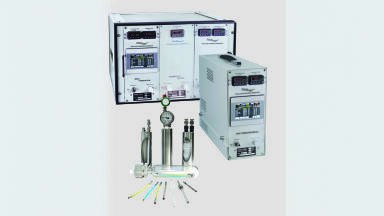
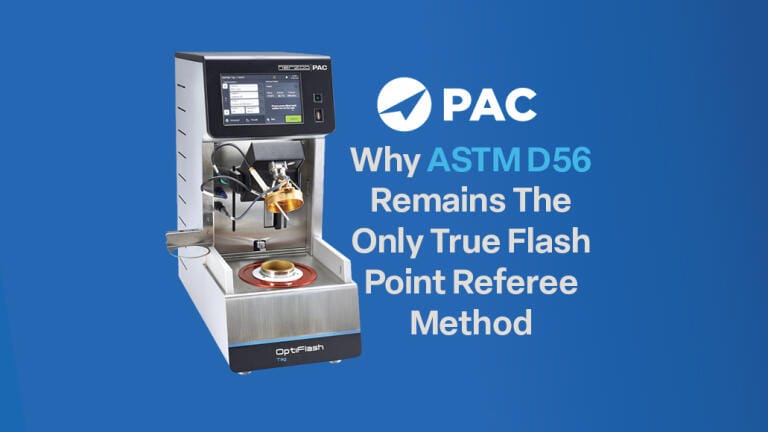
ASTM D56, the TAG closed cup tester, is designated as the referee method for aviation fuels and SAF. Meaning that in case of dispute that test method shall be leading. In addition, a flash point result should only be represented as a D56 referee result if the test was actually performed using D56 apparatus and procedure from start to finish. Results from Abel, Pensky Martens, small-scale or micro-flash point instruments remain valid for routine testing, but they are not D56 results and should not be characterized as such.
As laboratories continue navigating evolving aviation fuel specifications and flash point testing requirements, ensuring method integrity and transparent reporting becomes increasingly important.
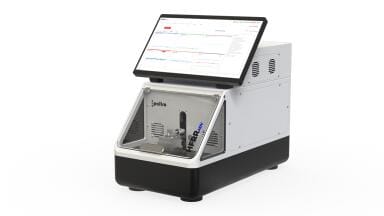
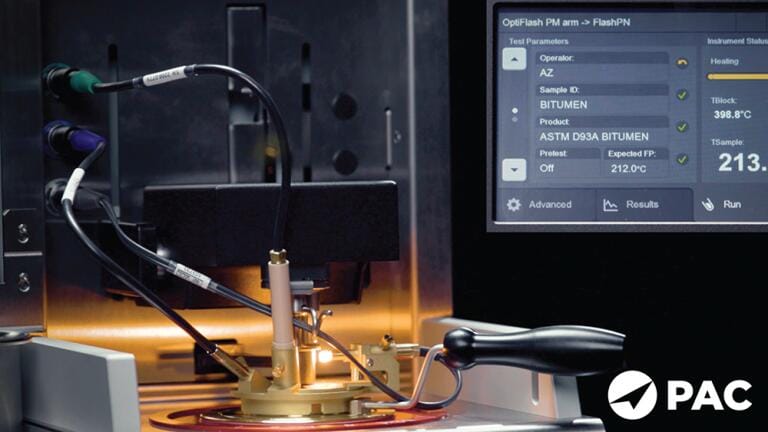
PAC’s OptiFlash is designed to support compliant flash point testing across multiple ASTM and IP methods while helping laboratories maintain confidence in method-specific reporting, operational consistency, and standards alignment.
PIN 27.4 Aug/Sept 2026




 Product directory



.jpg)











.jpg)
.jpg)