Analytical instrumentation
For nearly a hundred years, the four-ball test has been one of the lubricant industry's most trusted tools for understanding how oils and greases perform under pressure. Despite significant advances in lubrication technology, the basic principle remains remarkably simple: three stationary steel balls are immersed in a lubricant while a fourth rotating ball is pressed against them to measure wear, friction, and extreme-pressure performance. What has changed dramatically, however, is the technology used to conduct the test.
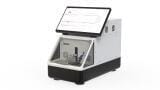
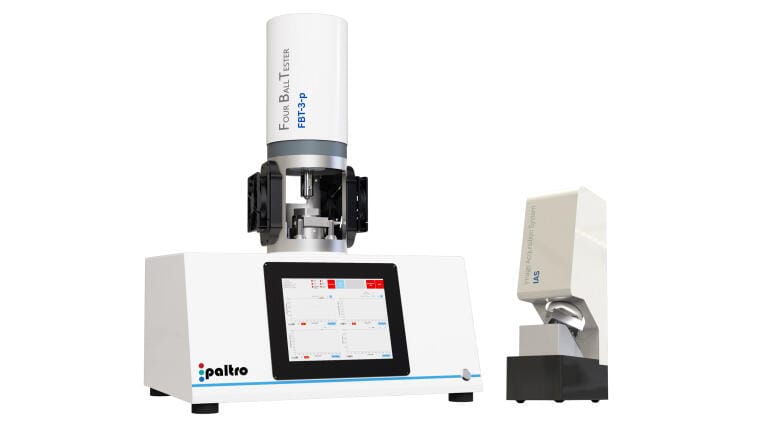
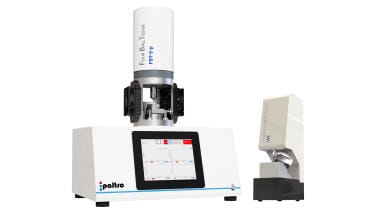
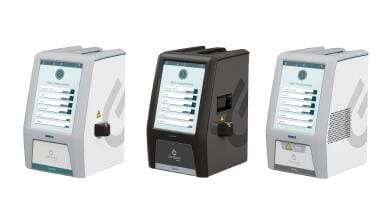
Paltro's FBT-3-p Four Ball Tester demonstrates how a long-established test method can be adapted to meet the demands of modern lubricant development. As lubricant formulators face growing challenges driven by electrification, sustainability targets, bio-based products and increasingly demanding industrial applications, the need for accurate, flexible and efficient testing has never been greater.
FBT-3-p builds on the strengths of traditional four-ball testing while introducing levels of automation and versatility that help laboratories generate reliable results with less manual intervention. Supporting a broad range of ASTM, DIN, CEC, ISO and IP standards, the system enables users to evaluate wear prevention, extreme-pressure performance and frictional characteristics across a wide variety of lubricant types. Automated loading procedures and pre-configured test protocols further help laboratories improve consistency and throughput.
One of the most notable advances in the latest FBT-3-p configuration is its ability to perform customised load profiles in addition to standard test methods. Rather than relying solely on fixed load increments, laboratories can create controlled ramp-loading programmes that continuously vary the applied load throughout a test. This capability can significantly reduce the number of separate experiments needed to determine weld load performance, saving both time and resources while providing valuable insight into lubricant behaviour.
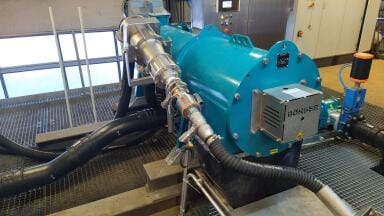
FBT-3-p features an advanced KRL shear stability module designed for diverse applications such as electric vehicles, hydraulic equipment and industrial machinery. Modern lubricants are rigorously optimized for both efficiency and durability with kinematic viscosity ranges that span several orders of magnitude from few cSt to hundreds of cSt. Such fluids need to sustain their performance over long periods of use. To meet this need, the FBT-3-p features KRL shear stability testing capabilities and can be configured for dedicated 20-hour procedures outlined in the CEC L-45-99 standard.
Long-duration testing places significant demands on temperature control, and this is another area where the platform introduces meaningful innovation. Ultralow viscosity fluids require heat input to achieve stable temperatures whereas high-viscosity fluids like VG 460 and VG 680 oils require heat extraction during shearing. An advanced temperature management system combines active cooling around the test area with a high-performance external chiller capable of both heating and cooling. Intelligent software continuously adapts to the fluid's viscosity, helping maintain stable temperatures throughout the test and ensuring compliance with stringent industry requirements.
Ease of use has also been a key consideration in the system's development. A single software interface controls both the KRL testing functions and the external chiller, simplifying operation and reducing the complexity often associated with specialised lubricant testing equipment.
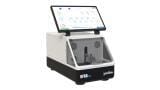
Importantly, FBT-3-p platform has been designed with future requirements in mind. Its modular architecture allows additional capabilities, including KRL shear stability testing and high-temperature operation up to 200°C, to be added as testing needs evolve. For laboratories that require a standalone KRL shear stability tester, independent of the four ball tester, FBT-3-p platform can be reconfigured to KRL-SST-p shear stability tester dedicated for shear stability testing. This flexibility enables laboratories to respond to changing standards and emerging lubricant technologies without replacing existing equipment.
While the four-ball test may trace its origins back to the early twentieth century, instruments such as the Paltro FBT-3-p show that there is still plenty of room for innovation. By combining a proven test method with modern software, automation and intelligent control systems, the platform helps laboratories meet the increasingly complex demands of lubricant development and quality assurance in a rapidly changing industry.
PIN 27.3 June/July 2026


 Product directory












.jpg)
.jpg)
-(1).jpg)