.jpg)
Analytical instrumentation
As industries seek to reduce operating costs, improve sustainability, and maximise equipment availability, used oil analysis is becoming an increasingly important part of maintenance programs. Rather than changing lubricants based solely on service hours or mileage, operators are using oil condition data to determine when maintenance is actually required.
During operation, lubricating oils are exposed to high temperatures, oxidation, fuel dilution, water contamination, soot, and wear particles. These factors alter the oil's properties and reduce its ability to protect machinery. As a result, oil may need replacement before a scheduled service interval – or remain suitable for use long after it.
Among the parameters used to assess lubricant condition, kinematic viscosity and the viscosity index (VI) are the most important. Changes in viscosity can indicate lubricant degradation, contamination, or mechanical problems, making viscosity and VI more reliable indicators of oil condition than service time alone.
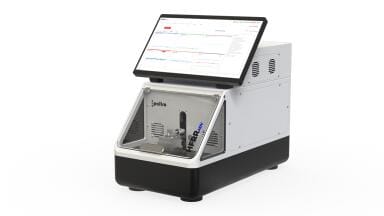
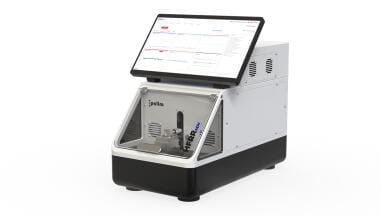
Anton Paar's SVM viscometer series enables rapid determination of kinematic viscosity ac-cording to ASTM D7042 and automated calculation of the viscosity index according to ASTM D2270. High-end models additionally determine density according to ASTM D4052, API gravity, and numerous other parameters from a single sample injection. The instruments cover a viscosity range from 0.2 mm²/s to 30,000 mm²/s and a temperature range from -60 °C to +135 °C, allowing the same system to analyse engine oils, hydraulic fluids, industrial lubricants, and gear oils.
For used oil analysis, the optional Magnetic Particle Trap (MPT) removes ferromagnetic wear particles before measurement. This improves measurement repeatability and prevents particles from reaching the measuring cells.
“Used oil analysis gives maintenance teams a more reliable basis for deciding when lubricants should be changed,” says Wolfgang Jud, [AM1.1] Product Manager for the SVM viscometer series at Anton Paar. “With the SVM viscometer series, users can determine viscosity and viscosity index quickly and using minimal sample volume. This supports routine oil condition monitoring while reducing solvent use, manual effort, and the need for multiple capillaries.”
Compared with conventional capillary viscometry according to ASTM D445, SVM instruments require less sample and solvent, provide higher throughput, and eliminate the need for multiple capillaries across different viscosity ranges. A single measuring cell covers the full measuring range, while autosampler options enable unattended operation for routine testing laboratories.
Used oil analysis is widely applied in transport fleets, industrial facilities, construction equipment, wind power plants, and dedicated oil analysis laboratories. By tracking changes in viscosity and other key parameters, operators can optimise oil drain intervals, identify potential problems earlier, reduce waste, and minimise unplanned downtime.
PIN 27.4 Aug/Sept 2026





 Product directory












.jpg)

.jpg)

.jpg)
.jpg)