.jpg)
Analytical instrumentation
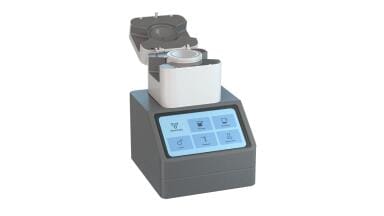
The transition to sustainable energy depends on innovative technologies and advanced materials. As renewable and synthetic fuels reshape industries, safe handling remains paramount. Because these fuels are derived from diverse feedstocks – such as vegetable oils, waste oils, and recycled materials – their chemical variability directly impacts fuel quality. Therefore, precise flash point determination is essential for the safe blending, storage, and transportation of tomorrow’s fuels.
Even trace contaminants from production or recycling processes can lower the flash point, increasing the risk of fire. Flash point testers act as critical early-warning systems, detecting changes caused by impurities and helping ensure product quality and standards compliance.
Reliable monitoring of these critical safety limits requires precision, quality, and proven expertise. Anton Paar brings together a long tradition in flash point determination with modern application expertise and technological know-how. From roots reaching back to Berthold Pensky, one of the pioneers behind the Pensky-Martens flash point tester, to advanced instrumentation and expert support, Anton Paar provides the knowledge and technology needed for reliable fuel analysis.
“As renewable and synthetic fuels become more diverse, reliable flash point testing provides essential information for safe handling and quality control. Accurate measurements help laboratories identify changes caused by contaminants and verify that fuels meet the relevant requirements,” says Dr. Andjela Djordic, Product Manager for Flash Point Testing at Anton Paar.
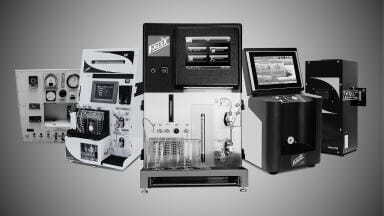
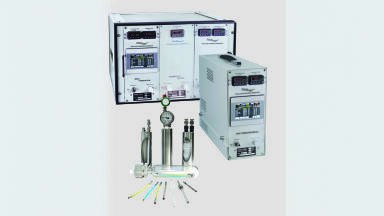
Anton Paar’s Pensky-Martens PMA 300/500 flash point testers provide accurate and reliable measurements for a wide range of fuels, including renewable diesel fuels such as HVO and GTL. For sustainable aviation fuels (SAFs), the ABA 300/500 and TAG 300/500 provide dedicated closed-cup testing options. All Anton Paar closed-cup flash point testers feature a ceramic-coated electric igniter with a lifetime up to 10 times longer than conventional igniters, helping reduce maintenance requirements and operating costs.
PMA 500 further increases laboratory efficiency with cooling times up to 20 % faster. An integrated impurity matrix for PMA 500, ABA 500, and TAG 500 helps users quickly assess contaminant content based on flash point results. PMA 300/500, ABA 300/500, and TAG 300/500 offer excellent repeatability and reproducibility across a wide range of samples.
Seamless integration into AP Connect provides users with automated data transfer, centralised data management, improved traceability, and interconnected laboratory 4.0 operations.
Anton Paar’s portfolio of flash point testers empowers fuel developers to reliably characterise renewable fuel formulations and ensure compliance with the highest standards and reliability requirements.
PIN 27.4 Aug/Sept 2026



 Product directory


.jpg)
.jpg)










.jpg)
.jpg)


.jpg)


.jpg)