.jpg)
Analytical instrumentation
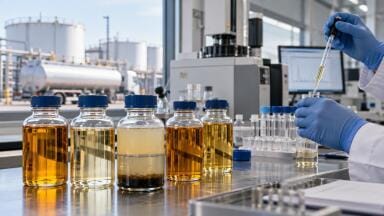
The growing use of renewable fuels is changing what petroleum laboratories need to handle. Conventional diesel and jet fuel are increasingly joined by biodiesel blends, renewable diesel, and sustainable aviation fuels (SAFs), bringing a broader range of compositions and low-temperature behavior to routine quality control and fuel development.
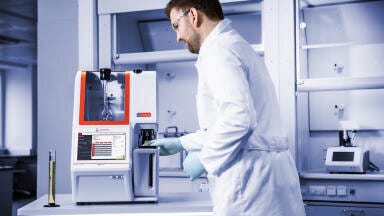
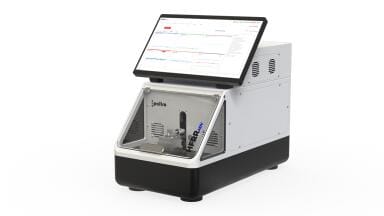
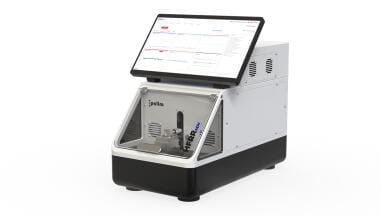
Anton Paar’s SVM series gives laboratories the flexibility to test these different fuels on one platform. Viscosity is measured according to ASTM D7042, an established alternative to ASTM D445 accepted in major fuel specifications, including ASTM D975 and EN 590 for diesel fuels. The same instrument handles everything from light distillates to more viscous samples and from routine measurements at a defined temperature to detailed temperature-dependent analysis – all without changing measuring cells.
This flexibility becomes particularly useful when working with new fuel formulations. SVM 3001 can automatically perform a temperature scan from a single sample filling, providing a more complete picture of how a fuel behaves as the temperature changes and valuable information on properties such as pumpability.
“Fuel laboratories increasingly need to work with conventional and renewable fuels side by side. The SVM series is designed to support this shift by covering a broad range of samples and measurement tasks on one platform. This helps laboratories obtain the viscosity, density, and temperature-dependent data they need without introducing additional measuring systems or more complex workflows,” said Wolfgang Jud, Product Manager for the SVM series at Anton Paar.
For jet fuel and SAF, SVM 3001 Cold Properties combines several traditionally separate tests in one automated workflow. ASTM D7042 is accepted for viscosity testing in the key aviation fuel specifications ASTM D1655 and ASTM D7566. Its integrated optical cell determines cloud and freezing point, with freezing point now standardised according to the new ASTM D8630 test method, while density is measured according to ASTM D4052. Additional properties such as viscosity borderline temperature and viscosity 3 °C above freezing point provide further insight into fuel behavior under cold conditions.
Routine operation remains straightforward: Robust metal measuring cells eliminate glass breakage, Peltier temperature control replaces conventional liquid baths, and as little as 1.5 mL of sample and solvent is required. Optional sample changers extend this workflow to unattended measurements.
Whether a laboratory is testing conventional distillates today or qualifying renewable fuels for tomorrow, SVM provides the flexibility to do both – without adding complexity to laboratory workflows.
PIN 27.4 Aug/Sept 2026


 Product directory


.jpg)










.jpg)
.jpg)



.jpg)
.jpg)