Fuel analysis
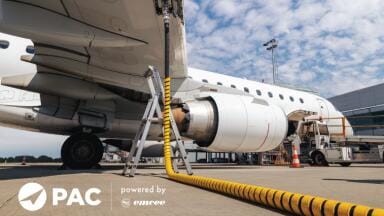
Water in jet fuel is a flight-safety problem. Left in the fuel, it can freeze and restrict fuel flow, feed microbial (“bug”) growth that fouls filters, and corrode tanks and fuel-system components. Filter-separators exist to strip that water out before fuel reaches an aircraft, and the test on your bench is meant to confirm the fuel will actually release it.
New independent data raises a serious concern: ASTM D8073 routinely reports a “pass” on fuel that D3948 and D7224 - and real filter-separator behaviour - show has lost the ability to shed water.
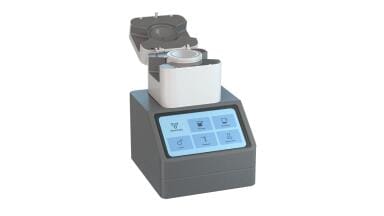
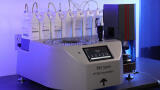
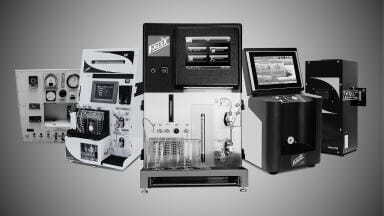
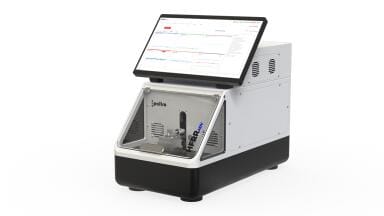
Two Different Tests. Only One of Them Separates Water. For 60+ years the Micro-Separometer (D3948/D7224) has physically forced a water/fuel emulsion through real fibreglass coalescing media and measured how much water actually got through. D8073 works on an entirely different principle: it mixes fuel, water, and a fluorescent dye, then compares the dye’s glow before and after part of the sample passes through a small disposable cartridge. No water is ever physically separated - the result is purely optical, and the dye responds strongly to only one class of surfactant.
The data tells the story. In a 2019 side-by-side study by a government aviation organisation, 62 real fuel samples were tested both ways: D8073 passed 93.5% while D7224 passed just 17.7% of the identical fuel. One Jet A-1 sample scored a complete failure (0) on D7224 and 75.2 on D8073. In a separate bench study of 72 deliberately contaminated blends, D8073 false-passed 68% of the time, versus 18% for D7224 and 10% for D3948, and never once registered a false fail.
Precision is not accuracy. D8073 is highly repeatable, but repeatability only measures whether a test agrees with itself. The standard concedes it “has no bias” only because its result is defined solely in terms of the method, a self-referential definition that can’t be wrong no matter what the fuel actually does.
What it means for your lab. A passing D8073 result is not confirmation that a fuel will separate water in an actual filter-separator, particularly for fuel with common approved additives, microbial contamination, or biodiesel cross-contamination, exactly where the data shows D8073 missing real problems. D3948 and D7224 remain tied to real coalescing performance and should be the method of record whenever water separation is in question.
PIN 27.5 Oct/Nov 26

 Product directory


.jpg)






.jpg)