Fuel analysis
Diesel fuel lubricity is an important consideration in the development and quality control of modern fuels. As sulphur levels have been reduced and fuel formulations have changed, the natural lubricating properties of some diesel fuels have also become an area of concern. Poor lubricity can increase wear in fuel-injection equipment, making reliable measurement an important part of fuel testing.
One of the established laboratory methods for assessing diesel fuel lubricity is the High Frequency Reciprocating Rig (HFRR) test described in ASTM D6079 and ISO 12156. The method is also used for evaluating biodiesel and diesel/biodiesel blends.
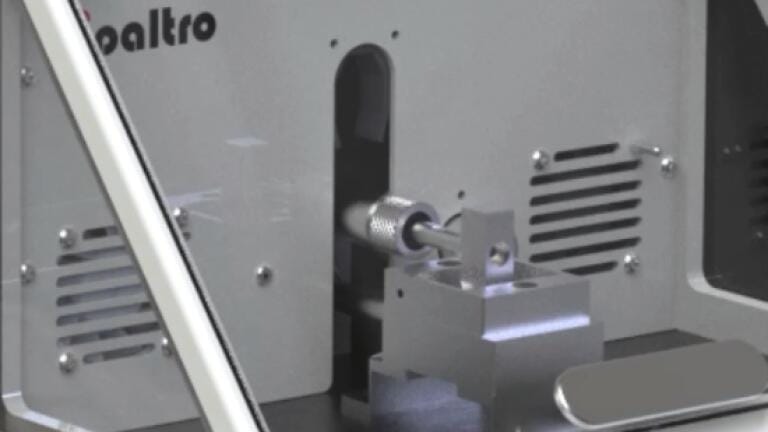
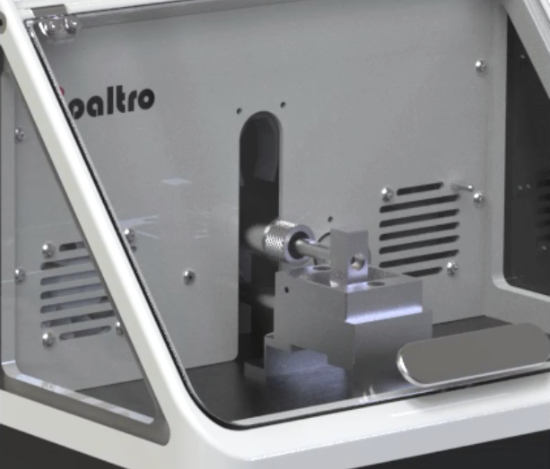
Paltro's HFRR test uses a small, controlled sliding contact to reproduce wear conditions between two metal surfaces. A steel ball is loaded against a stationary steel disc, with both surfaces immersed in the fuel sample. The ball is then reciprocated against the disc at high frequency and over a defined stroke length.
During the test, the contact between the ball and disc produces a wear scar on the ball. Once the test is complete, the wear scar diameter (WSD) is measured, normally using optical microscopy. The resulting measurement provides an indication of the lubricating performance of the fuel under the specified test conditions.
The test is highly controlled because relatively small changes in operating conditions can influence the measured wear scar. Load, temperature, stroke length, frequency, humidity, specimen condition and fuel handling all need to be controlled if meaningful comparisons are to be made.
For ASTM D6079, the ball and disc are operated under defined conditions, including a 200 g applied load and a nominal 1 mm reciprocating stroke. The sample temperature is also controlled during the test.
Humidity is an important consideration in HFRR measurements. Water vapour in the surrounding atmosphere can influence the tribological behaviour of the contact, meaning that uncontrolled laboratory humidity can contribute to variation between measurements.
ISO 12156 therefore specifies environmental conditions for the test. Maintaining relative humidity at approximately 53 ± 2% during testing helps reduce one potential source of variation.
Traditionally, achieving and maintaining these conditions has required additional laboratory equipment and operator attention. Automated systems can incorporate humidity measurement and control directly into the test enclosure, with the temperature and relative humidity monitored throughout the test.
An integrated humidity system can use separate humidification and dehumidification functions to maintain the required environment. Using distilled water rather than a salt solution also removes the need to prepare and replenish a salt-based humidity system.
The reciprocating movement of the ball is another important parameter. ASTM D6079 and ISO 12156 specify a stroke of 1 ± 0.02 mm. Any significant departure from the specified stroke can affect the contact conditions and consequently the resulting wear scar.
In an automated HFRR system, the ball holder can be driven by an electrodynamic vibrator while a linear variable differential transformer (LVDT) measures its displacement.
The LVDT provides a continuous measurement of the actual movement of the holder. This measurement can be fed back to the control system, allowing the stroke to be monitored and adjusted electronically rather than relying solely on a mechanical setting.
This approach also provides a record of the stroke achieved during the test, which can be useful when investigating anomalous results or comparing measurements between laboratories.
The contact load must also be controlled accurately. In the HFRR method, a 200 g load is applied between the ball and disc.
A conventional HFRR arrangement may use separate weights and associated loading components. An integrated configuration can incorporate the loading mechanism into the instrument itself, reducing the number of components that have to be positioned manually before each test.
The objective is not simply to simplify the application of the load, but to make the loading procedure more consistent between individual tests and between different operators.
Measurement of an unknown fuel is only useful if the performance of the test system can be demonstrated. Reference fluids therefore form an important part of HFRR quality control.
ASTM D6079 uses reference fuels with established lubricity characteristics. Low- and high-lubricity reference fluids can be used to check whether an instrument is producing results within the relevant acceptance limits.
For example, DFA and DFB reference fluids have defined performance ranges associated with their ASTM Test Monitoring Center certification. Running these materials provides a way of identifying changes in instrument performance before unknown samples are tested.
Automated test sequences can also generate an electronic record of the qualification process. This provides traceability for the reference-fluid results and creates a record that can be associated with subsequent measurements.
Automation does not change the underlying tribological principle of the HFRR method. The ball still reciprocates against the disc under a defined load, and the resulting wear scar remains the primary measurement.
The potential benefit lies in controlling the conditions surrounding that measurement.
Automated and precise control of the stroke, temperature and humidity can reduce the number of variables that depend on individual operator technique. Recording these parameters throughout the test can also provide additional information when results fall outside an expected range.
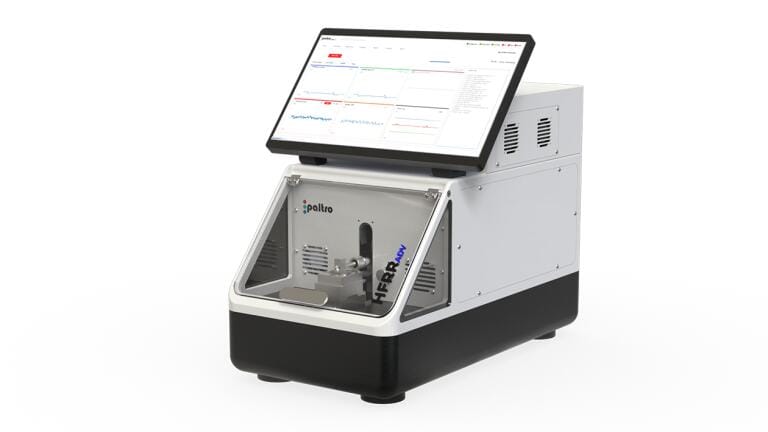
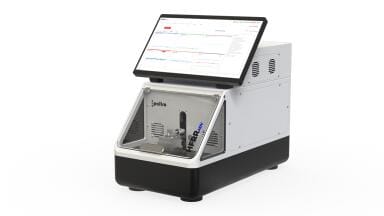
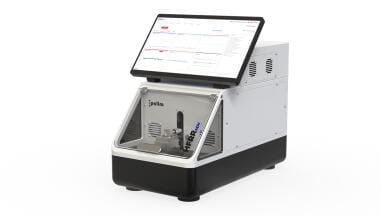
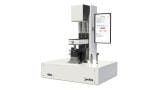
A fully integrated system such as the HFRR-ADV combines the HFRR mechanism, loading system, environmental control and electronic monitoring within a single laboratory instrument. The intention is to make the standard test procedure more repeatable while reducing the amount of manual intervention required.
For laboratories analysing large numbers of diesel and biodiesel samples, this can also help standardise the workflow between operators and provide a more complete electronic record of each test.
Measuring lubricity remains a tribological problem
Although modern instrumentation can automate much of the HFRR procedure, the fundamental measurement remains a relatively small-scale tribological experiment. The result depends on the interaction between the fuel, ball and disc under carefully controlled conditions.
Consequently, automation should not be regarded as a substitute for good laboratory practice. Specimen preparation, cleanliness, fuel handling, temperature control and accurate measurement of the resulting wear scar remain important factors in obtaining reliable results.
The value of automation is therefore largely in controlling and documenting the conditions under which the measurement is made. For a method such as ASTM D6079, where relatively small variations can influence the final wear scar diameter, greater control of those conditions can provide laboratories with a more consistent basis for comparing fuels and investigating changes in lubricity.
The HFRR continues to provide a relatively simple way of translating the complex interaction between a fuel and a metal surface into a measurable wear parameter. The challenge for modern testing systems is to ensure that the surrounding experimental conditions are controlled closely enough for differences in the fuel itself to be distinguished from differences introduced by the test procedure.
PIN 27.4 Aug/Sept 2026


 Product directory






















.jpg)
.jpg)