Fuel analysis
Jet fuel has an unusual job. It is not simply what an aircraft burns. It also serves as a heat-transfer medium, routed through hot sections of the airframe and engine to absorb heat from hydraulic, electronic and lubrication systems before reaching the combustor. In that role, fuel effectively becomes part of the aircraft’s thermal management system.
But hydrocarbons exposed to elevated temperatures and dissolved oxygen can oxidise. The resulting gums, lacquers, particulates and coke can create problems throughout a fuel system, including fouling filters, reducing heat exchanger efficiency, causing fuel-control components to stick and altering injector spray patterns.
For more than seven decades, the aviation industry has developed increasingly sophisticated ways to evaluate this behaviour.
The question at the centre of thermal oxidation testing has remained remarkably consistent: at what temperature does a given fuel begin to lose its ability to perform reliably as both fuel and coolant?
What has changed is how precisely, and defensibly, that question can be answered.
The first serious efforts to standardise thermal oxidation testing emerged in the 1950s, as jet propulsion moved rapidly from a developing technology to an operational reality.
The instrument that emerged from that era was the CRC coker, developed during the decade and accepted as ASTM D1660 in 1959. It was a substantial piece of equipment: a 330mm double-annulus aluminium chamber heated internally by a cartridge heater, followed by a heated filter housing.
Fuel flowed across the inner tube under controlled conditions while the filter housing was maintained at a higher temperature. At the conclusion of the test, the fuel was evaluated using two primary indicators: discolouration of the heated tube and pressure drop across the filter.
Those two measurements proved remarkably durable.
The apparatus itself, however, presented a significant practical limitation.
A single test consumed approximately 19 litres of fuel.
For a refinery performing release testing on successive batches, or a research laboratory comparing numerous candidate fuels, that volume made routine testing difficult. Thermal stability testing needed to become more practical if it was going to become a routine part of aviation fuel evaluation.
The next major development came from work by Al Hundere, who filed US Patent 3,670,561 in 1970 for an apparatus described as an ‘Apparatus for Determining the Thermal Stability of Fluids’.
That technology was adopted in 1973 as ASTM D3241, Standard Test Method for Thermal Oxidation Stability of Aviation Turbine Fuels.
The scientific premise had not fundamentally changed. The test still examined deposits formed on a heated surface and monitored differential pressure across a filter as particulate material accumulated. What changed was the scale. ASTM D3241 reduced fuel consumption from approximately 19 litres to less than a litre, making this test much more convenient than the previous test. ASTM D3241 subsequently became an important pass/fail test associated with specifications and requirements including ASTM D1655, ASTM D7566, DEF STAN 91-91 and Joint Inspection Group requirements.
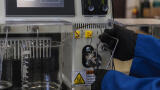
The modern procedure uses approximately 450mL of fuel, which flows across an aluminium heater tube during a 2.5-hour test at elevated temperature.
For much of the method’s history, one of its most important measurements ultimately depended on the human eye.
Following the test, the heater tube was placed inside a lighted box known as a Visual Tube Rater. An operator compared the appearance of the deposit against a plaque containing five anodised aluminium colour strips, rated from 0 to 4, with intermediate gradations available. Under the traditional system, a fuel passed when the deposit received a rating of 3 or below at the test temperature.
The procedure was straightforward but its reproducibility was extremely complicated. Researchers and practitioners documented the subjective nature of visual tube rating and the difficulty of achieving consistent results between operators and laboratories. Because many fuels fail primarily on tube deposits rather than filter pressure drop, uncertainty in measuring the tube deposit could become a significant source of uncertainty in the overall result.
In other words, a standardised test could still produce variability because the final measurement depended on who was looking at the tube.
The industry began looking for ways to replace visual judgement with quantitative measurement.
Although the principle of the test has remained relatively the same, the evolution of the testing comes from a pivot towards repeatable, measurable and defensible results rather than subjective methods.
Early approaches included photometric and video-based tube deposit raters, using cameras and controlled lighting to replace direct visual comparison.
Ellipsometry offered a way to measure the thickness profile of the deposit film, rather than simply evaluating its apparent colour. Instead of producing an operator’s visual judgement, the technique could produce numerical measurements.
Now, two fuels that might receive the same visual rating could potentially be distinguished through quantitative measurement of their deposit characteristics.
That transition eventually became part of the standard itself.
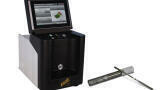
ASTM D3241 now includes metrological requirements for tube grading, specifying 1,200 measurement points across the gradable area of the tube, distributed among 24 equally spaced circumferential positions and 50 longitudinal positions. The standard recognises visual and ellipsometric grading approaches.
Under ISO/IEC 17025, laboratories are expected to demonstrate that testing conditions are controlled, measurements are traceable and results are repeatable. The credibility of a result therefore depends not only on the measurement itself, but also on the evidence supporting how that measurement was produced.
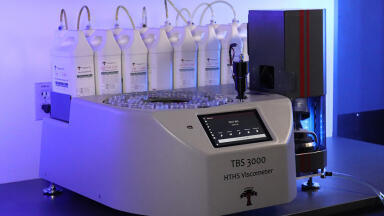
As a result, modern testing systems increasingly emphasise automated data capture, tighter temperature control, reduced operator intervention, integration between testing and analysis equipment, and serviceability. In a laboratory that relies on testing to generate reportable results, equipment availability and the ability to document its operation are integral to the testing process.
The need for thermal oxidation testing has not disappeared as aviation technology has advanced.
Aircraft systems have become increasingly complex and the thermal demands placed on fuel systems have continued to matter. At the same time, the composition of aviation fuels has diversified.
As synthetic aviation fuels have progressed, they have been evaluated for thermal stability behaviour alongside conventional Jet A. That diversification makes consistent measurement particularly important. When fuels have different compositional characteristics, the ability to quantitatively characterise thermal oxidation behaviour provides laboratories with a more detailed way to understand how those fuels respond to elevated-temperature conditions.
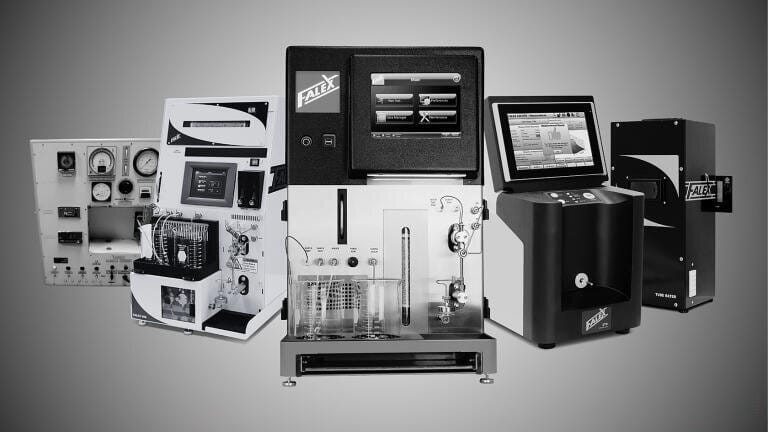
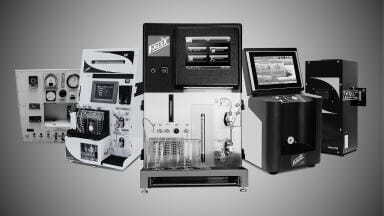
Today, thermal oxidation testing sits at the intersection of established physical chemistry and modern laboratory expectations. The physics of fuel oxidation and deposit formation has not needed to be reinvented. Instead, the surrounding measurement process has become smaller, more controlled, more automated and more traceable, with companies such as Compass Instruments supporting the evolution of thermal oxidation testing technology.
That may be the most significant evolution of all.
The test did not become more scientific. It became more provable.
In an industry where the reliability of a fuel system can depend on how that fuel behaves under heat, the ability to produce a result that can be measured, documented, repeated and defended is as important as the test itself.
PIN 27.5 Oct/Nov 26


 Product directory


.jpg)










.jpg)