Safety
It found the site had only four full‑face respirators, not all rated for hydrogen sulphide.
It also found the operator neither provided nor required personal gas monitors once the site moved from production into decommissioning.
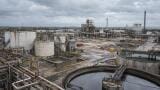
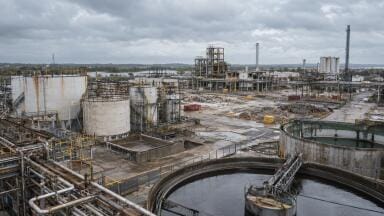
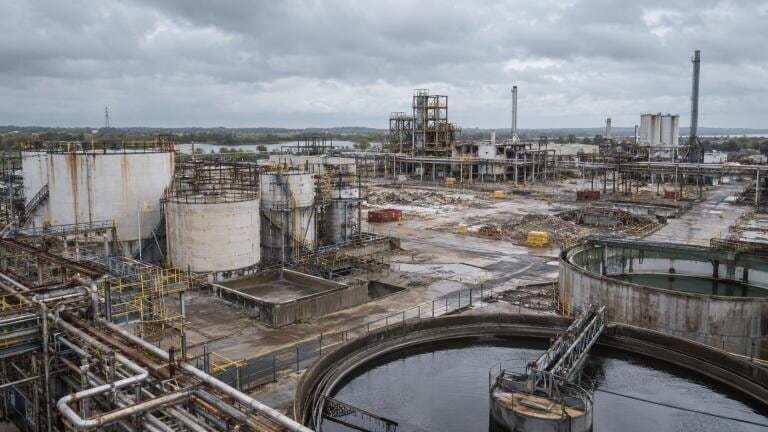
The release occurred on 22 April 2026 at the Institute, West Virginia, facility operated by Ames Goldsmith Corporation’s Catalyst Refiners, Inc.
The facility reclaimed silver from spent catalyst and manufactured silver oxide, including from ethylene oxide catalysts.
By the time of the incident it had ceased silver reclamation and was being decommissioned, though its wastewater pre-treatment system remained in operation. This is a catalyst reclamation and refining facility, not a petroleum refinery.
According to the CSB’s 13 August 2026 update, employees were disposing of onsite chemicals as part of decommissioning, without a written procedure for doing so through the wastewater treatment system.
On the day of the incident, workers pumped around 80 gallons of A‑50, a proprietary calcium chloride coagulant, into a wastewater receiving tank.
They added 275 gallons of M‑2000A, a proprietary sodium trithiocarbonate metal precipitant, to the same tank, then began pumping diluted nitric acid from a tote into it.
As the nitric acid entered the tank, workers observed a chemical reaction and a fog forming over it.
The employee operating the pump stopped the nitric acid flow, went outside for fresh air, then lost consciousness before recovering.
A supervisor who approached the tank also lost consciousness.
Two further employees who entered to assist were overcome by the vapour and later died, after one had pulled the unconscious supervisor clear.
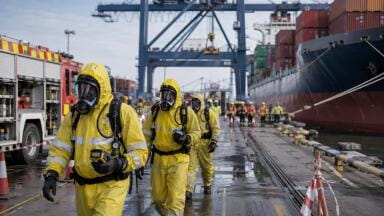
Emergency responders subsequently detected hydrogen sulphide at the site and issued a shelter‑in‑place order within one mile of the facility.
Twenty‑two people, including four responders, were decontaminated on site, and eighteen were taken to local medical facilities.
Hydrogen sulphide is immediately dangerous to life or health at a concentration of 100 parts per million.
The CSB’s update states that the four full‑face respirators found at the facility were not all equipped with filters suited to hazardous gases such as hydrogen sulphide.
Workers told investigators that respirator use was no longer required once the site transitioned from production to decommissioning.
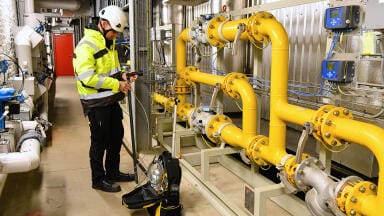
The CSB found the company did not provide or require personal gas monitors for employees or contractors during that phase.
CSB Chairperson Steve Owens said the incident “underscores the need to have clear procedures and safely manage the serious chemical hazards that can arise during facility decommissioning”.
He added that the board was concerned Catalyst Refiners neither required respirators during decommissioning, nor provided or required personal gas monitors that might have alerted workers to the hydrogen sulphide.
The CSB’s investigation remains open. The board said it will continue examining chemical hazards and incompatibilities, decommissioning hazard analysis and chemical disposal procedures.
It will also examine personal protective equipment and atmospheric monitoring, and corporate governance and oversight. Findings, analysis and recommendations will follow in a final report.
For process safety and gas detection specialists, the update reinforces a pattern the CSB has flagged before.
Atmospheric monitoring and respiratory protection requirements that apply during active production are prone to lapsing once a site moves into decommissioning.
That is true even where legacy chemical hazards and pre-treatment systems remain live.
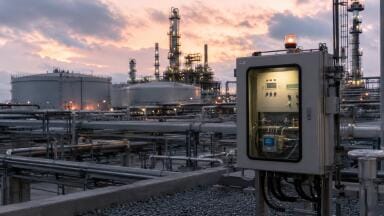
Fixed systems calibrated for a plant’s operating chemistry offer no protection against a reaction nobody had a written procedure to anticipate.
Personal gas monitoring is what catches the gap a procedure missed.
PIN 27.4 Aug/Sept 2026


 Product directory


.jpg)