Safety
Some social media and lower quality aggregator accounts have inflated that count to over 45 in a similar window and claimed an "1,800 per cent increase" against historical norms; that figure is not independently verifiable and appears to conflate two very different categories of event, so it should be treated with scepticism rather than repeated as fact.
The distinction matters.
A meaningful share of the widely reported 'surge' is war damage.
Ukrainian strikes have repeatedly hit Russian refining capacity, including repeated attacks on the Tuapse export terminal and the NORSI refinery, while the closure of the Strait of Hormuz has cut global crude throughput by an estimated six million barrels a day as facilities absorb feedstock disruption.
These are geopolitical events with safety implications but they say nothing about the condition of process equipment.
Set those aside, and a smaller cluster of accidental incidents remains genuinely instructive.
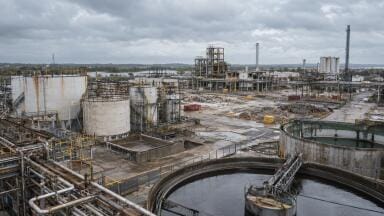
Chevron's El Segundo refinery in California suffered an explosion on 19 February; Marathon's Texas City refinery caught fire; Pemex's newly commissioned Olmeca refinery in Tabasco, Mexico, saw five workers killed on 17 March after oily water overflowed the site perimeter and ignited, then suffered a second, contained fire in a petroleum coke warehouse on 9 April; Valero's Port Arthur refinery – one of the largest in the US, processing around 435,000 barrels a day – suffered a major explosion and fire in a diesel hydrotreater on 23 March, with full recovery still incomplete months later; and Viva Energy's Geelong refinery in Australia saw flames reaching 60 metres after an April gas leak ignition.
A further incident at PBF Energy's Chalmette refinery in Louisiana in May was attributed to a heater failure in a reformer unit.
Several of these – Chalmette and Olmeca's second fire in particular – were traced to mechanical or equipment failures rather than external causes.
Analysts covering the pattern have pointed to a familiar combination: ageing infrastructure, deferred turnarounds and increasingly complex process configurations, in a market environment with thinner margins and fewer operational backups than during past oil-price shocks.
That combination raises a legitimate question for the sector's use of condition monitoring as a genuine leading indicator rather than a compliance exercise run to a fixed inspection calendar.
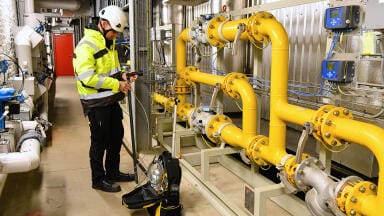
Corrosion-under-insulation surveys and guided-wave ultrasonic testing are designed to catch wall-thickness loss on piping and vessels between scheduled turnarounds.
Vibration-based predictive maintenance on rotating equipment such as pumps and compressors can flag bearing and seal degradation weeks before failure.
Continuous online process analysers tracking stream composition, catalyst activity and heater performance parameters offer the same early-warning function for process upsets that periodic manual inspection, by design, cannot provide between outages.
Where turnaround budgets are being deferred, the case for shifting weight towards this kind of continuous, sensor-based monitoring – rather than relying on inspection intervals alone – becomes correspondingly stronger.
PIN 27.4 Aug/Sept 2026




 Product directory