Safety
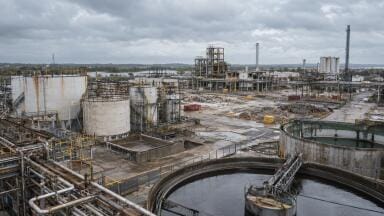
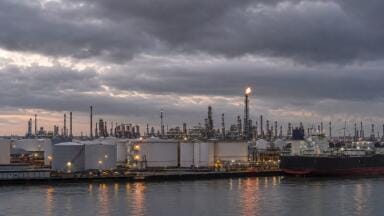
The most clearly reported refinery-adjacent impacts are at Ras Tanura in Saudi Arabia and Mina Al-Ahmadi in Kuwait.
Separate incidents at Fujairah in the UAE and Duqm in Oman did not target refineries but they are operationally critical because they sit in the fuel logistics chain, where disruption can tighten product markets even if refinery runs elsewhere remain stable.
Multiple outlets describe an attempted strike where drones were intercepted and debris caused a limited fire, with precautionary shutdowns and checks following.
On the available information, the best-supported interpretation is that physical damage appears localised, but operational disruption is still plausible because even short shutdowns for inspection, combined with renewed-attack risk, can take capacity off the table at exactly the point markets become most sensitive.
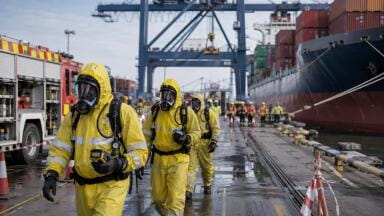
At Mina Al-Ahmadi, coverage has focused on debris or shrapnel falling within the facility area, causing minor injuries, while operator-linked statements carried by regional outlets emphasised continued operation at full capacity and no material damage. If that remains accurate, it is best read as a near-miss with real safety consequences rather than a sustained production outage.
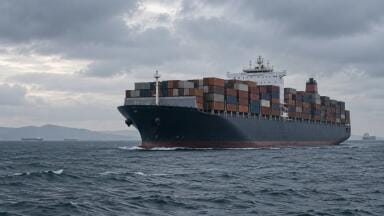
Where the story becomes more strategically important for downstream markets is the logistics layer. Market reporting sourced to Reuters via trade press indicates bunkering in Fujairah slowed and prices moved sharply, which is consistent with operational caution around storage and terminal activity and a rise in perceived risk for shipowners and traders.
A separate Reuters-syndicated report states a drone hit a fuel tank at Oman’s Duqm port, with damage contained and no casualties for that specific strike, again reinforcing the point that terminals and tankage are part of the target set even when the refinery core is not.
This matters because a limited physical impact at one site can still translate into a large supply shock if the constraint migrates to shipping and loadings. The IEA’s current overview of the Middle East energy system highlights that only Saudi Arabia and the UAE have meaningful crude pipeline options to bypass Hormuz, and those routes have limited spare capacity compared to total flows.
In 2025, most oil and oil products transiting Hormuz went to Asia, but any sustained disruption can still propagate globally through price formation and product tightness. LNG exposure is also structurally high, because large volumes of LNG, notably from Qatar, transit the strait. In parallel, Reuters reporting in Asian markets is already framing stress through distillate tightness and sharp moves in refining margins and cracks, which is how refinery-adjacent security risk can show up quickly in the economics of operations far from the Gulf.
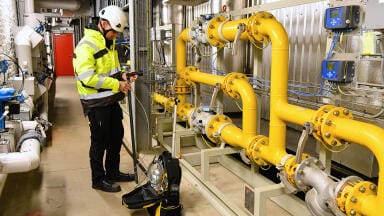
For a process monitoring and refinery instrumentation audience, the practical story is less about a single dramatic mechanical failure and more about operational resilience under uncertainty. After an interception or debris event, the hard question is not only whether there was a fire, but what changed that could fail later.
That pushes plants towards rapid, evidence-led integrity verification, where historians, vibration and condition monitoring, and carefully prioritised NDT planning matter because they help teams discriminate between “restart safely now” and “defer and inspect” decisions.
It also raises the importance of validating instrumentation performance after transients, because fast ESD events and thermal excursions can produce drift or latent issues in pressure, temperature, DP flow and level measurements, which become most costly when plants are trying to stabilise and return to normal operations.
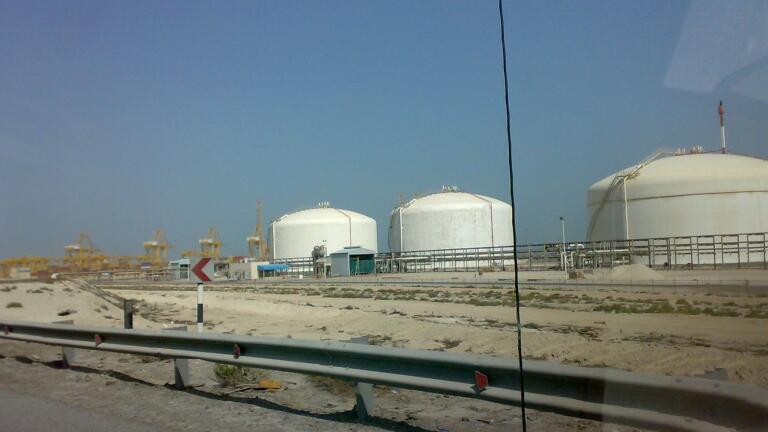
The terminal and tank farm layer deserves disproportionate attention because that is where disruption can cascade into immediate market tightness. Fujairah and Duqm reinforce that storage, manifolds, loading systems and adjacent utilities are now critical business-continuity assets, not background infrastructure.
In instrumentation terms, tank gauging reliability, independent high-high protection, and the robustness of fire and gas coverage around manifold areas, pump bays and vapour recovery become central to loss prevention and incident response. Power and communications resilience for terminal control systems also becomes a first-order concern, because degraded modes of operation are more likely when sites are operating cautiously, frequently switching configurations, or carrying out checks with reduced access.
Safety instrumented functions and ESD strategy are likely to be stress-tested if precautionary shutdowns become frequent. Repeated shutdown and restart cycles increase the value of tight proof-test discipline, rigorous management of bypasses and overrides, and a sober approach to nuisance trips versus permissive logic quality, especially when plants are operating in manual or degraded modes and operator workload rises. Alarm management becomes more than good practice in that context.
Environmental monitoring is also more operationally coupled during these events than the public narrative usually recognises. Even when a reported fire is limited, flaring, depressurisation and abnormal operating states can create short-duration emissions spikes. For sites with nearby communities or tight regulatory expectations, the ability to evidence what happened, when, and at what magnitude becomes valuable in both compliance and reputational terms.
That points readers towards flare monitoring capability, CEMS/PEMS integrity, and boundary monitoring credibility, especially when plants are asked to explain transient events rather than routine performance.
Finally, the resilience question extends beyond the fence line into spares and vendor support. If threat persists and inspections and restarts become a repeated pattern, lead times and service availability for critical measurement, detection, power-conditioning and network components matter again in a very direct way.
In practice, that can shift thinking about what is held locally, dual-sourced or what is treated as a single point of failure in the instrumentation and controls stack.
Over the next month, the signals that matter for operational audiences are the duration and pattern of any repeat attacks, whether the language from operators shifts from precautionary shutdown to repairs required, and whether shipping and bunkering disruption persists in ways that point to sustained logistics constraints rather than one-off incidents.
In parallel, distillate pricing and margins are worth watching because they are a fast proxy for how quickly refinery and logistics risk is tightening the system, and IEA or government stock-release signals matter because they can moderate physical shortages even if the risk premium remains elevated.
PIN 27.4 Aug/Sept 2026



 Product directory



.jpg)