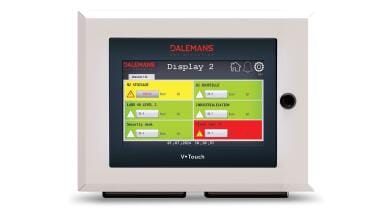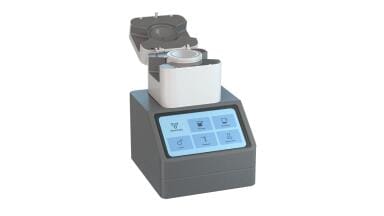
Gas detector
Petrochemical operations have long struggled with the monitoring of long, linear assets such as transfer lines and perimeter infrastructure.
Point sensors provide high-quality local data, but they leave large gaps between measurement locations.
Distributed fibreoptic sensing offers a fundamentally different approach, turning entire lengths of fibre into continuous sensors capable of detecting acoustic and thermal phenomena along their route.
Distributed acoustic sensing, in particular, has attracted growing attention.
By analysing backscattered light in standard fibre-optic cables, DAS systems can detect vibrations and sound signatures associated with leaks, impacts, or third-party interference.
In recent years, improvements in signal processing and pattern recognition have made these systems far more usable in industrial settings.
For petrochemical operators, the appeal lies in coverage rather than precision. DAS does not replace conventional instrumentation, but it provides early warning of events that might otherwise go unnoticed until secondary indicators, such as pressure imbalance or visible damage, appear. This can significantly reduce detection times for leaks or mechanical disturbances.
Distributed systems generate vast quantities of data, much of it uninteresting. Turning raw acoustic signals into actionable events requires well-trained classifiers and careful tuning to local conditions.
Deployment choices also matter. Fibre can be installed internally within pipelines, externally along their length, or integrated into existing communications infrastructure.
Each approach has trade-offs in instability. As a result, many operators are conducting targeted trials to understand which configurations make sense for their specific assets and risk profiles.
Early DAS deployments were often experimental and isolated. Today, they are increasingly integrated into broader monitoring frameworks, feeding alerts into control rooms and maintenance workflows.
PIN 27.4 Aug/Sept 2026


 Product directory
























.jpg)