Safety
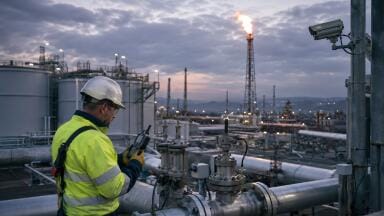
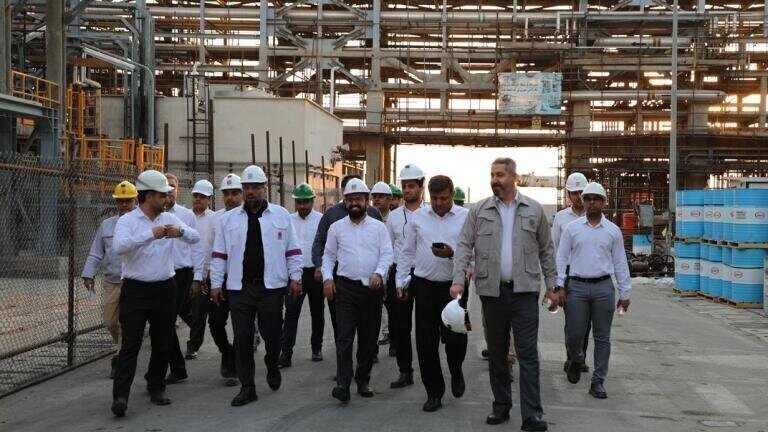
Industrial safety is being reshaped by embedding wearable technologies into refinery and petrochemical operations.
As operational complexity and environmental risks increase, firms have taken a proactive stance to safeguard its workforce through the development and deployment of an advanced worker monitoring system.
Let's explore how smart helmets equipped with biometric and IoT-enabled capabilities can protect workers in our industry.
At the centre of these initiatives are integrated digital safety solutions that aggregates real-time data from workers' personal protective equipment (PPE), location tags, and environmental sensors into a centralised, cloud-connected dashboard.
These platforms enable continuous visibility over field personnel and allows safety teams to respond to hazards dynamically, based on real-time alerts rather than delayed reports or periodic checks.
One of the most significant upgrades to these platforms came in 2024, when firms began rolling out an enhanced generation of smart helmets that incorporate core body temperature sensors.
These sensors are designed to measure a worker’s internal thermal condition in real time, offering a direct view into heat strain risk that traditional ambient temperature readings cannot provide.
This innovation is particularly critical in the Gulf region, where daily temperatures during summer months often exceed 45°C.
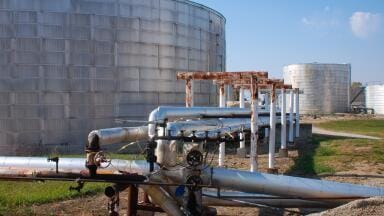
Workers at sites are regularly exposed to intense heat in outdoor processing units, pipelines, tank farms, and construction zones.
Under such conditions, the risk of heat-related illnesses, including heat exhaustion and heat stroke, is high and conventional safety protocols based on fixed hydration or rest intervals are insufficient.
By integrating core temperature monitoring into wearable headgear, these systems can now detect early warning signs of heat stress on an individual basis.
The helmet sensors communicate with data infrastructure wirelessly, transmitting alerts when body temperature crosses a defined threshold, such as 38.0°C.
These alerts are relayed instantly to on-site safety supervisors, who can mandate immediate cooling interventions, such as removing the worker from the hot zone, initiating rest cycles, or deploying mobile cooling units.
The inclusion of an IoT sensor platform within the helmet adds a complementary layer of spatial and behavioural insight.
The module tracks real-time worker location, motion, and duration of exposure in heat-intensive areas.
Combined with body temperature data, this creates a high-fidelity risk profile for each worker.
For example, a worker who has remained in a high-exposure area for more than 90 minutes with rising core temperature can be proactively flagged before symptoms arise.
This system also enables site-wide heat risk analytics.
The digital dashboard aggregates data from hundreds of helmets, allowing safety managers to map thermal stress hotspots across the facility, evaluate compliance with rest schedules, and revise workflows or shift patterns accordingly.
Over time, this data can be analysed to optimise plant design and operations. For instance, by identifying process areas that require additional shading, ventilation, or automation to reduce human exposure.
Field deployment of these helmets has already demonstrated measurable safety gains.
In several pilot locations, including gas processing and downstream storage sites, a significant reduction in heat-related incidents have been reported.
Supervisors noted that real-time alerts led to earlier interventions, reduced medical visits, and fewer near-misses compared to prior years.
In particular, the system proved critical during the 2024 summer heatwave, which saw record-breaking temperatures across the Gulf.
Crucially, the integration of biometric data into PPE is not viewed as an isolated technical upgrade, but as part of a broader transformation of safety culture.
The company has embedded these technologies into its daily operational rhythm: shift briefings now include reviews of biometric trends from the previous day, rest cycles are dynamically adjusted based on real-time data, and safety drills incorporate smart helmet usage and alert responses.
From a technology standpoint, this approach exemplifies the convergence of occupational health, IoT infrastructure, and AI-based risk management.
The data captured by helmet sensors feeds into machine learning models that predict risk escalation based on environmental factors, worker history, and physiological readings.
This allows the company not only to respond to individual incidents, but to anticipate broader risk patterns, an essential capability for managing large workforces across sprawling industrial complexes.
The privacy and data security of workers have been carefully considered in the system design.
Personal biometric data is anonymised when used for facility-wide analytics, and access to real-time alerts is limited to designated safety personnel.
Workers receive training on how the helmet systems function, what data is collected, and how it is used solely for health and safety purposes.
According to feedback collected during internal surveys, employees have largely welcomed the technology, citing enhanced trust in the organisation’s commitment to health protection and faster response times during elevated heat periods.
The adoption of heat-sensing smart helmets has drawn international attention and is being closely watched by operators in similar climatic regions, such as the UAE, India, and parts of Southeast Asia.
The initiative aligns with global occupational health guidelines from bodies like the World Health Organisation (WHO) and the American Conference of Governmental Industrial Hygienists (ACGIH), which have called for the use of wearable heat stress indicators in high-risk work environments.
Looking forward, there are plans to expand the scope of wearable sensing to include additional biometric markers such as heart rate variability, skin temperature, and hydration level, further enhancing the granularity of its risk detection framework.
The company is also exploring the integration of this data with digital twin models of operational assets, allowing simulations that account not only for mechanical stress points, but also for human exposure hotspots.
In sum, the deployment of heat-sensing helmets represents more than a safety upgrade.
It signals a shift toward personalised, data-driven workforce protection in high-risk environments.
As environmental stressors intensify under climate change and operational expectations rise, such wearable systems are poised to become standard components of industrial safety architecture.
For refineries and petrochemical plants worldwide, this model offers a real-world template for how to fuse human-centric design with digital infrastructure to achieve next-generation safety outcomes.
PIN 27.4 Aug/Sept 2026


 Product directory


.jpg)