Flow level pressure
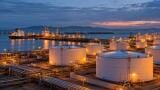
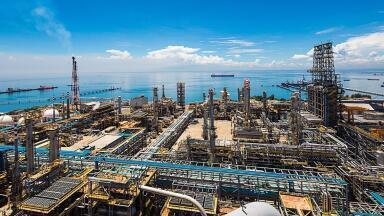
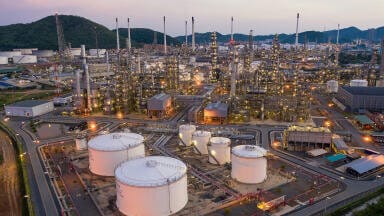
New complexes like the Amiral project in Saudi Arabia exemplify a global trend: blending refining and chemical production into a single, highly flexible operation.
This shift places new demands on process monitoring systems, which must now manage increased feed variability, tighter product specifications, and deeper interconnectivity across traditionally separate domains.
Below are the key areas where instrumentation and analytics must evolve to support integrated C2C operations.
C2C plants operate with a wider range of feedstocks, including naphtha, ethane, LPG and refinery off-gases, each requiring precise, real-time characterisation.
Online mass spectrometers and spectroscopic analysers must deliver high-frequency compositional data to accommodate frequent switching and blending.
Analytical precision is critical: even minor shifts in paraffin-to-olefin ratios or sulphur content can impact cracker selectivity and downstream yields.
Unlike traditional fuels-focused refining, C2C requires granular tracking of individual hydrocarbon species.
Ethylene, propylene, aromatics, and C4/C5 fractions must be continuously monitored at various process stages.
Inline analysers capable of identifying olefin/paraffin ratios and trace contaminants are central to yield optimisation and grade compliance.
Steam crackers, the core of many C2C schemes, operate with narrow process windows and high sensitivity to feed composition and temperature.
Coil outlet temperature and coke build-up must be continuously tracked.
Operators increasingly rely on infrared thermography and acoustic sensors to extend furnace uptime and maintain product consistency.
C2C complexes leverage tight energy integration between refining and chemical units, demanding more rigorous utility monitoring.
Heat exchanger performance and steam-to-feed ratios require advanced sensors and data-driven oversight.
Real-time tracking of condensate and fuel gas flows becomes essential for stable, efficient operation.
Because C2C sites adjust output in response to market signals, switching between gasoline, LPG, olefins or aromatics, monitoring systems must support flexible product routing and quality control.
This includes inline purity analysis and reconciliation software that tracks component flows across complex production paths.
Advanced process control (APC) becomes more valuable and more complex in C2C environments.
Cracking, separation and polymer feedstock units must be linked into unified APC frameworks, often supported by digital twins and model-predictive control systems.
Monitoring networks must be time-synchronised and interoperable across unit boundaries.
With increased volumes of reactive and high-value products, such as ethylene or benzene, safety-critical sensors and emissions monitoring become even more vital.
Gas detection systems and fence-line monitors must meet heightened standards, while product traceability systems must document lifecycle emissions and quality metrics for downstream buyers.
Crude-to-chemicals integration transforms the traditional refinery into a multi-product, high-purity chemical producer.
Meeting its operational goals requires not just new reactors and crackers but smarter and more integrated process monitoring systems.
As this model gains global traction, instrumentation will sit at the core of safe, efficient C2C performance.
PIN 27.5 Oct/Nov 26


 Product directory


.jpg)










.jpg)