Flow level pressure
Can monitoring technologies keep pace with new trading regimes and safety demands?
In the petrochemical world, vapour pressure has long been treated as a routine measurement.
It sits on spec sheets, compliance checklists and fuel trading contracts, but rarely draws the attention that flow, level or emissions do.
Yet vapour pressure defines how a liquid behaves: whether it evaporates safely, whether it can be shipped legally, whether a tank farm stays within design tolerances.
Until recently, most operators measured vapour pressure periodically in the lab, using standardised bench tests such as ASTM D323 or D5191.
These snapshots were enough to satisfy regulators and refiners in an era of relatively stable crude and product streams. But the game is changing.
Two forces are elevating vapour pressure from an afterthought to a critical control parameter.
The first is the tightening of product standards.
For example, the International Maritime Organization’s sulphur cap made vapour pressure a proxy for fuel blend volatility, and aviation fuels face increasingly strict volatility windows to balance cold-start reliability with safety in storage.
The second driver is feedstock variability.
With refineries processing a growing mix of unconventional crudes, pyrolysis oils from plastics recycling and bio-based components, the volatility profile of final products is far less predictable.
Blending streams with different vapour pressures can trigger off-spec batches, costly reprocessing or even safety hazards if tanks exceed design limits.
Suddenly, vapour pressure isn’t just a lab number — it’s a frontline variable that shapes trade, safety and compliance.
This shift is pushing new generations of vapour pressure instrumentation into the process environment. Inline and online systems are starting to complement the laboratory.
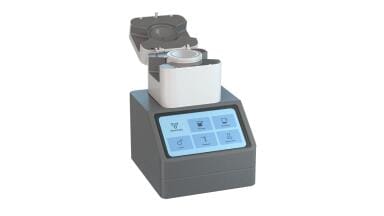
Online vapour pressure analysers use miniaturised expansion chambers or advanced correlators to deliver continuous volatility data during blending operations.
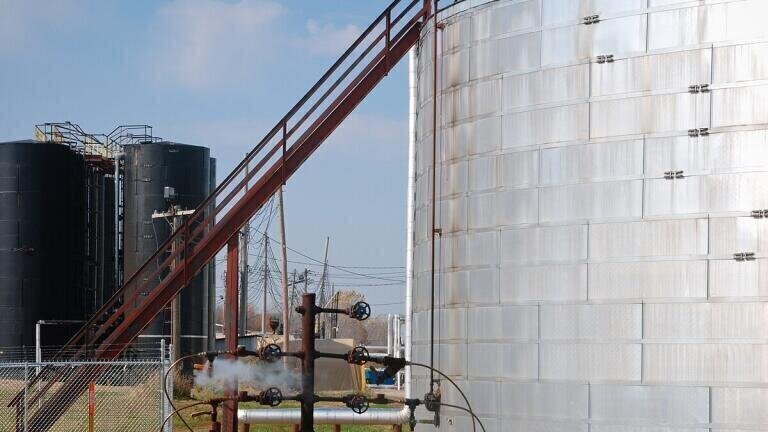
Tank farm monitoring systems are integrating pressure sensors, temperature probes and predictive models to flag when storage conditions might breach volatility limits.
Even advanced gas analysers are being adapted to measure dissolved gases and light-end fractions that can skew vapour pressure readings.
Together, these technologies are moving volatility from something checked after the fact to something operators can manage in real time.
There is also a commercial undercurrent. Vapour pressure is increasingly being seen not just as a quality metric but as a trading parameter, much like sulphur content in shipping fuels.
Off-spec volatility can lock cargoes out of particular markets or invite penalties from counterparties.
As carbon intensity reporting expands, volatility could also factor into emissions accounting, since evaporative losses directly influence fugitive VOC totals.
This puts instrumentation professionals in the unusual position of safeguarding both process integrity and financial integrity.
A tank gauge or inline analyser error is no longer just a technical glitch — it can distort trade flows and carbon credit calculations.
Biofuels illustrate the point vividly. Ethanol blends exhibit volatility behaviours that shift with temperature, blend ratio and even feedstock origin.
Similarly, pyrolysis oils from plastics recycling often contain high levels of light-end components that can cause pressure excursions.
Producers are discovering that conventional lab-only monitoring is inadequate.
Inline vapour pressure monitoring is becoming essential to keep shipments within regulatory bounds and avoid tank farm surprises.
For compliance officers, this means volatility must now be tracked with the same seriousness as sulphur or benzene content.
Despite progress, several gaps remain. Laboratory methods such as ASTM D5191 do not always correlate neatly with online or inline measurements, creating uncertainty in custody transfer.
Cryogenic fuels such as LNG or liquid hydrogen present further challenges, since conventional sensors may not capture transient volatility shifts during phase change.
And many plants still rely on stand-alone volatility instruments, leaving operators with siloed data rather than a consolidated process view.
Closing these gaps will be essential if vapour pressure is to take its place alongside flow and emissions monitoring as a fully trusted operational metric.
Looking forward, the integration of machine learning with vapour pressure monitoring may provide a step change.
By feeding volatility data into blending algorithms, predictive systems could anticipate off-spec outcomes and adjust inputs automatically.
Some pilot projects are already testing AI-driven volatility management at tank farms, where algorithms balance product quality with evaporative loss prevention.
For instrumentation suppliers, this opens a new competitive frontier. It is not just about accurate sensors but about decision-support ecosystems built around volatility.
For decades, vapour pressure was relegated to the fine print of compliance manuals.
Today, it is being pulled centre stage by a volatile mix of tighter product standards, variable feedstocks and emerging trading regimes.
For lab technicians, this means adapting to new instrument platforms and bridging the gap between bench and process.
For plant managers, it means treating volatility as a live operational parameter rather than a static lab report. And for compliance officers, it means recognising that vapour pressure now sits at the intersection of safety, quality and financial accountability.
Volatility used to be something to be checked at the end of the process. Now it’s something we manage every hour.
PIN 27.5 Oct/Nov 26


 Product directory



.jpg)











.jpg)






.jpg)