Flow level pressure
From protecting pumps and nozzles to ensuring final product clarity, filtration is everywhere.
But most facilities have only a vague schedule for replacing filters, relying on pressure drop triggers or visual inspection.
Rarely do facilities deploy direct, real-time measurement of what the filters are actually removing.
That’s a missed opportunity.
Inline particle monitoring can extend component life and reduce waste.
So, why is it still missing from so many systems?
Over-filtration, using finer filters than necessary or replacing them too frequently, might seem like a cautious approach.
But it carries real operational penalties, like higher pressure drops, increasing pump energy consumption, premature wear on filters, and reduced flow rates.
Whether it’s batch blending or pipeline transfer, this can become a significant drag on efficiency.
Without inline particulate data, operators tend to play it safe and end up overspending.
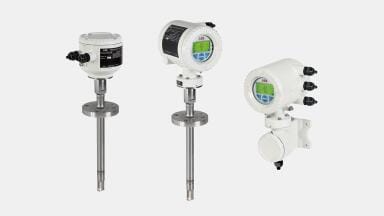
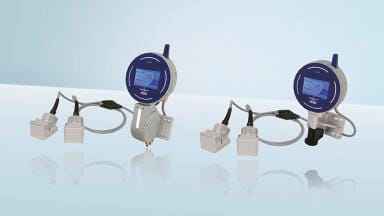
Several sensor types can now monitor particulate loads in real time, directly in process lines or recirculating loops:
Provides particle size distribution in liquids or gases.
High accuracy, suitable for transparent or translucent process fluids.
Ideal for high-value intermediates or QA-critical processes.
Measures turbidity or particle counts by detecting light scatter.
Widely used in fuel systems, lubricants and hydraulic loops.
Detect particulates in opaque or high-solids fluids using ultrasound.
Good for slurries or viscous product streams where optical methods fail.
For conductive slurries or metal particles in cooling fluids — useful for wear monitoring in rotating equipment.
Many of these sensors can be installed inline or in bypass loops with flow-through cells.
Outputs are typically 4–20 mA, Modbus or HART, all of which are ready for integration into SCADA or condition monitoring systems.
Inline particle monitors are particularly valuable in three key areas.
Firstly, filter banks and polishing units, where they can be used to compare upstream and downstream particulate counts to assess filter loading.
Secondly, in closed-loop water or solvent systems, to identify degradation or contamination in reuse circuits.
Finally, they’re great for blending tanks and product transfer lines to ensure that product cleanliness meets spec before dispatch or handover.
With live particle data, facilities can shift from scheduled filter changes to condition-based replacement, avoiding unnecessary downtime and reducing filter inventory.
More advanced systems now use particle trends to predict filter clogging or pump cavitation, trigger automated flushing or backwash cycles and detect system upset events before alarms are triggered.
Despite clear benefits, inline particle monitoring is still rare in many midstream and downstream facilities.
Common barriers include perceived complexity or cost, legacy thinking, lack of standardisation in how particulate limits are defined and fear of false alarms or sensor fouling.
As predictive maintenance and digital QA gain traction, the case for inline monitoring is getting stronger.
Inline particle monitoring is not just about protecting equipment but building cleaner, leaner processes with better data.
Facilities that invest in real-time particulate insight can expect not just longer filter life but improved product quality and energy savings.
In an industry where every margin counts, this is one sensor category that’s overdue for attention.
PIN 27.5 Oct/Nov 26


 Product directory



.jpg)


















.jpg)