Analytical instrumentation
ASTM D7359 is the international standard method for determining total fluorine, chlorine, and sulfur in aromatic hydrocarbons and their mixtures.
These elements, even at trace levels, can cause significant problems in industrial applications—such as catalyst poisoning, equipment corrosion, and increased harmful emissions.
The method applies to concentrations ranging from 0.10 mg/kg to 10 mg/kg of each element and provides laboratories and industries with a reliable framework for quality control, regulatory compliance, and risk mitigation.
The process involves oxidative pyrohydrolytic combustion of the sample at high temperature, which converts halogens and sulfur into their ionic forms (HF, HCl, and SO₂/SO₃).
These gases are absorbed into an aqueous solution, which is then analyzed by ion chromatography (Combustion Ion Chromatography, C-IC) to quantify the halide and sulfate ions.
The approach ensures sensitivity at both trace and higher concentration levels, with specific requirements for background stability when analyzing below 1 mg/kg. Results are reported in SI units only, with rounding governed by ASTM Practice E29.
By standardizing this technique, ASTM D7359 helps industries such as petrochemicals, specialty chemicals, and environmental testing ensure their materials and processes meet stringent quality and compliance standards.
It provides a reliable tool to safeguard product integrity, extend equipment life, optimize processes, and minimize environmental risks, making it an essential benchmark for the accurate determination of halogens and sulfur in aromatic hydrocarbon matrices.
Traditionally, the ASTM D7359 method employs a boat introduction system, where samples are dosed into the combustion furnace in a carrier vessel. While effective, this approach can introduce limitations in terms of sample handling speed, detection sensitivity, and reproducibility.
To address these challenges, the application of direct liquids injection into the combustion system offers a modernized alternative.
Direct liquid injection into a liquids module eliminates the need for intermediate sample holders, enabling faster introduction, more efficient combustion, and improved analytical performance. Notably, direct liquids injection provides:
• Higher throughput due to rapid and simplified sample introduction.
• Lower limits of quantification and detection, enhancing trace-level analysis.
• Improved repeatability and reproducibility, minimizing variability introduced by the manual handling of boats.
By adopting direct liquids injection within the framework of ASTM D7359, laboratories are able to improve the overall efficiency of their analyses.
This approach simplifies routine operations and meets the growing need for accurate, high-volume testing in industries such as petrochemicals, specialty chemicals, and environmental monitoring.
The presented work in this paper highlights the suitability and advantages of direct liquids injection as an alternative to the traditional boat introduction technique.
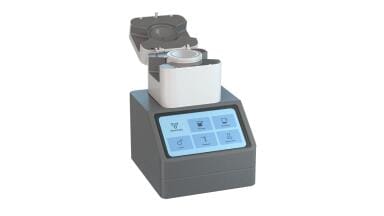
TE Instruments developed a fully automated, extremely compact sample preparation system covering pyrohydrolytic combustion, fraction collection, and sample injection towards any IC (Fig.1).
The XPREP C-IC is the only configuration capable of introducing liquid samples both via direct injection into the liquids module
and conventional boat-inlet system into a horizontal furnace.
Sample introduction by direct injection (Fig. 2) improves the analytical results for trace-level applications such as aromatic hydrocarbons and ultrapure chemicals.
A larger sample volume (250 µL) can be introduced into the direct injection module compared with boat-inlet systems. Controlled sample evaporation at 1 µL/s eliminates the need for a boat program and decreases the time of sample combustion dramatically.
Multiple sample combustions can be collected in the same absorption tube, which increases the concentration of analytes in the absorbance medium.
The analytical results at trace level are significantly improved by adjusting the number of sample combustions, volume of absorbance liquid, size of the IC sample loop, and use of a pre-concentrator.
To assess the performance of a boat introduction configuration versus a liquids module configuration on the Xprep C-IC system, tests were carried out using fluorobenzene, chlorobenzene, and dibenzothiophene standards (prepared in xylene), ranging from 0 to 10 mg/L.
These standards and concentration ranges are in accordance with ASTM D7359 (see Table 1). The same standard solutions were used for both configurations to ensure consistent testing conditions, enabling a direct comparison in terms of repeatability, sensitivity, and linearity.
All analyses were performed using an IC system equipped with a preconcentration setup, to enhance sensitivity. A 500 µL sample loop, installed on the 6-port valve of the Xprep C-IC, was used to collect and transfer the sample to the IC system.
In accordance with ASTM D7359, both system blank and solvent blank tests were performed prior to calibration and sample analysis, for each configuration.
System blanks were evaluated by performing 3 empty injections (air injections) under the same operational settings used for sample analysis, ensuring equivalent conditions and injected volumes.
Solvent blanks were assessed by injecting the same volume of xylene solvent used in the standards preparation. These tests were also carried out using the same instrument settings to accurately measure any background contamination and verify compliance with method requirements.
To evaluate the performance of the liquids module, the Xprep C-IC system was equipped with a Vectra Autosampler fitted with a 250 µL syringe. System blanks and solvent blanks were analyzed under the same conditions prior to calibration.
Calibration was then conducted using the xylene standards across a concentration reported in Table 1.
Each calibration level was analyzed through three consecutive injections of 250 µL, resulting in a total injection volume of 750 µL per concentration level. After calibration, the system produced a calibration curve with a coefficient of determination (R²) reported in Table 2 respectively for f, Cl, and S.
An example of calibration line obtained for Fluoride is shown in Figure 4.
Figure 3: Example of Fluoride calibration line for direct liquid injections.
For comparison, the same tests were also carried out using the boat injection configuration.
In this configuration, the Xprep C-IC system was fitted with a Vectra autosampler equipped with a 100 µL syringe. After the system and solvent blanks check, the calibration was conducted by using the standards in xylene across the concentrations reported in Table 1.
Each standard concentration was analyzed through three consecutive injections of 100 µL, resulting in a total injection volume of 300 µL per concentration level.
Following calibration, the system produced a calibration curve with a coefficient of determination (R²) reported in Table 3. An example of a calibration line obtained for Fluoride is shown in Figure 5.
The following table presents the results of the blank and standard injection tests performed for both configurations.
According to ASTM D7359, the peak area of the solvent blank must not exceed 50% of the peak area of the lowest calibration standard.
The results confirm that both configurations meet the ASTM D7359 requirements. However, the liquids module configuration performs better overall in meeting these criteria (see Table 4 and Table 5).
In comparison to the liquid by boat configuration, the liquids module enables the injection of larger sample volumes while consistently producing lower blank values for solvent injections.
The increased injection volume also improves the system’s sensitivity, leading to significantly higher peak areas at the same concentration levels.
Both configurations achieved an RSD% within the ASTM D7359 limit of 5%, but an additional advantage of the liquids module is the 25% reduction in total analysis time. This time-saving benefit is primarily due to the elimination of the boat program, making the liquids module more efficient for this type of analysis.
Table 4: Overview of peak areas results for liquids module experiments.
Table 5: Overview of peak areas results for the liquid by boat experiments.
The study evaluated direct liquids injection as an alternative to the boat introduction configuration described in ASTM D7359. Both configurations meet the standard’s requirements for blank levels and precision; the liquids module demonstrated better overall performance.
The capacity to handle larger injection volumes improves sensitivity. By minimizing variability caused by manual boat handling, it achieves lower solvent blank values. Additionally, eliminating the boat program reduced total analysis time.
Included test results confirm that direct liquids injection complies with ASTM D7359 and overcomes several limitations of the traditional liquid by boat configuration.
Implementing the liquids module can enhance analytical efficiency, making it a better solution for laboratories conducting high-throughput testing in petrochemical, chemical, and environmental sectors.
For the validation study, the combination of Xprep C-IC with the Vectra autosampler with two configurations (liquids module and liquids by boat) was utilized. This setup can hold multiple sample trays, each with 50 sample positions for 2 ml vials.
Additionally, different optional sizes of syringes can be included to enhance the configuration (Table 6).
Table 6: System settings of the Xprep C-IC.
PIN 27.5 Oct/Nov 26


 Product directory


.jpg)























.jpg)