Safety
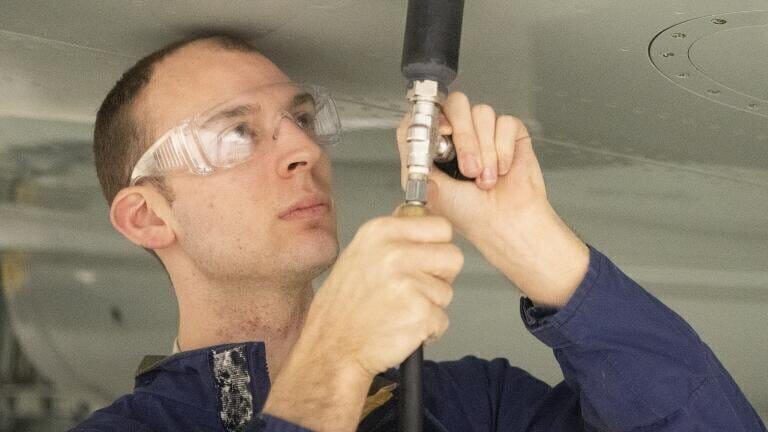
By listening to valves, pipelines and pressure systems, operators can hear trouble long before it becomes visible.
Leak detection in petrochemicals has long relied on established technologies.
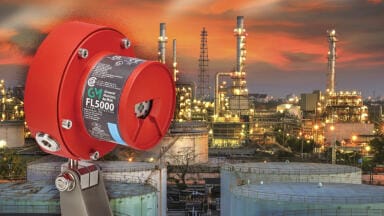
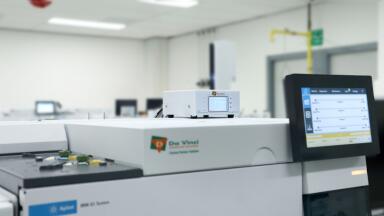
Infrared cameras visualise methane plumes, electrochemical cells detect toxic gases, and mass spectrometers in the lab identify complex mixtures.
These tools have saved lives and reduced emissions.
But they all share a weakness: they often detect problems only after a leak has already begun.
Acoustic sensing offers a different approach.
By capturing ultrasonic or low-frequency vibrations, it can identify the signature of a system under stress.
A valve starting to wear, a microfracture propagating in a pipeline, or a transient pressure surge leaves an acoustic fingerprint.
Detecting those signals in real time means identifying problems before they escalate into visible leaks, shutdowns or explosions.
Acoustic sensing has moved from niche diagnostic tool to serious contender in the process monitoring toolkit.
Miniaturised piezoelectric sensors, already common in vibration analysis, are being adapted for leak detection and valve monitoring.
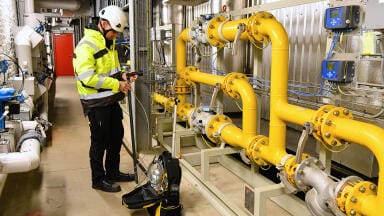
Arrays of microphones mounted on pipework can triangulate the source of a leak down to a few centimetres.
In some cases, fibre optic cables are being repurposed as distributed acoustic sensors, turning entire pipelines into listening devices.
The principle is simple: gases escaping under pressure emit ultrasonic noise, even if the leak is too small to be smelled or seen.
With the right algorithms, these signals can be distinguished from background noise, allowing continuous monitoring of large, noisy process environments.
The real promise lies in predictive maintenance.
Instead of replacing valves and gaskets on a calendar schedule, plants can replace them when acoustic data shows they are beginning to fail.
This shift from preventative to predictive maintenance reduces unnecessary downtime and extends asset life.
For plant managers, the appeal is not just safety but efficiency.
Maintenance budgets stretch further when resources are targeted precisely where needed.
For compliance officers, acoustic data provides a defensible record that equipment was monitored continuously, potentially easing the burden of proving regulatory diligence.
The integration of acoustic data with digital twins is already being tested in advanced facilities.
Digital twins simulate how equipment should sound under normal conditions.
When the real-time acoustic profile diverges, the system flags an anomaly.
Machine learning further enhances sensitivity, learning to distinguish the acoustic signature of a loose bolt from that of an impending rupture.
This is a crucial step towards what some call “self-aware plants” — facilities where instruments not only measure but also interpret and anticipate.
Acoustic sensing, once an overlooked by-product of vibration monitoring, could become a cornerstone of this shift.
Despite its promise, acoustic sensing faces hurdles.
Plants are noisy places, and distinguishing a true signal from background machinery is not trivial.
Calibration and sensitivity vary across sensor types, raising questions about standardisation.
And while acoustic sensors are inexpensive compared to high-end IR cameras, the cost of deploying and maintaining arrays across sprawling plants can still be significant.
There is also the matter of regulatory recognition.
While regulators widely accept infrared and chemical detectors, acoustic monitoring is not yet codified in most leak detection and repair frameworks.
Until it is, companies may hesitate to rely on it for compliance, even if it outperforms other methods in practice.
Even so, acoustic sensing is steadily moving from supplementary tool to central pillar of leak detection.
Early adopters report success in detecting pinhole leaks invisible to other methods.
Pipeline operators have demonstrated the ability to pinpoint leaks within minutes along dozens of kilometres of buried pipe.
And in chemical plants, acoustic systems have prevented unplanned shutdowns by catching valve wear early.
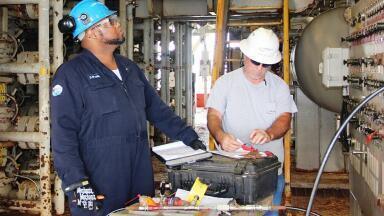
For lab technicians and operators, the technology means adding another sensory dimension to the plant: not just seeing or measuring gases, but listening to the health of equipment.
For managers, it represents a pathway to reduced downtime and lower maintenance costs.
And for compliance officers, it could soon provide a continuous monitoring record that meets or exceeds regulatory expectations.
Acoustic sensing in petrochemicals is more than a clever trick; it is the beginning of a new monitoring discipline.
Where once sound was considered noise, it is now being reinterpreted as data.
The industry is learning that listening can be as powerful as measuring, and that a whisper from a stressed pipe may be more valuable than a plume caught on camera.
For an industry under pressure to reduce emissions, prevent accidents and extend asset life, the ears of the plant may prove just as important as its eyes.
PIN 27.4 Aug/Sept 2026



 Product directory


.jpg)











.jpg)












.jpg)