Measurement and testing
In the race to automate process operations, some metrics get all the attention: flow rates, pressure, VOCs, pH, turbidity.
But one variable is quietly reshaping plant performance and compliance: water temperature.
At petrochemical and refining sites, where cooling water, washdown flows or discharge streams are in play, temperature is a key metric.
Ignore it, and you risk non-compliance, energy waste, and accelerated asset degradation.
Water temperature influences almost every aspect of process health and regulatory compliance.
Discharge permits often include thermal pollution limits, such as a maximum temperature differential (ΔT) between intake and effluent or a hard upper bound like 30°C, that can be exceeded even if chemical parameters are within spec.
Thermal effects also drive corrosion, scaling and fouling, especially in heat exchangers and piping systems.
A rise of just a few degrees can shift solubility equilibria, triggering deposition of minerals.
Meanwhile, the efficiency of heat exchangers depends on stable temperature gradients.
A warm shift in cooling water can spike energy use and compromise downstream performance.
Even instrumentation can suffer.
ORP, pH and conductivity probes are temperature-sensitive. Without proper compensation, drift is inevitable.
Despite these risks, many plants still monitor water temperature only at intake and discharge, leaving internal systems blind to fluctuations.
Modern sensing technologies offer robust solutions for real-time temperature tracking across process circuits.
Resistance temperature detectors (RTDs) provide stable, high-accuracy readings ideal for cooling lines or discharge pipes.
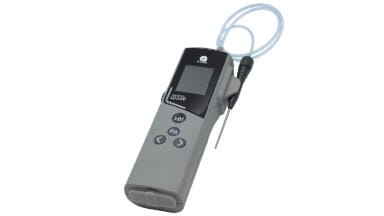
Thermocouples, while slightly less precise, offer fast response times and are often built into portable or multiparameter units.
Non-contact IR sensors can monitor open channels or exposed pipework, though surface variability can affect reliability.
The value of these sensors multiplies when integrated with flowmeters (to calculate thermal load), connected to SCADA or DCS platforms for alarms and trend tracking, for example.
Some advanced facilities are already temperature-mapping entire water loops, from washdown to cooling return, to highlight unexpected thermal shifts indicative of process drift.
In many jurisdictions, water temperature is now a frontline compliance issue.
The European Water Framework Directive and US Clean Water Act both support temperature-based discharge restrictions, particularly near ecologically sensitive areas.
Even where temperature isn’t directly regulated, it can affect compliance indirectly by increasing the bioavailability of metals or spiking oxygen demand.
In fact, several recent permit breaches have been traced to thermal effects rather than chemical overloads.
Beyond risk mitigation, water temperature data enables efficiency gains.
Waste heat recovery is among the most accessible forms of industrial energy savings.
But to recover what you can’t measure is impossible.
Reliable, continuous temperature monitoring unlocks opportunities for boiler preheating, absorption chilling, district heating links and heat pump integration.
For process operators aiming to future-proof their plants, it’s time to elevate temperature monitoring to a primary concern.
The right sensor in the right location might be the simplest upgrade your process needs.
PIN 27.4 Aug/Sept 2026



 Product directory











.jpg)

.jpg)