Measurement and testing
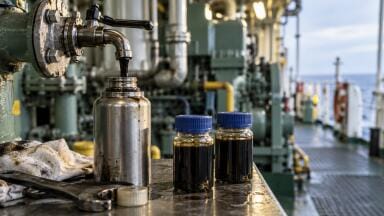
A sample is taken from the process, labelled, transported to a laboratory, analysed, checked, reported and then fed back to operations.
The method is familiar, trusted and deeply embedded in refinery practice. But it has one unavoidable limitation: by the time the data arrives, the process conditions that produced the sample may already have changed.
In refining and petrochemical production, small deviations in composition, blend quality or operating conditions can have immediate consequences for product value, energy use, reprocessing requirements and regulatory confidence.
Operators have traditionally managed this uncertainty by building in margins. Products are blended safely within specification rather than as close to the specification boundary as possible.
Units are run conservatively because the analytical picture is partial and delayed. Quality is protected, but value is often left on the table.
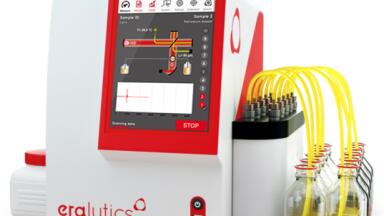
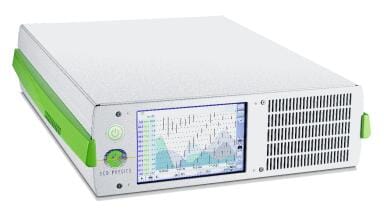
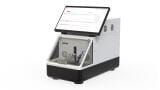
Inline spectroscopic analysers using near-infrared, Raman and Fourier-transform infrared technologies are increasingly being integrated directly into process control environments at refineries, terminals and petrochemical facilities.
Instead of providing a retrospective laboratory snapshot, these systems generate continuous compositional data from the process itself. Blend ratios, hydrocarbon composition, sulphur content, vapour pressure, octane number and other critical quality parameters can be measured close to the point where operational decisions are made.
For process engineers and instrumentation teams, the significance is not simply that the measurement is faster. It is that the measurement becomes part of the control strategy.
Inline analysers allow quality data to move from the laboratory report into the control room, where it can be used by operators, distributed control systems and advanced process control platforms. In practical terms, this means fewer blind spots between production, blending and final product certification.
The financial case is becoming increasingly difficult to ignore. A 2026 industry analysis of inline process analysers found that refiners linking analyser data directly to advanced process control systems are achieving annual yield uplifts of up to USD 9.3 million.
When operators have reliable real-time feedback, they can reduce the conservative buffers traditionally used to protect against analytical lag. That allows production to run closer to specification limits without increasing the risk of off-spec material.
The gains can appear in several places at once. More accurate blending reduces giveaway, where higher-value components are used unnecessarily to ensure the final product meets specification.
Faster detection of deviations can reduce the volume of material requiring reprocessing. More stable operation can improve throughput and reduce energy consumption. For high-volume refining operations, even small improvements in blend accuracy or unit performance can translate into substantial annual value.
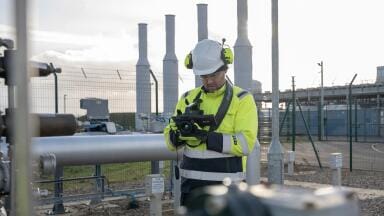
There is also a human dimension to this shift. Refinery operators are often expected to make decisions under pressure, using data that may be incomplete, delayed or spread across different systems.
Inline analysis does not remove the need for operator judgement, but it can give teams a clearer and more current view of what is actually happening in the process. Instead of reacting to yesterday’s lab result, personnel can respond to live process conditions with greater confidence.
For laboratory teams, the change is more complex. Inline analysis does not make the laboratory redundant. Instead, it changes the lab’s role. Laboratory analysis remains essential for validation, calibration, reference methods, dispute resolution and final certification in many contexts.
But as routine quality checks move closer to the process, laboratory staff may increasingly act as analytical specialists supporting analyser performance, method transfer, calibration models and data integrity. The boundary between the lab and the process is becoming less rigid.
This is especially important for spectroscopy-based systems. NIR, Raman and FTIR analysers are powerful because they can infer multiple quality parameters from spectral signatures.
But their value depends on robust calibration models, representative reference data, suitable sampling systems and ongoing validation. Poor sample conditioning, fouling, changes in feedstock composition or inadequate model maintenance can all undermine confidence in the results.
For instrumentation users, the analyser itself is only one part of the measurement system. The installation, maintenance regime, data handling and quality assurance framework matter just as much.
The regulatory implications are also significant. Fuel specifications, sulphur limits, emissions-related requirements and product quality obligations all depend on credible measurement.
Continuous sulphur monitoring across the refining and blending chain can provide a stronger audit trail than isolated batch testing, particularly when linked to secure data systems and documented quality procedures.
It reduces the risk that off-spec product moves downstream unnoticed and gives operators earlier warning when a process is drifting toward non-compliance.
This matters because compliance is increasingly data-driven. Regulators, customers and supply-chain partners are asking not only whether a facility met a limit, but how it knows that it met the limit.
A periodic test result can still be essential, but continuous measurement provides a richer record of process performance over time. For facilities under growing scrutiny, that documented data trail can support both operational control and external assurance.
The smart analyser segment is projected to grow at 18.7% CAGR through 2028, driven by demand for faster quality control, tighter process optimisation and greater integration with digital plant infrastructure.
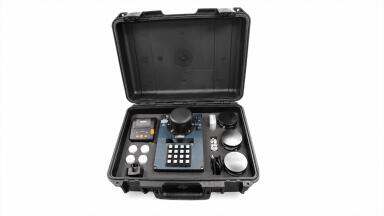
Modern analysers are increasingly designed to connect with SCADA, DCS, APC and asset management systems. This allows analyser data to support automated process adjustments, remote diagnostics, predictive maintenance and alarm rationalisation.
However, integration also raises new responsibilities. Once analyser data is used in closed-loop or semi-automated control, measurement reliability becomes even more critical.
False confidence in a poorly maintained analyser can be as damaging as having no analyser at all. Facilities need clear procedures for validation, fallback operation, calibration checks, alarm handling and maintenance access.
Cybersecurity and data governance also become more important as analysers become connected assets within wider industrial networks.
For maintenance and reliability teams, remote diagnostics are one of the most practical benefits.
Modern smart analysers can provide information on optical performance, signal quality, contamination, drift, temperature effects and component status. This makes it easier to identify emerging problems before they lead to bad data or analyser downtime.
In facilities where specialist analyser technicians are scarce, remote access and condition-based maintenance can help teams prioritise interventions and reduce unnecessary site visits.
For environmental and process monitoring professionals, the shift from periodic laboratory analysis to continuous inline measurement is therefore much more than a technical upgrade.
It changes how quality is controlled, how compliance is demonstrated and how operational decisions are made. It also places greater emphasis on the expertise of the people responsible for keeping measurement systems trustworthy.
The future refinery is unlikely to abandon the laboratory. But it will increasingly depend on a more connected relationship between the lab, the analyser shelter, the control room and the compliance function. Quality control will become less of a delayed confirmation exercise and more of a continuous operational signal.
That is the real significance of inline spectroscopy. It allows refineries and petrochemical facilities to move from finding out what happened to seeing what is happening.
For an industry under pressure to improve margins, reduce emissions, protect product quality and prove compliance, that shift is becoming central to both economic performance and operational credibility.
PIN 27.4 Aug/Sept 2026



 Product directory


















.jpg)