Fuel analysis
Grid injection, vehicle fuel use, and cross-border trade all depend on demonstrable compliance with impurity limits set out in EN 16723.
Until recently, however, the conformity assessment of biomethane has relied on a fragmented measurement landscape: high-end reference standards developed in metrology labs, but limited practical means for operators, laboratories, and instrument manufacturers to verify performance in the field.
The European BiometCAP project was designed to close that gap. Coordinated under the EURAMET framework and involving national metrology institutes across Europe, BiometCAP has focused on one central problem: how to make SI-traceable, reliable biomethane measurements accessible and affordable for real-world use.
The EU’s renewable energy ambitions, formalised through RED II, raised the 2030 target for renewable energy consumption to 32%.
Biomethane is critical to meeting that target because it can directly displace fossil natural gas without major infrastructure changes.
Yet EN 16723-1 and -2 impose strict limits on impurities such as hydrogen sulphide, ammonia, siloxanes, halogenated compounds, and oxygen.
For environmental and process monitoring professionals, this creates a familiar problem: compliance hinges on trace-level measurements of reactive or unstable species, often outside controlled laboratory environments.
Historically, the reference standards needed to validate these measurements have been expensive, non-portable, and limited to specialist facilities. This has made routine performance evaluation of gas analysers difficult, especially for small producers and field-based testing.
A core contribution of BiometCAP lies in its development of practical gas transfer standards.
Instead of relying solely on primary reference standards, the project has demonstrated cost-effective static and dynamic mixtures that contain multiple biomethane-relevant impurities at EN 16723 limit levels, with relative expanded uncertainties targeted between 1% and 10%.
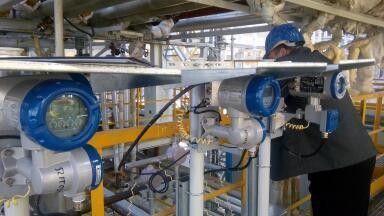
These transfer standards are designed to be portable and robust enough for on-site use, allowing analysers to be evaluated next to the sampling point rather than shipped back to a laboratory.
For monitoring professionals, this represents a shift from occasional, centralised verification to routine, decentralised performance checks that still maintain SI traceability.
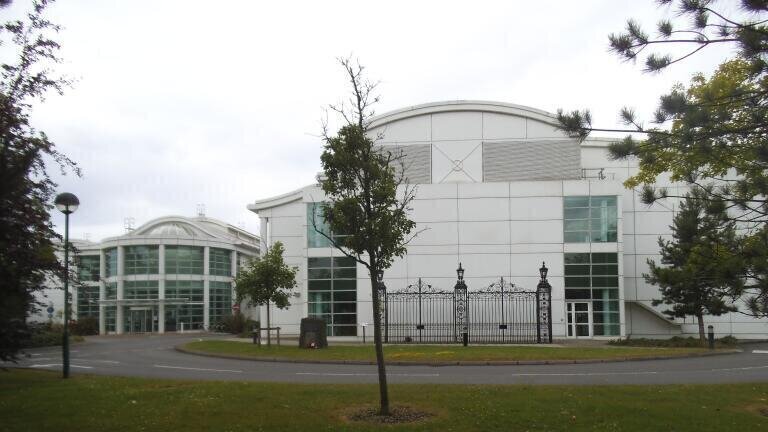
This work has been led in the UK by the National Physical Laboratory, building on earlier European metrology projects but explicitly addressing the cost and logistics barriers that previously limited uptake.
Equally significant is BiometCAP’s development of a harmonised performance evaluation protocol. While ISO/IEC 17025 requires laboratories to validate methods and demonstrate fitness for purpose, biomethane has lacked a fuel-specific, end-to-end protocol equivalent to those already established for hydrogen.
BiometCAP’s protocol provides structured guidance on sampling, analysis, and performance evaluation for biomethane gas analysers, covering both laboratory and field scenarios. It also links analytical techniques - such as gas chromatography and spectroscopic methods - to specific impurities, addressing issues like sample integrity and matrix effects that are particularly challenging in biomethane.
For instrument users, this means clearer answers to practical questions: how often to verify analyser performance, which parameters matter most, and how to document results in a way that supports accreditation and regulatory audits.
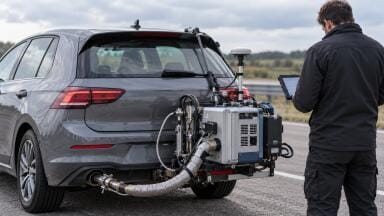
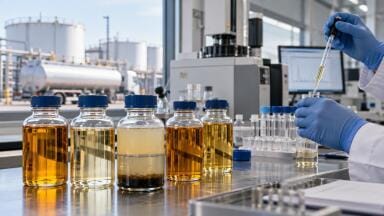
The project has not stopped at method development. Industrial gas analysers currently used for biomethane conformity assessment have been evaluated using the newly developed standards and protocol, both in laboratories and under field conditions.
This has generated realistic performance data across different technologies, highlighting strengths, limitations, and sources of measurement bias.
For manufacturers, the protocol provides a common benchmark that can be integrated into product development and quality control. For operators and laboratories, it offers a defensible basis for instrument selection and ongoing performance verification.
One of BiometCAP’s distinguishing features is its close integration with standardisation bodies.
Outputs from the project are being fed directly into the revision of EN 16723 and into ISO work via ISO/TC 193/SC 1/WG 25 on biomethane. A New Work Item Proposal, including draft ISO text for a biomethane analyser performance evaluation standard, has already been submitted.
This tight feedback loop between metrology, industry testing, and standards development increases the likelihood that future requirements will reflect actual measurement capability rather than theoretical best-case performance.
For those working in environmental and energy gas monitoring, the implications are practical rather than abstract. Lower-cost, traceable transfer standards reduce the barrier to compliance for small and decentralised producers.
A validated protocol reduces ambiguity in audits, accreditation, and procurement. More reliable impurity measurements improve safety, protect infrastructure, and support enforcement of toxic compound limits.
In the longer term, these improvements underpin trust in biomethane as a substitute for fossil gas. Without credible, reproducible measurements, renewable gas cannot scale beyond pilot projects.
BiometCAP shows how measurement science, often invisible outside specialist circles, can become an enabling technology for decarbonisation.
For a sector increasingly asked to deliver both environmental benefit and regulatory certainty, that shift from bespoke laboratory excellence to accessible, field-ready traceability may prove decisive.
PIN 27.4 Aug/Sept 2026


 Product directory
















.jpg)