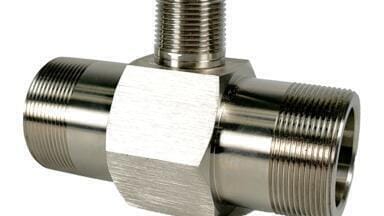
Flow meter
Can instrumentation keep pace with the physical realities of these unconventional fluids?
Petrochemical plants are built on the logic of flow.
Crude, products and by-products are pumped, measured and traded according to volumes verified by a century of metrological practice.
But as the sector embraces carbon capture and storage (CCS) and hydrogen as a fuel, familiar instruments are being pushed into unfamiliar territory.
Supercritical CO₂ does not behave like crude oil or natural gas. Hydrogen, the smallest of molecules, slips through seals and embrittles metals.
Together they expose the limits of traditional flow, level and pressure monitoring systems.
What worked reliably for hydrocarbons can suddenly deliver inconsistent readings, accelerated wear or outright failure when faced with these new fluids.
Consider CO₂ pipelines. Once captured, carbon dioxide is compressed into a supercritical state and transported at pressures above 70 bar.
At these conditions, even slight temperature changes can shift density dramatically.
Flowmeters calibrated for stable liquids or gases may miscalculate mass flow if density corrections are not constantly applied.
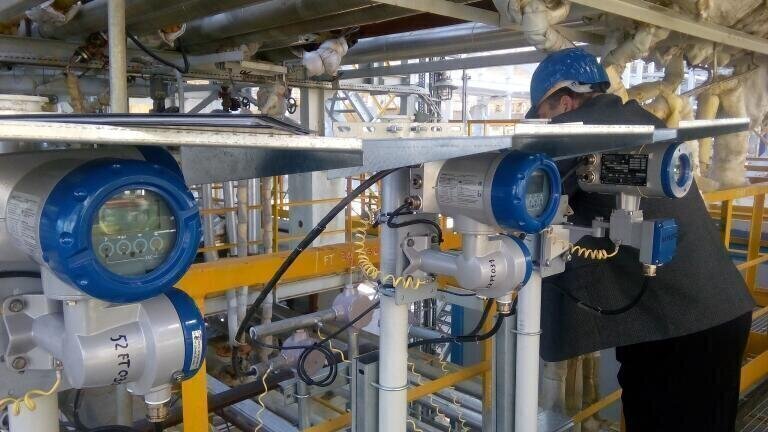
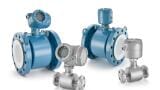
Coriolis meters, long trusted in custody transfer, must be specially adapted to handle these density swings without drift.
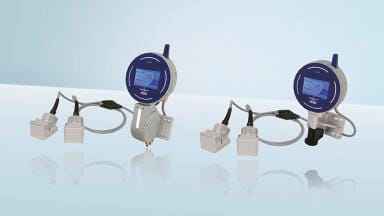
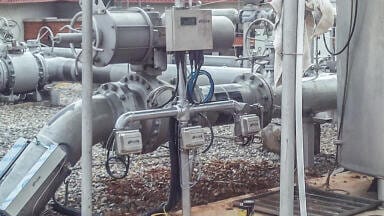
Ultrasonic flowmeters, meanwhile, face issues as supercritical CO₂ absorbs acoustic energy differently than hydrocarbons, requiring recalibration and sometimes new transducer designs.
Without accurate measurement, custody transfer contracts are undermined and storage operators cannot meet the monitoring, reporting and verification (MRV) requirements tied to carbon credits.
If CO₂ challenges density and phase behaviour, hydrogen tests instrumentation with its sheer physical elusiveness.
Its tiny molecular size causes leaks through seals and gaskets that would be tight against natural gas.
Flowmeters and pressure sensors must therefore not only measure accurately but withstand accelerated wear and embrittlement in contact with hydrogen.
Ultrasonic meters, prized for non-intrusive measurement, struggle because hydrogen’s low density alters acoustic velocity.
Differential pressure meters require higher sensitivity to cope with lower viscosity.
Even storing hydrogen introduces monitoring puzzles: cryogenic liquid hydrogen demands sensors capable of operating at –253°C, where conventional electronics and materials often fail.
The stakes are high. If CCS projects are to earn trust, they must prove that captured carbon is transported and stored exactly as declared.
This requires measurement systems that are auditable to the kilogram, not merely approximate.
For hydrogen, safe adoption as a fuel depends on reliable leak detection and flow monitoring at every stage, from electrolyser to pipeline to end user.
For plant managers, the challenge is practical: instruments designed for hydrocarbons cannot simply be redeployed without modification.
For compliance officers, the challenge is legal: carbon credits, emissions ledgers and hydrogen purity contracts are only as robust as the instruments behind them.
Instrumentation suppliers are responding. Specialised Coriolis meters with reinforced tubes are being rolled out for CO₂ custody transfer.
New ultrasonic meter designs are being tested that compensate for hydrogen’s acoustic peculiarities.
Distributed fibre optic sensing is emerging as a non-intrusive way to monitor flow dynamics along entire pipelines, complementing point measurements.
Research projects are also exploring hybrid approaches.
By combining pressure and temperature sensors with advanced density correlations, operators can cross-check flow calculations in real time.
Digital twins of CO₂ and hydrogen pipelines are being built to simulate fluid behaviour under varying conditions, providing operators with a virtual benchmark to validate sensor readings.
Yet challenges remain. Calibration standards for CO₂ and hydrogen flows are not yet harmonised globally, making custody transfer disputes more likely.
Materials compatibility testing for hydrogen embrittlement is still in progress, meaning even certified instruments can fail prematurely.
And digital compensation methods are only as good as the models they rely on — models that are still being refined as field data accumulates.
These blind spots matter because they cut to the heart of credibility.
A carbon capture project that cannot prove every tonne moved is a project that may lose regulatory approval or market trust.
A hydrogen plant that suffers repeated leaks due to poor monitoring risks setting back adoption across an entire region.
Flow, level and pressure monitoring have always been the hidden infrastructure of petrochemicals.
With CO₂ and hydrogen, they become even more critical.
The success of decarbonisation strategies depends not only on capturing and producing these fluids but on measuring them with accuracy and reliability under extreme conditions.
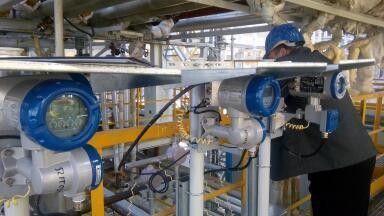
For technicians, this means learning to work with instruments that behave differently under supercritical or cryogenic regimes.
For plant managers, it means investing in monitoring systems as core infrastructure rather than peripheral equipment.
And for compliance officers, it means preparing for a world in which carbon and hydrogen are not just molecules but financial assets, traded and audited down to the decimal place.
The future of low-carbon petrochemicals will be measured as much as it is produced.
And the meters, gauges and sensors that rise to this challenge will define whether CO₂ and hydrogen flow seamlessly into the energy system — or whether they remain bottlenecked by the limits of measurement itself.
PIN 27.4 Aug/Sept 2026


 Product directory









.jpg)
.jpg)
_Ray_Mabus_tours_a_biofuels_testing_facilit.jpg)



.jpg)