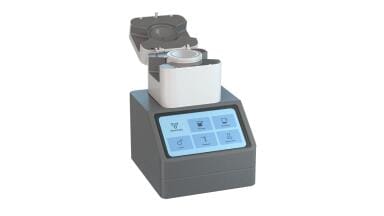
Oil analysis
Waste plastic process oil has spent years in an awkward position inside the petrochemical sector. It has been talked about as a circular feedstock, promoted as a route into chemical recycling, and trialled in refinery and petrochemical assets, but it has often lacked the analytical clarity that process engineers and laboratory teams expect from a serious industrial stream. ASTM’s new D8577-25 Standard Guide for Waste Plastic Process Oil Analyses matters because it starts to close that gap. The guide says the minimum analytical foundation for waste plastic process oil should cover composition, physical properties and contaminants, and it also acknowledges a problem many users will recognise immediately: some of the referenced standards were not originally written with waste plastic process oil in scope, so modifications may still be needed until methods are updated or new ones are developed.
That is what makes this more than a standards housekeeping story. It is really a story about whether waste-plastic-derived oils can be treated as controllable process streams rather than as experimental materials. ASTM presents D8577 as a first step toward consistent analytical testing for WPPO, while the guide itself explicitly frames thorough analysis and characterisation as essential to the viability and safety of process-oil applications. In other words, the sector is moving away from broad claims about “advanced recycling” and towards a more familiar petrochemical question: what exactly is in this stream, how stable is it, and what can downstream equipment realistically tolerate?
The industrial backdrop makes the timing significant. In March 2026, Neste said it had commissioned what it describes as the world’s largest upgrading facility for liquefied waste plastic at its Porvoo refinery in Finland, with capacity to process up to 150,000 tonnes per year. The company said the purpose of the facility is to close the quality gap between crude liquefied plastic waste and the high-quality drop-in raw materials required by the petrochemical industry. That wording is important, because it captures the central challenge. These oils may resemble crude-derived streams in broad outline, but they are not automatically refinery-ready. Neste says unprocessed liquefied waste plastic contains impurities and chemical compositions that can lead to corrosion, process inefficiency and poor end-product quality, and that continuous large-scale processing requires pretreatment and upgrading to remove impurities and optimise composition.
For analytical and process-monitoring professionals, that means the real story is not simply whether waste plastic can be converted into oil. It is whether the resulting oil can be characterised well enough to support routine handling, blending, upgrading and downstream conversion. ASTM D8577-25 is useful precisely because it avoids pretending there is one single defining test. Instead, it frames waste plastic process oil as a material class that needs a package of analyses. Composition testing is needed to identify hydrocarbons, heteroatoms and other impurities. Physical property testing matters because those properties determine handling, safety and application behaviour. Contaminant testing matters because harmful substances may still be present. That combination makes the guide feel much closer to a real plant problem than to a marketing label.
There is also a broader message here for instrumentation suppliers and labs. As circular feedstocks move into existing refinery and petrochemical infrastructure, the burden shifts from proving a concept to proving consistency. A process stream that arrives with variable composition, uncertain contaminant load and incomplete method alignment is not just a sustainability opportunity; it is a risk to throughput, reliability and product quality. ASTM’s own wording makes clear that D8577 is a least-common-denominator analytical methodology, not a finished end-state. That suggests the next phase for the sector will involve more method development, more validation work, and more effort to adapt conventional petroleum and fuels analyses to streams that behave differently from fossil-derived norms.
That is why this standard deserves attention from petrochemical readers. It signals that waste plastic process oil is beginning to enter the industry on petrochemical terms rather than rhetorical ones. The commercial push is real: Neste says production ramp-up at Porvoo has begun and will continue gradually depending on market and legislation development, while also arguing that current European recycled-content accounting rules could limit refineries’ role in meeting recycled-content targets. But whatever happens on the policy side, the technical direction is already clear. Waste plastic process oil will not become mainstream because it is labelled circular. It will become mainstream only if laboratories, analysers and process teams can show, with repeatable methods, that it is measurable, manageable and fit for purpose. ASTM D8577-25 does not solve that problem on its own, but it does mark the point at which the industry starts addressing it properly.
PIN 27.5 Oct/Nov 26

 Product directory



.jpg)
















.jpg)