Oil analysis
MODCON Systems believes crude distillation is the foundational operation of petroleum refining, separating crude oil into fractions based on boiling ranges. As refiners increasingly process diverse and unconventional feedstocks, fluctuations in crude composition have become a central challenge affecting yield stability, energy efficiency and product quality. These variations are particularly disruptive during crude switching, when rapid changes in boiling behaviour and separability can destabilise column profiles.
To address this complexity, advanced optimisation methodologies incorporating deep reinforcement learning (DRL) are gaining momentum. Unlike traditional modelling approaches that rely heavily on historical datasets, DRL operates through iterative interaction with the process environment. The system evaluates different control actions, receives performance-based rewards and gradually identifies optimal strategies for targeted objectives such as maximising distillate yield or minimising furnace duty. DRL’s ability to adapt in real time makes it well suited for dynamic refinery processes.
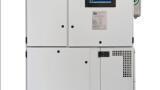
However, DRL’s effectiveness depends on access to accurate and current process measurements. Without real-time information on crude properties, model decisions may reflect statistical artifacts rather than true operational needs. This underscores the importance of integrating continuous crude quality analysis into AI-driven control frameworks. Near-infrared (NIR) analytical technologies, such as the MOD-4100 Crude Oil Analyser, provide immediate characterisation of key crude parameters, including composition and viscosity. These measurements feed directly into optimisation systems such as the MODCON.AI CDU Optimisation Suite, enabling continuous adjustment of operating setpoints based on actual feed properties. The AI model replicates complex distillation relationships and aligns column behaviour with the crude’s true characteristics, significantly improving stability during feed transitions.
The combination of DRL-based optimisation, real-time NIR analysis and advanced AI modelling enhances CDU performance by reducing energy consumption, minimising quality giveaway, improving fractionation accuracy and supporting broader feedstock flexibility. This integrated approach offers a practical path toward more efficient, economically resilient and environmentally-aligned crude distillation operations.
As operational demands and crude variability continue to rise, the integration of AI with real-time analytical measurement provides a forward-looking solution for refineries seeking to maintain consistent product quality and optimise overall performance.
PIN 27.4 Aug/Sept 2026


 Product directory










.jpg)