Flow level pressure
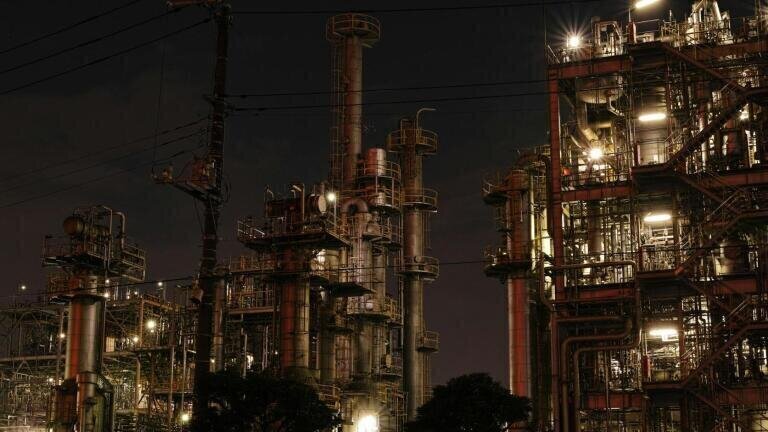
If the chemicals sector will continue to depend on hydrocarbons in the medium term, process monitoring will be critical to ensuring the industry’s sustainability.
By Jed Thomas
As the world pushes towards net zero, the quest for low-carbon hydrocarbons—synthetic fuels, green plastics, and cleaner chemicals—has become a technological frontier.
While much of the attention falls on flashy new reactors, renewable feedstocks, or carbon capture systems, the real enabler of this transition is quieter and more invisible.
Behind every low-emissions molecule is a dense web of sensors, analysers, and control systems that ensure complex, sensitive chemical processes run with maximum efficiency and minimum waste.
In many ways, low-carbon hydrocarbons are as much a feat of measurement as they are of chemistry.
Producing hydrocarbons from renewable electricity, biomass, or captured CO₂ involves multi-stage conversion systems.
These are thermally intensive, pressure-sensitive, and chemically complex. Without tight process control, they become inefficient—and inefficiency in this context means more energy consumption, more emissions, and higher costs.
Real-time monitoring of temperature, pressure, and gas composition allows operators or automated systems to keep reactions in the optimal range.
In water electrolysis, for instance, stray too far from the ideal operating point and you’ll burn through green electricity with little hydrogen to show for it.
The same is true in gasification, methanol synthesis, and Fischer-Tropsch systems.
Instrumentation ensures that the investment in renewable inputs pays off—both environmentally and economically.
One of the challenges of transitioning to alternative feedstocks is variability.
Unlike refined petroleum, biomass can vary widely in moisture content, density, and chemical makeup. CO₂ captured from air or industrial sources may differ in purity or flow rate.
To handle this variability, analytical tools like gas chromatographs, spectrometers, and inline sensors provide critical data on feedstock quality in real time.
This information is used to dynamically adjust process parameters—ramping up heating, tweaking flows, or switching reactor conditions—to stabilise output and avoid waste.
Low-carbon fuels may begin with messy inputs, but monitoring transforms them into something clean, consistent, and scalable.
Many of the core technologies used to make synthetic hydrocarbons—like methanol-to-olefins or Fischer-Tropsch synthesis—don’t produce a single output.
They generate a spectrum of hydrocarbons, from gases to liquids to waxes, depending on temperature, catalysts, and reactor conditions.
Here, analytical instrumentation acts like a steering wheel.
Inline gas and liquid analysis allows fine-tuning of the reaction towards the desired product mix—whether that’s maximising jet fuel, minimising byproduct aromatics, or optimising ethylene yield.
The better the monitoring, the better the selectivity. And better selectivity means less waste, better economics, and a lighter carbon footprint.
It’s not enough to produce low-carbon fuels; you also have to make sure you’re not leaking carbon along the way.
Process monitoring includes fugitive emission detection—infrared or laser-based gas sensors that catch leaks of methane, hydrogen, or VOCs before they become safety or environmental hazards.
Continuous emissions monitoring systems (CEMS) track CO₂, NOₓ, and particulate emissions to ensure compliance and verify environmental claims.
This layer of instrumentation acts as the immune system of the plant, identifying problems early and ensuring environmental integrity.
Producing synthetic hydrocarbons requires a lot of energy—but it also generates a lot of waste heat.
Thermal sensors and flow monitors across heat exchangers and process loops allow operators to recover and reuse energy across steps, improving total system efficiency.
In a sector where margins are tight and carbon intensity is scrutinised, turning heat into value is only possible through tight instrumentation.
In a future dominated by variable renewable electricity, process monitoring will be key to unlocking load-following operations.
That means plants that can ramp up when power is cheap and clean, then throttle back when the grid is under pressure.
This kind of smart control requires a steady stream of high-resolution data—from flow meters and gas analysers to predictive maintenance sensors and digital twins.
As plants become more dynamic, monitoring becomes not just important, but foundational.
Producing low-carbon hydrocarbons isn’t just about finding better chemistry—it’s about controlling that chemistry with precision.
Process monitoring and analytical instrumentation provide the eyes, ears, and reflexes of a sustainable fuel or chemical plant.
As we design the next generation of clean energy systems, it’s time to recognise instrumentation not as an afterthought, but as the silent infrastructure on which the future of decarbonisation depends.
PIN 27.4 Aug/Sept 2026


 Product directory