Analytical instrumentation
What does this mean for technicians, plant managers and compliance officers in petrochemicals and green fuels?
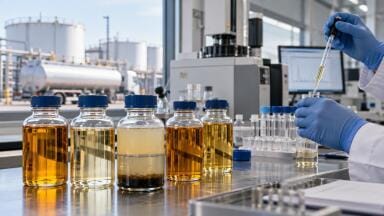
For decades, the refinery laboratory has been the arbiter of truth.
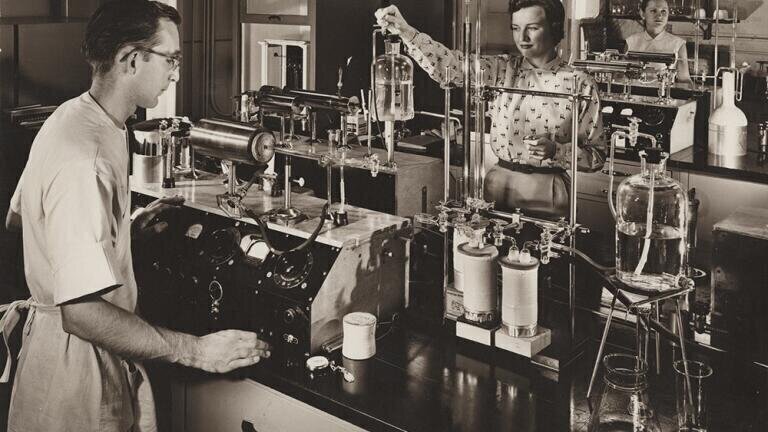
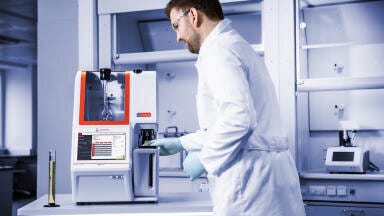
Samples taken from the field were brought into controlled environments, run through benchtop chromatographs or spectrometers, and the results defined whether a process was compliant, a product was on spec or a safety concern was real.
That model is now being challenged by the rise of portable instruments.
Handheld gas chromatographs, compact FTIR units and even pocket-sized Raman spectrometers are moving analyses out of the lab and directly into the field.
What once took hours or days in a controlled setting can now be performed within minutes at the sampling point.
This shift is not only about convenience: it fundamentally alters workflows, the role of the laboratory and the expectations placed on process monitoring.
A technician equipped with a handheld Raman analyser can confirm the identity of a solvent before it is offloaded.
An operator with a portable GC–MS can screen for volatile organic compounds at a suspected leak site rather than waiting for lab confirmation.
These capabilities reduce delays and cut the risk of non-compliant batches being processed further down the line.
For plant managers, the appeal is obvious. Distributed instruments in the hands of operators mean that data is generated more quickly, closer to the point of decision-making.
In a sector where downtime costs millions, shaving even a few hours off a verification step can be a competitive advantage.
Regulatory regimes are also adapting.
In leak detection and repair programmes, handheld analysers are increasingly accepted as valid screening tools, provided they are properly calibrated and traceable.
In custody transfer and fuel quality assurance, portable devices are beginning to supplement, though not yet replace, the lab.
The key question is whether regulators will one day accept handheld data as legally binding in the same way as a laboratory certificate of analysis.
For compliance officers, the trend creates both opportunities and risks. Portable instruments allow more frequent checks, broader coverage and faster responses.
But they also create questions about data integrity, calibration and training.
Who is responsible if a handheld device delivers a result that conflicts with a benchtop instrument?
What is emerging is not the outright replacement of laboratories but the dissolution of boundaries between lab and field.
In some facilities, laboratories are already reinventing themselves as data hubs.
Instead of focusing solely on analysis, they coordinate and verify streams of results from hundreds of portable instruments spread across the plant.
The laboratory becomes less a physical place and more a quality assurance function that governs a distributed network of measurements.
This raises deeper questions about skills and roles.
Do technicians need to be trained as field analysts?
Should plant operators learn laboratory techniques, or will instruments automate enough of the method to make interpretation fool-proof?
The division of labour between operator, analyst and compliance officer is shifting, and instrumentation is at the heart of that shift.
The enthusiasm for portable instruments should not obscure their limitations.
Miniaturised devices often lack the sensitivity and selectivity of full laboratory systems.
They may be excellent for screening or rapid decision-making but insufficient for definitive compliance checks.
Ruggedisation for petrochemical environments adds further complications: battery life, intrinsic safety certification and durability under extreme conditions are not trivial challenges.
There is also the risk of data overload. If every technician is generating streams of field data, the challenge becomes how to manage, validate and interpret that information.
Without strong data governance, portable instruments could create more noise than insight.
The likely future is a hybrid model in which laboratories and portable instruments are symbiotic rather than competitive.
Laboratories will continue to provide the gold standard for definitive analyses, method development and regulatory assurance.
Portable devices will act as the eyes and ears of the plant, extending the reach of monitoring and accelerating response times.
For instrumentation suppliers, this means designing not just hardware but ecosystems: handheld devices that seamlessly feed into central databases, calibration routines that harmonise with lab standards, and interfaces that allow compliance officers to trace results back to a single, auditable chain of custody.
The blurring of boundaries between laboratory and field is more than a technical shift. It is a cultural one.
For lab technicians, it means moving from gatekeepers of data to stewards of distributed monitoring networks.
For plant managers, it means recognising that decisions can be made on the spot rather than waiting for lab turnaround.
And for compliance officers, it means rethinking the evidentiary value of field-generated data.
The end of the lab is not a disappearance but a transformation.
In petrochemicals and green fuels, the future may be defined not by where analysis happens but by how seamlessly instruments, data and people connect across the entire operation.
PIN 27.4 Aug/Sept 2026


 Product directory


.jpg)












.jpg)


.jpg)
.jpg)
.jpg)