Sulphur analysis
The driver is not a sudden change in fuel quality but a sustained increase in Chinese port-state enforcement.
Protection and indemnity club Gard reported on 12 August that the number of sulphur-related claims recorded between January and June 2026 rose by more than three times compared with the same period in 2025.
The claims recorded in just the first six months of 2026 already exceed the total for the whole of 2025 by around 40 per cent.
Gard attributes the rise principally to intensified inspection activity by the China Maritime Safety Administration, concentrated in the Bohai Sea region.
The enforcement context matters as much as the numbers themselves.
On 5 June 2026, maritime authorities in Tianjin, Hebei, Liaoning and Shandong jointly launched a coordinated pollution-prevention campaign expected to run for close to five months, covering major ports and surrounding areas including Tianjin, Tangshan, Qinhuangdao, Huanghua, Jinzhou, Yingkou and Longkou.
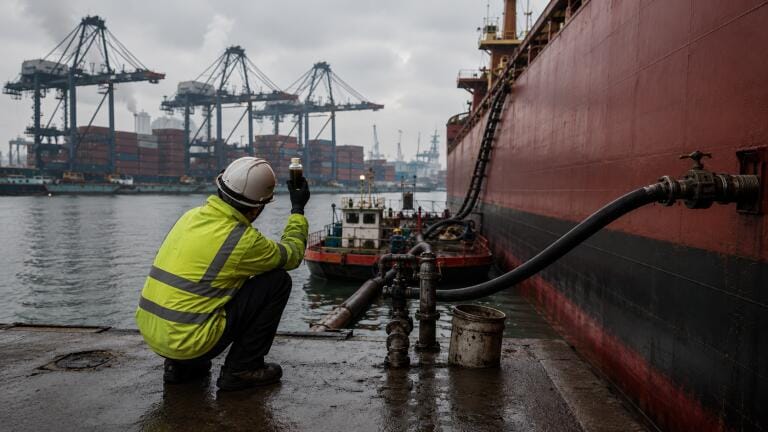
Checks under the campaign can include fuel sampling, onboard inspections and review of bunker delivery notes, fuel test reports and fuel management records – a broader net than routine port-state control typically casts.
Gard highlighted one case at Panjin in which China MSA officers found fuel containing 2.51 per cent sulphur; initial shipboard testing had put the level at between 2.5 and 2.7 per cent – either figure comfortably above the applicable sulphur limits for the area.
What makes sulphur non-compliance distinct from many other bunker quality problems is the exposure it creates once identified at a port-state inspection.
Unlike contamination issues that surface gradually through operational problems on board, an MSA finding of excess sulphur is a direct MARPOL compliance breach with immediate consequences: vessel delay, enforcement action, and the cost of debunkering and disposing of non-compliant fuel, on top of whatever claim follows against the supplier.
That distinction is the reason for treating sulphur compliance as both a fuel-quality and a regulatory risk rather than filing it alongside other contamination stories.
A vessel carrying fuel with elevated catalytic fines or phenolic contamination may develop operational problems over time, giving the crew and operator some room to respond before matters escalate.
A vessel found with non-compliant sulphur content at a port inspection has no such buffer – the finding itself triggers the consequence.
For operators, Gard's recommendations are procedural rather than technical: take preventive steps before bunkering in the affected region, act promptly if non-compliant fuel is suspected rather than waiting for a claim to develop, and preserve testing evidence carefully if an inspection does occur.
Under amended IMO Resolution A.1206(34), Appendix 18, clause 2.1.5, if a bunker delivery note shows compliant fuel but the master holds independent test results indicating non-compliance, the master may document the discrepancy formally – notifying the vessel's flag administration, with copies to the competent authority at the port of destination, the administration with jurisdiction over the bunker deliverer, and the deliverer itself.
The scale of the increase – more than threefold year on year, and already ahead of a full prior year's total after six months – indicates this is a sustained enforcement shift rather than a short-lived crackdown.
For any vessel regularly calling at Bohai Sea ports over the life of the current five-month campaign, independent verification of sulphur content at the point of bunkering, rather than reliance on the delivery note alone, is now the more defensible position.
Gard's data also sits within a wider pattern of rising bunker-related claims generally.
The club's earlier review of the first five months of 2026 had already identified a broader increase in off-specification bunker incidents, linked in part to pressure on global fuel supply chains following the escalation of the conflict in the Middle East.
Sulphur-specific claims are rising faster than that general trend, which points to enforcement intensity, rather than fuel-market pressure alone, as the more significant factor behind this particular spike.
PIN 27.4 Aug/Sept 2026




 Product directory























.jpg)