Sulphur analysis
Published over 2 years ago. See the latest and most current information on Sulphur analysis.
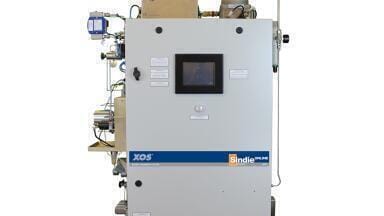
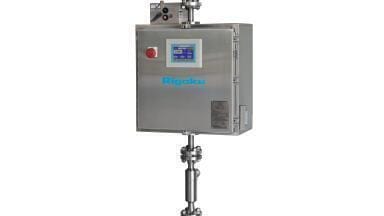
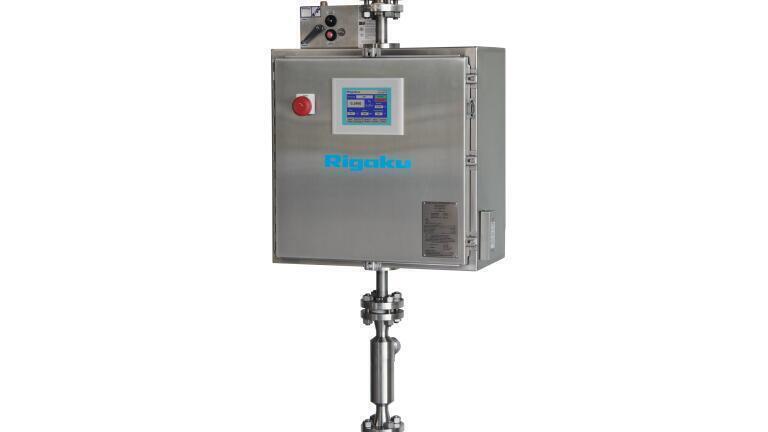
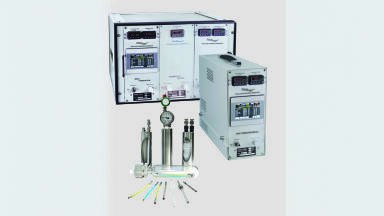
Whether used for crude oil blending and monitoring, assaying or blending marine bunker fuels, or custody transfer, the Rigaku NEX XT is an excellent on-line tool for sulphur analysis in petroleum streams. It is well suited to meet the varying demands of the industry and help maximise profitability.
NEX XT delivers on-line, real-time X-ray transmission (XRT) measurement of sulphur from 400 parts-per-million (ppm) to 6 wt% for various petroleum streams. It represents the next evolution of process solutions for sulphur measurement of crude, bunker fuel, fuel oils, and other highly viscous hydrocarbons, including residuums.
Optimised for total sulphur analysis needs, NEX XT is versatile, compact, and specifically designed to address the needs of refineries, pipelines, blending operations, bunkering terminals, and other storage facilities.
Featuring uniquely engineered hardware and novel proprietary software technologies, the NEX XT system is faster, more sensitive, and much more compact than competitive systems. NEX XT performs continuous, reliable sulphur monitoring at pressures up to 100 bar (1450 psig) and up to 200°C in custom configurations. NEX XT operates as a standalone analyser or provides real-time closed-loop control when tied into a blending or plant-wide automation system.
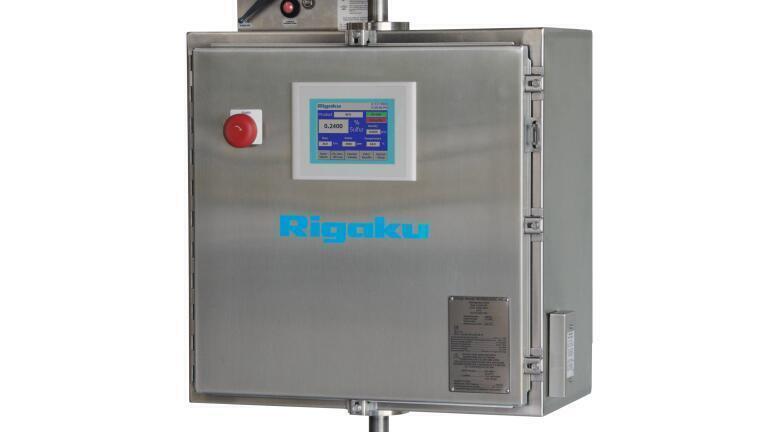
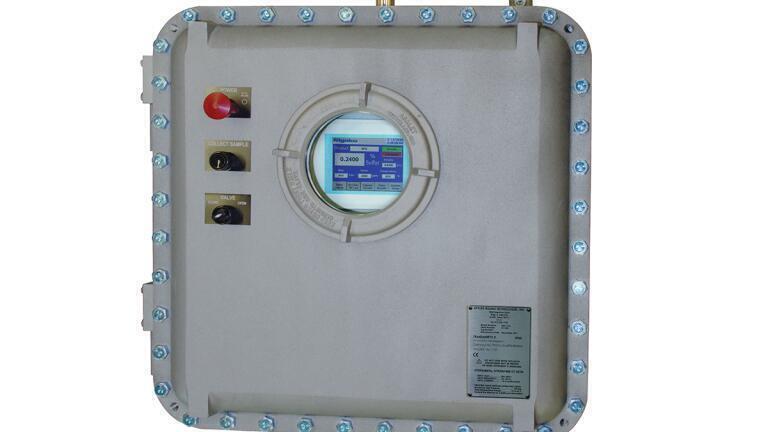
Its other key features are a simplified user interface, reduced standards requirement, automatic density compensation, password protection, and a standard platform for communicating sulphur results to a DCS. Due to its unique design and robust construction, sample conditioning and recovery systems are typically not required.
X-ray Transmission (XRT) gauging has long been an accepted technique for measuring total sulphur (S) in heavy hydrocarbon process streams. Whether used for pipeline switching, crude oil blending, or to assay or blend marine and bunker fuels, the NEX XT XRT process analyser is suited for rigorous process environments, with pressures up to 1450 psig and temperatures up to 200°C.
X-ray transmission gauging involves measuring the attenuation of a monochromatic X-ray beam at a specific energy (21 keV) that is specific to sulphur (S). In practice, a process stream passes through a flow cell where sulphur (S), in the hydrocarbon matrix, absorbs X-rays transmitted between an X-ray source and detector. The recorded X-ray intensity is inversely proportional to the sulphur concentration. Thus, the highest sulphur levels transmit the least X-rays.
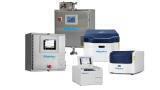
Applied Rigaku Technologies offers a complete line of benchtop and process instruments for petroleum analysis applications. Their products serve many screening and monitoring needs and meet compliance with multiple testing methods and standards. For more information, contact the company by email.
PIN 27.4 Aug/Sept 2026



 Product directory


.jpg)












.jpg)