Flash point
Renewable and synthetic fuels are at the forefront of the global transition toward sustainable energy. As these new fuel types enter the market, knowing their ignition behavior is essential, to ensure safety, maintain quality, and support reliable performance. Among the key safety parameters is the flash point, which measures flammability risk, to guide critical decisions around storage, handling, blending, and transportation.
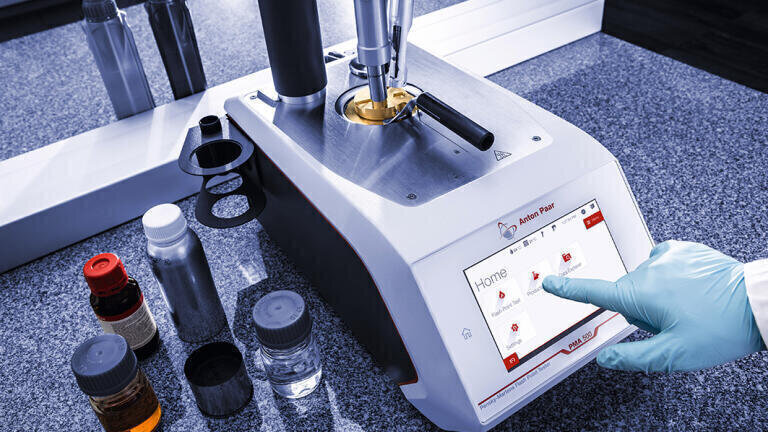
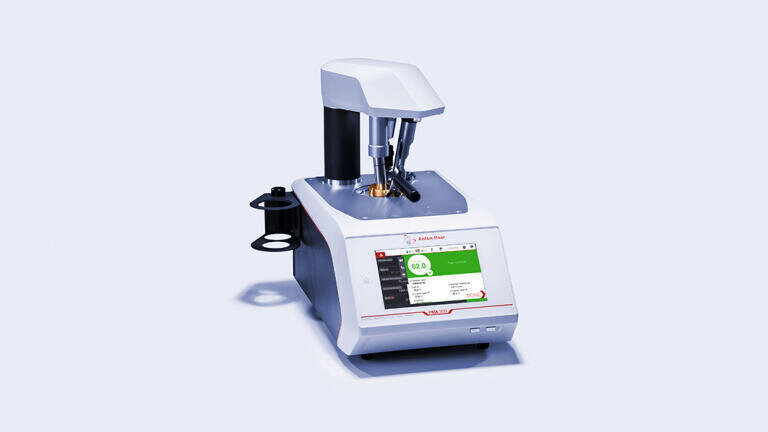
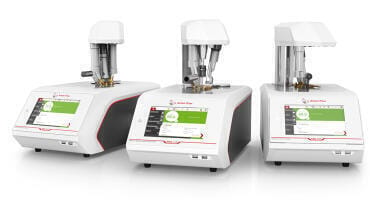
Anton Paar’s PMA 300 and PMA 500 Pensky-Martens flash point testers deliver precise and reliable flash point measurements for a wide range of fuels. These include fuels derived from sustainable raw materials, such as vegetable oils, waste oils, and residual fats, which are processed into renewable diesel (e.g., hydrotreated or hydrogenated vegetable oil) via hydrocracking or hydrogenation. This category also covers hydrogen-based and fully synthetic fuels, such as gas-to-liquids (GTL), where natural gas is converted into high-quality diesel or gasoline via the Fischer–Tropsch process.
PMA 500 combines advanced features with intuitive operation. The impurity matrix feature allows users to monitor the effects of fuel contamination and estimate impurity concentrations based on measured flash points. PMA 300 offers a cost-effective solution for routine applications, with automated closed-cup testing for ease of use.
Anton Paar's closed-cup flash point testers are equipped with a unique ceramic-coated electric igniter, which lasts up to 10 times longer than conventional igniters – reducing replacement frequency, minimizing maintenance costs, and improving laboratory performance. Both PMA models feature a fully automatic multi-function head. PMA 500 also includes a status light and achieves 20 % faster cooling times.
By delivering accurate flash point data throughout the research, production, and distribution processes, Anton Paar enables fuel developers to characterize new renewable and synthetic formulations with confidence – ensuring that innovative energy sources meet the highest standards of safety, quality, and reliability.
PIN 27.5 Oct/Nov 26

 Product directory



.jpg)










.jpg)
.jpg)


.jpg)

.jpg)
.jpg)

.jpg)