.jpg)
.jpg)
Flash point
Jet fuel enters the aviation supply chain only after defined safety and quality checks confirm it meets applicable specifications. Flash point is one of the key parameters in this process. It confirms conformity, indicates potential contamination, and supports compliance with international aviation fuel requirements.
For aviation fuels such as Jet A, Jet A-1, and JP-8, even small amounts of lighter components (including gasoline or solvent residues) can reduce the flash point and increase risk during storage, transport, and handling. Closed-cup flash point testing according to ASTM D56 and ISO 13736 therefore remains a critical quality gate from refining and blending through to certification and final release.
In routine laboratory environments, automated flash point testing helps reduce operator influence, stabilise test conditions, and support reproducible results across shifts, sites, and audit cycles.
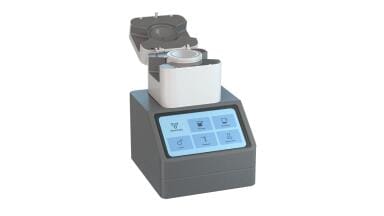
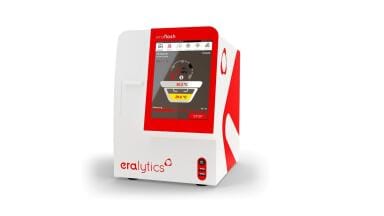
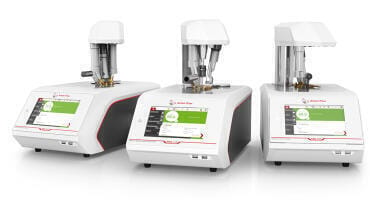
Anton Paar’s ABA 300/500 and TAG 300/500 closed-cup flash point testers are designed to support these requirements with robust instrumentation, defined heating and cooling control, and method-compliant workflows for jet fuel and related distillates such as kerosene.
“Flash point is a straightforward number, but it carries significant operational impact,” says Dr. Andjela Djordic, Product Manager for Flash Point Testing at Anton Paar. “By automating critical steps and combining safety functions with method compliance, the ABA and TAG series help laboratories generate reliable results that support consistent release decisions for aviation fuels.”
To support high sample throughput, the ABA and TAG series offer a wide temperature range enabled by integrated cooling options (from -35 °C to +130 °C, depending on the model). This allows laboratories to handle a broad spectrum of sample types – from jet fuel to various other products with differing flash point values – on a single platform.
Maintenance effort is reduced through Anton Paar’s electric igniter system, which delivers up to 10 times the lifetime of conventional electric igniters. This lowers replacement frequency and supports a lower total cost of ownership – especially in routine and high-throughput testing environments.
Safety functions are built into the platform. The ABA and TAG series include fail-safe fire detection and an extinguishing system, supporting safe operation in daily laboratory workflows.
For compliance and documentation, AP Connect integration supports standardised data handling and traceability across instruments and workflows, helping reduce manual transcription and supporting consistent reporting during audits.
By delivering accurate flash point data in method-compliant workflows, laboratories gain more than test completion. They gain confidence that each batch of jet fuel meets defined requirements before it enters the aviation supply chain – supporting safe handling, regulatory conformity, and dependable flight operations.
PIN 27.5 Oct/Nov 26


 Product directory



.jpg)









.jpg)
.jpg)



.jpg)

.jpg)
.jpg)

.jpg)