Flash point
The flash point of a material is a critical safety parameter used for classifying hazardous substances, and it plays a key role in the storage, transport, and usage of flammable materials such as fuels, oils, chemicals, and waste. The lower the flash point, the more flammable the substance is, which is particularly important in the case of fuels like diesel and aviation turbine fuels.
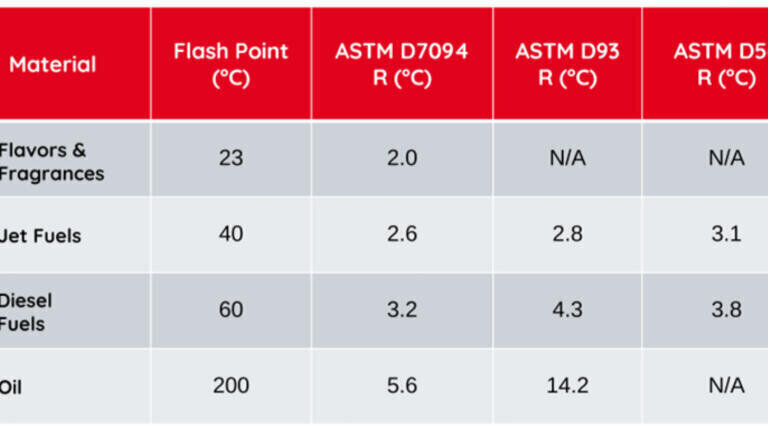
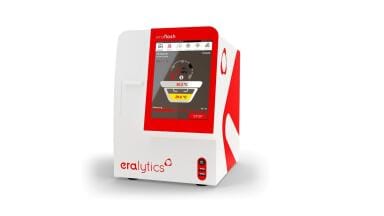
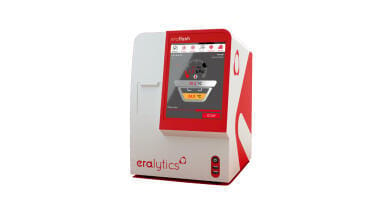
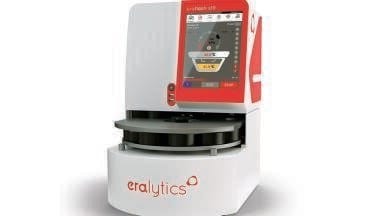
Due to its safety significance, a range of flash point measurement methods have been developed over the years. Recently, the newest flash point method, ASTM D7094, underwent a large interlaboratory study (ILS) to determine the precision. The results presented in the research report RR-D02-2086 showed that ASTM D7094 has the best reproducibility of all available flash point methods, confirming eralytics eraflash as the modern gold standard and prime choice for safe and accurate flash point testing.
By definition, the flash point is the ‘lowest temperature at which the vapors of a material will ignite when exposed to an external ignition source’. This principle led to the invention of the Pensky-Martens flash point tester more than 150 years ago. The method involves placing a large amount of sample (75 mL) in a container and heating it gradually. At regular intervals, the sample vapors are exposed to an open flame, and ignition is detected. The temperature at which the sample ignites are recorded as the flash point. This method was standardised as ASTM D93 (equivalent to EN ISO 2719), referred to as a closed cup flash point method.
Recognising the dangers associated with open flames, the US Navy commissioned the development of a safer flash point testing method in the 1990s. The goal was to create a method that eliminated open flames, used smaller sample size and provided faster results. This led to the creation of the Modified Continuously Closed Cup Flash Point Method (MCCCFP), ASTM D7094. In this method, just 2mL of sample is placed in a temperature-controlled chamber, and ignition is triggered by electric arcs at regular temperature intervals. The flash point is detected by a sudden rise in chamber pressure, and the chamber remains closed during the entire test, eliminating open flames.
Flash point is not a fundamental property of a sample but rather a method-dependent parameter, meaning the results can vary depending on the test method used. This makes adherence to standardised methods essential to ensure consistent and accurate results. New methods like ASTM D7094 undergo extensive validation through interlaboratory studies (ILS) to assess their precision and bias compared to established methods.
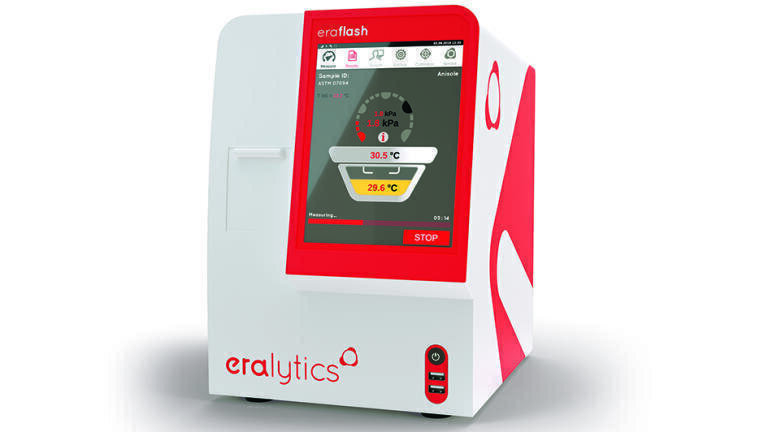
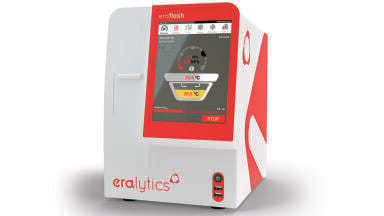
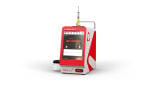
ASTM D7094 has set a new standard in flash point testing, providing highest precision, faster results, minimal sample volume, and enhanced safety. eralytics’ eraflash, fully based on ASTM D7094, brings these advantages into a robust, user-friendly instrument designed for modern laboratory workflows.
The eraflash flash point tester, based on ASTM D7094, combines all the benefits of this modern method: superior precision across a broad temperature range, even for difficult or contaminated samples; inherently safe operation, with no open ignition sources (flames or glowing wires), eliminating fire hazards; twice as fast as ASTM D93, enhanced by eralytics PBT® - Peltier Boost Technology; and minimal sample volume (just 2mL), dramatically reducing waste, cleaning time, and operational costs
All in all, eraflash is the clear choice for laboratories seeking unmatched precision, maximum safety, and next-era flash point testing performance.
PIN 27.5 Oct/Nov 26

 Product directory


.jpg)










.jpg)
.jpg)


.jpg)