.jpg)
Flash point
Growing demand for lithium-ion batteries continues to drive rapid expansion of the battery industry across a range of markets. Electric mobility, in particular, has emerged as one of the most dynamic application areas, with an increasing number of new vehicles already powered by lithium-ion technology. However, as battery adoption accelerates, expectations around safety, reliability, and quality control have also increased, bringing the need for reliable flash point testing into sharper focus.
Battery electrolytes typically consist of a lithium salt – most commonly lithium hexafluorophosphate – dissolved in organic carbonate solvents such as ethylene carbonate, propylene carbonate, and diethyl carbonate. While these solvents are essential for electrochemical performance, they also contribute to flammability risks, making the thermal safety of electrolytes a key concern for both industry and the public.
The flash point is a key parameter for assessing flammability risk and usability of battery electrolytes. Reliable flash point data helps manufacturers to balance performance optimisation and safety requirements as battery systems evolve.
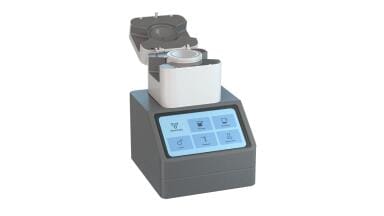
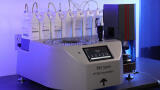
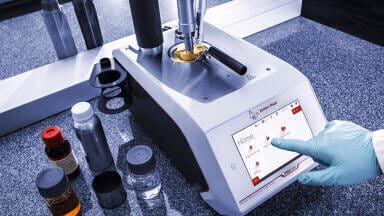
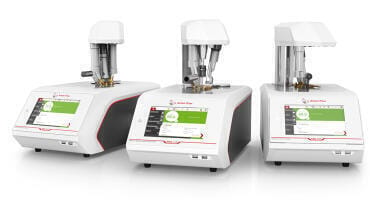
Anton Paar’s ABA and TAG flash point testers are specifically designed to evaluate the flammability behaviour of battery electrolytes, delivering fast and efficient testing in accordance with ASTM, ISO, and other recognised methods. In addition to excellent repeatability and reproducibility, they also feature automatic flash point detection, advanced cooling options, and integrated safety features such as a fire extinguisher and status light indicator.
As lithium-ion battery technologies continue to advance, reliable, standards-based flash point testing remains essential for safe and consistent electrolyte evaluation. By combining precise measurements with robust safety concepts, Anton Paar’s ABA and TAG flash point testers give battery manufacturers the tools they need to develop safer, more reliable electrolyte systems – from research to production and distribution.
PIN 27.5 Oct/Nov 26

 Product directory


.jpg)









.jpg)
.jpg)

.jpg)

.jpg)
.jpg)

.jpg)