Measurement and testing
Freezing-point testing is a routine part of aviation fuel quality control, but the measurement has traditionally involved a significant degree of operator judgement.
ASTM D8615-26 provides an automated alternative.
The standard covers the determination of the temperature below which solid hydrocarbon crystals may form in aviation turbine fuels, using an automatic coaxial optical-fibre method.
The method is now available as the 2026 edition of ASTM D8615, superseding the 2025 edition.
For fuel laboratories, the significance is less about replacing one instrument overnight and more about how automated measurement can change the workflow around a familiar test.
The conventional ASTM D2386 method relies on manual observation of the formation and disappearance of hydrocarbon crystals.
ASTM says D8615 eliminates most of the operator time and judgement associated with this manual approach. Results are reported to the nearest 0.1 °C.
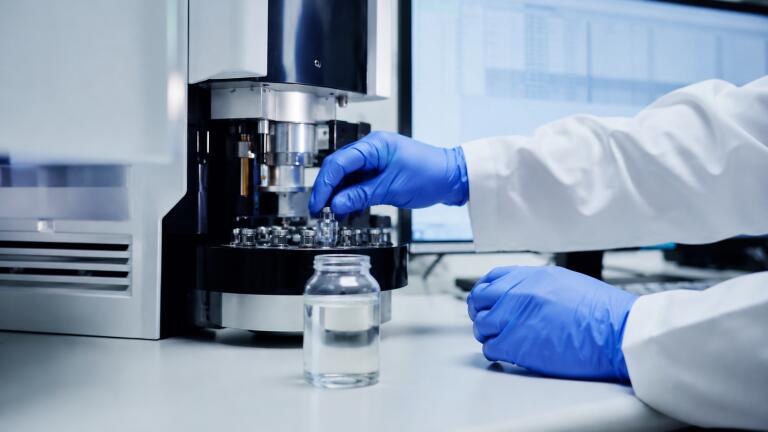
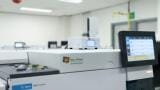
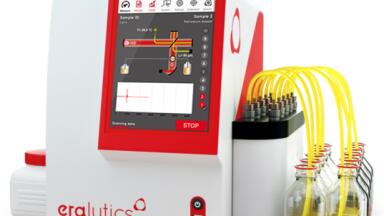
The new method uses coaxial optical fibres to detect the relevant change during controlled cooling and warming.
Automation can therefore reduce the subjective element of the measurement and create a more consistent sequence of operations.
That has practical implications for laboratories handling repeated batches of aviation fuel samples.
One important qualification is explicit in the standard.
Where a fuel specification requires ASTM D2386, D8615 must not simply be substituted. ASTM states that D8615 should not replace D2386 where the specification specifically calls for the latter method.
This is important when considering instrument purchases.
A laboratory cannot assume that the availability of an automated method means every existing D2386 requirement can immediately be transferred to the new procedure.
Method selection remains linked to the specification, customer requirement and applicable quality system.
ASTM D8615-26 defines a reporting range of −71.2 °C to −36.5 °C for the application of the stated precision values.
The apparatus itself has a wider measuring range, from −80 °C to 20 °C, but ASTM notes that precision has not been established across the entire instrument range.
The precision data behind the method came from an interlaboratory study involving 12 laboratories and 15 materials.
For laboratory managers, this reinforces a familiar principle: automation does not remove the need for method validation.
A new analyser still needs to be incorporated into the laboratory’s QA/QC system. Analysts need to understand calibration, maintenance, verification and any differences between the automated method and the laboratory’s existing procedure.
The method also has relevance beyond conventional aviation turbine fuels.
ASTM has stated that the standard can be used to test sustainable aviation turbine fuels.
The underlying measurement remains important because freezing point is linked to the behaviour of fuel at the low temperatures encountered during flight.
As fuel composition changes, laboratories will need analytical methods capable of providing reliable measurements across different fuel formulations.
This does not mean that ASTM D8615 resolves every analytical challenge associated with sustainable aviation fuel (SAF).
It does, however, provide another standardised route for an established fuel quality parameter.
For laboratories considering the method, the main questions are practical.
Can the existing specification be tested using D8615? Does the laboratory need to maintain D2386 capability? What validation evidence is required before reporting results? How will the new instrument fit into existing calibration and quality control procedures?
Those questions are likely to matter more than the simple fact that the test is automated.
ASTM D8615-26 provides laboratories with a more automated approach to freezing-point measurement, but method compliance remains dependent on the specification being applied.
The shift is therefore not from manual testing to automatic testing in isolation.
It is towards a more controlled analytical workflow in which optical measurement, standardised procedures and laboratory QA/QC work together.
PIN 27.4 Aug/Sept 2026


 Product directory


.jpg)









.jpg)




.jpg)