Measurement and testing
Published over 15 years ago. See the latest and most current information on Measurement and testing.
LPG is an alternative fuel, which is still fossil fuel-derived. It offers several benefits over traditional fuels as LPG is a clean-burning transport fuel with a high energy content and the infrastructure is well developed. The legislative rules and automotive industry promote the use of LPG.
One of the fuel specifications for LPG concerns the amounts of oily residues, as these lead to troublesome deposits and material changes. Conventional test methods to specify the oily residues require the evaporation of large amounts of LPG and therefore present a high safety risk. A new technique to determine the oily residues using a fast, safe and accurate method is based on Gas Chromatography combined with the Liquefied Gas Injector (LGI).
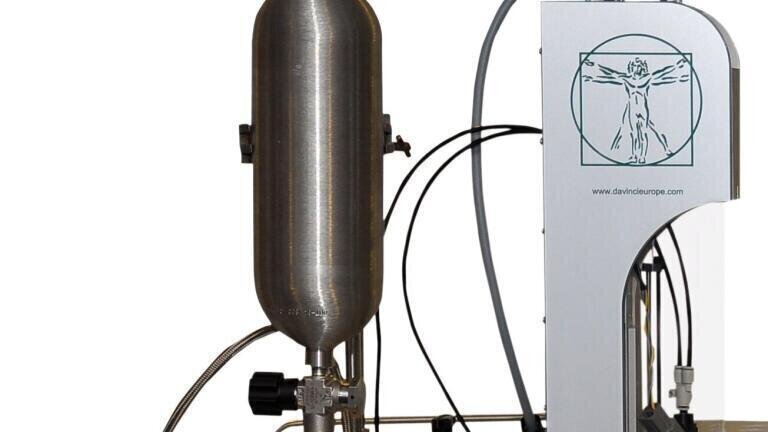
Da Vinci Europe laboratory solutions B.V. (Netherlands) developed the Liquefied Gas Injector in close cooperation with Shell Global Solutions. This injector is able to inject gases in liquid phase under high pressure directly on-column. The on-column injection allows to analyze the high boiling oily residues in LPG using a GC method. This is a fast, safe and accurate alternative for the current methods which are based on open air evaporation of large amounts of LPG.
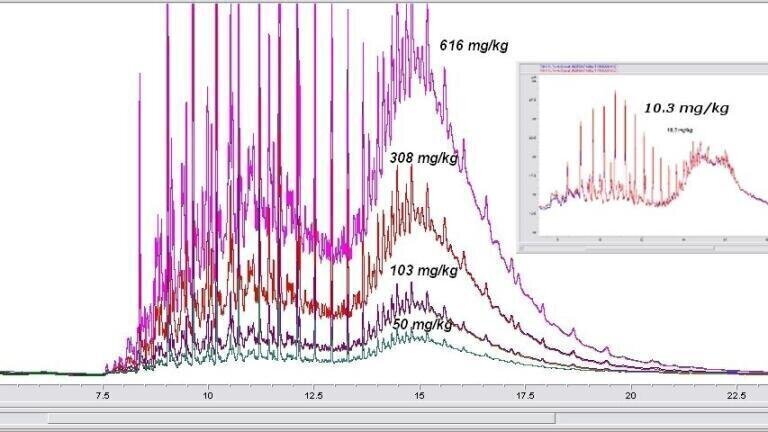
The injector is configured with the Gasoline Direct Injector, a proven part that is commonly used in car engines. After injection, the GC analysis technique uses a vapor exit to flush the LPG light end fraction. The oily residue remains on the column and is separated by boiling point order. The result is reported as concentration in mg/kg (mass ppm). The analysis range starts from 10 up to 600 mg/kg having a repeatability of 5%. The required analysis time is less than 30 minutes.
The new GC method is currently a work item of ASTM D02.H0 on Liquefied Petroleum Gas: WK31249 Residues in Liquefied Petroleum (LP) Gases by Gas Chromatography with Liquid, On-Column Injection. The GC method will be balloted in the fall of 2011.
After the product introduction in 2010 the LGI was awarded for the Best New Technology at the Gulf Coast Conference of 2010. The current installed base includes LPG customers located in Africa, Australia, Asia, Europe and U.S.A. Their experiences with the LGI have proven that the new technology is safe, fast and accurate. Additional benefits are: the results are not only reported as a value in mg/kg, the chromatogram also indicates the composition of the contamination and helps tracing the source of contamination.
PIN 27.5 Oct/Nov 26

 Product directory


.jpg)











.jpg)

.jpg)

.jpg)

.jpg)