Measurement and testing
Anton Paar knows that the performance and durability of asphalt pavements depend on a precise understanding of material properties. Unlike many conventional materials, asphalt and bitumen exhibit strongly temperature- and time-dependent behaviour. Properties can change significantly during production, storage, transport and application and the use of modifiers, additives and recycled materials further increases material complexity. Comprehensive testing is therefore essential to ensure consistent quality, safety and long-term reliability in road construction and infrastructure projects.
Single-parameter tests are often insufficient to fully describe asphalt behaviour. To predict performance under real-world conditions, multiple properties must be evaluated, including consistency and flow characteristics, elastic and viscoelastic response, resistance to permanent deformation and safety-related parameters. This requires testing across different temperatures and shear conditions to identify how materials behave during processing, under traffic loads and in varying environmental conditions.
Aging effects must also be evaluated. Exposure to heat and oxygen during production and application can alter material properties, potentially affecting flexibility and durability over time. Comprehensive testing helps manufacturers and laboratories assess these changes and ensure that material specifications are met throughout the product lifecycle.
Selecting an appropriate test method depends on the material type, application requirements and applicable standards. International norms such as ASTM, AASHTO, DIN EN, GOST and IS define procedures that support comparability and regulatory compliance across regions.
Typical testing programs focus on a combination of rheological, physical and safety-related properties. Flow behaviour and consistency provide insight into processability and handling, while elastic response and resistance to permanent deformation are closely linked to pavement performance and rutting resistance. Safety-related properties, such as flash point and density, help ensure safe storage, transport and handling of materials.
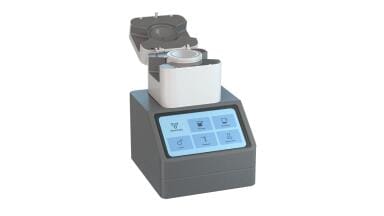
Anton Paar’s comprehensive portfolio of analytical instruments supports asphalt and bitumen testing across the entire value chain, from production and laboratory testing to storage, transport and application. Providing key measurement techniques for characterising material behaviour – such as rheological analysis, viscometry, density measurement and flash point determination – it enables laboratories and manufacturers to generate precise, reproducible and standards-compliant data for quality control, formulation, and safety assessment.
• PNR 500: reliable and standards-compliant penetration testing of asphalt and bitumen.
• SmartPave 93 dynamic shear rheometer: precise rheological characterisation of asphalt binder and bitumen.
• DMA 4200 M density meter: accurate density measurement of highly viscous materials at elevated temperatures, supporting quality control, mass calculation and safe storage and transport.
More information here.
PIN 27.4 Aug/Sept 2026


 Product directory


















.jpg)



.jpg)

.jpg)
.jpg)

.jpg)