Fuel analysis
Whether it’s verifying sulphur, tracking trace metals, monitoring contaminants, or measuring elemental composition for another application, reliable elemental data remains essential for product quality, process optimisation, contractual requirements, and regulatory compliance. Traditional methods provide accuracy but often require long turnaround times, complex preparation, and higher costs.
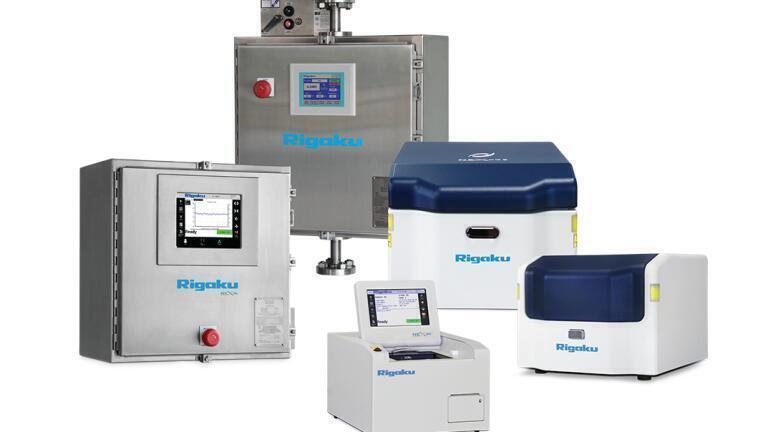
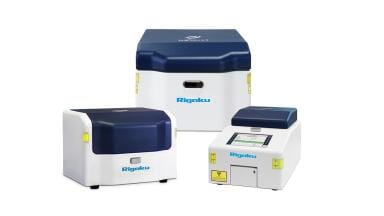
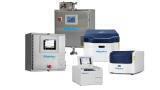
Energy-dispersive X-ray fluorescence (EDXRF) offers a faster, simpler option. Rigaku’s NEX Series EDXRF analysers serve the full range of petroleum needs - from routine quality control to high-precision research and real-time process monitoring. Each system is designed for ease of use, low ownership cost, and adherence to international standards, enabling confident, timely decisions at lower cost than many alternatives.
Across crude oil, finished fuels, and lubricants, Rigaku’s analysers help reduce expenses and accelerate decisions.
Rigaku EDXRF benchtops are built to handle petroleum applications, from verifying sulfur in fuels to detecting trace metals in crudes or lubricants. Users benefit from easy operation, robust designs, and software that simplifies calibration and method management.
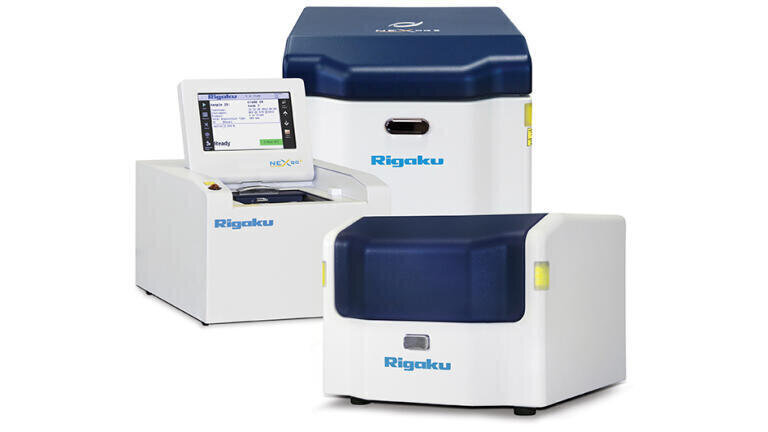
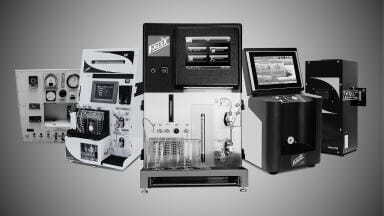
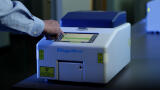
The NEX QC Series models provide dependable multi-element performance in a compact system with a built-in computer and printer. These analysers are ideal for field labs, terminals, and production facilities that need rapid verification. Designed for simplicity and affordability, they deliver reliable results for sulfur and other key elements across a wide variety of petroleum products. These models comply with ASTM D4294, D8252-19, ISO 13032 and ASTM D5059 and are best suited for routine QA/QC, field verification, and in-plant checks.
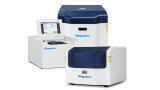
For facilities that demand greater flexibility and throughput, the NEX DE Series models combine high performance with streamlined operation. Their proprietary Matching Library software reduces standards requirements, and the VS option offers small spot analysis for in-plant forensics. These systems easily handle sulfur, chlorine, nickel, vanadium, and other critical elements. These models comply with ASTM D4294, D8252-19, ISO 13032, ASTM 5059 and ASTM D4929 Part C and are best suited for refineries, midstream labs, and QA teams requiring fast, repeatable precision.
For complex samples and ultra-low detection limits, the NEX CG II Series uses indirect excitation with secondary targets to achieve exceptional sensitivity across variable matrices. This makes them ideal for R&D, contract testing, and advanced QA environments, where they can analyse everything from trace metals to additives. Custom Matching Libraries can be built directly within the software, saving time and reducing calibration standards costs. These models comply with EPA Tier 3 and ASTM D7220 for ULSD sulphur, ASTM D5059 for manganese and trace lead, and ASTM D4929 for trace chlorine and are best suited for research labs, commercial testing facilities, and advanced QA/QC environments.
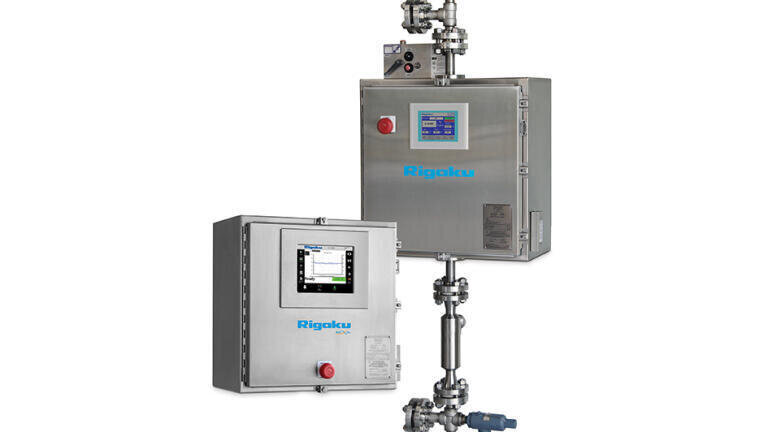
In continuous operations, reducing laboratory sampling can save both time and cost. Rigaku’s on-line analysers extend elemental analysis to the process line. These systems help you identify upsets sooner, maintain tighter control, and ensure every product stream stays within specification.
The NEX XT provides continuous total sulfur analysis from 0.04 to 6 wt% in various petroleum streams, including crudes, bunker fuels, and residuum’s. It’s ideal for refineries, blending operations, pipeline monitoring, and storage terminals where uptime and reliability are critical.
For on-line, multi-element monitoring of liquid streams, the NEX OL offers simultaneous measurement of elements such as cobalt, manganese, and bromine. It is well-suited for PTA production and catalyst recovery processes.
PIN 27.4 Aug/Sept 2026


 Product directory















.jpg)